Copyright (c) Marc Dacey/Dark Star Media 2006-2026. Above photo (c) Marc Dacey. Powered by Blogger.
Showing posts with label Weatherly. Show all posts

2020-02-16

Drogue therapy

This is a Jordan Series Drogue as built by Angus Coleman of Ocean Brake in the UK.
There's a surprisingly long list of items, some quite expensive, one hopes never to use as a sailor. These include obvious ones, like a SOLAS-grade flare and the liferaft, to more cryptic items, such as drogues, warps and sea anchors.


Amusingly, the drogue, which weighs about 18 kgs., came wrapped in two very big IKEA bags.
The idea of a drogue is to slow the pace of a boat running off in heavy weather. Running off is the opposite tactic to that of heaving-to, in which the jib, main and rudder are all set so as to sail the boat slowly upwind. Heaving-to as a tactic is largely passive: one can tie off the wheel or tiller and essentially doze, if not entirely comfortably, as the storm passes over or even to delay a harbour approach until daylight reveals potential complications. Heaving-to is something some boats do more readily than others, and requires practice to fiddle with the sails in order to balance the desired slow forereaching that keeps the boat slowly "crabbing" forward.

The forces of the sails and the rudder nearly cancel each other out and the wave train is therefore met with "the pointy end" and at a low speed. Expect a twisty ride, but not a dangerous one. Diagram (C) Sail Magazine
To run off in a gale or a storm situation is a more active strategy requiring active steering, but it also allows more options in terms of reacting to worsening weather. Running off means to steer downwind at a slight angle to the wave train and (usually) the wind aft in order to make more speed either away from the storm or gale, or away from the dangerous quadrant of the storm or gale. The problem with running off is essentially the same as the problem with heaving-to: eventually, the winds and wave heights may exceed the usefulness of the given tactic and at that point, the transition has been made from "heavy weather sailing" to "survival conditions". Not good.

The IKEA bags reveal the drogue elements of bridle, leader, cones and tail. And the bag (black mesh) in which to store the lot.

If the skipper and crew have opted to run off in heavy weather, a problem that will soon be made apparent is that of too much speed. Even in conditions of reduced sail, or even bare poles, a boat can travel faster than its hull speed, at which point the rudder can lose its effectiveness and/or the hull can "surf" and be prone to broaching, capsizing or pitchpoling, all dangerous outcomes at sea.

The bridle "legs" are shackled to the chainplates bolted to the stern and meet at the drogue leader, after which the cones deploy.
The best option, once running off has been decided upon, is to ready a series drogue should the sea state intensify to the point where the boat may become uncontrollable. While this will vary from vessel to vessel and depends on hull type, design and less quantifiable aspects such as windage, the outcome desired is to slow the forward progress of the boat to allow the waves to roll beneath it. The boat is still sailing actively and is still moving, presumably away, from the worst parts of the storm conditions, but its speed has been reduced by the drag of a long, trailing line with fabric cones that act like a large rubber band to retard forward movement smoothly and which, thanks to a weighted end, will stay submerged in the advancing wave faces.

Now, this doesn't mean a carefree ride. Note all the complexities of retrieval of the drogue in a chat between sailors Randall Reeves and John Harries in the video above. And even the drogue won't necessarily keep you dry: The aft part of the boat can still be smacked by a pooping wave and the motion inside the boat can still be considerable. But if the boat is sailing actively, even in heavy conditions, the odds of not only surviving, but of preserving the rig and gear and avoiding injury or worse among the crew increase.
The black straps attach the cones to the drogue's single leg.
Series drogues exert great stresses on themselves, which are transferred to the hull. We therefore ordered ours with Dyneema cores, which made the drogue both lighter and more compact and stronger than the nylon-line alternative. Angus Coleman, the amiable contact at Ocean Brake in the UK, actually dissuaded us from buying the drogue last year as he was on the verge of introducing all Dyneema-core drogues and wanted us to have the opportunity to order that style. Of course, the Dyneema aspects makes the drogue less stretchy than nylon line, but I suspect this is not going to be a particular problem with our steel sailboat. Nonetheless, I am mindful that the attachment points must be engineered correctly so as to transfer all the shock loads that may arise non-destructively. So we are going to have chainplates fabricated to accept the estimated (by Coleman) nine-tonne working loads on the stern. We actually have beefy bollards that can likely handle these loads, but outboard chainplates throughbolted to the hull won't have anything to chafe on, nor will they have much of a chance to catch on the windvane or the transom-hung rudder.

So this is another piece of the puzzle of preparedness. While we will do a practice deployment or three, let's hope, as with the liferaft, we need never use the thing.


2019-01-02

Why the new year is, hopefully, the last year


I'm pretty good with weather, but this cloud waterfall is both baffling and ominous.
Amid the lowering clouds of December I toiled to get the boat further in shape for a late June/early July 2019 departure; hence the title referring to the last winter of refitting, which I realize is probably hubristic. There's a lot left to do, including moving out of an apartment and stowing the contents 160 km. to the east, along with purchases from the upcoming boat show of an EPIRB, a life raft, water tanks, and the finishing of various welding/fabrication jobs.
Ah, speed wheel, you're yesterday's news.
To that end, out came the old speed wheel. This hole will be plated over. Zincs are also to be added. Plus a big change I'll cover off in future weeks. Plus Christmas happened. Goodness, it's a busy time.
Although not without its upsides: Can't take it with me!

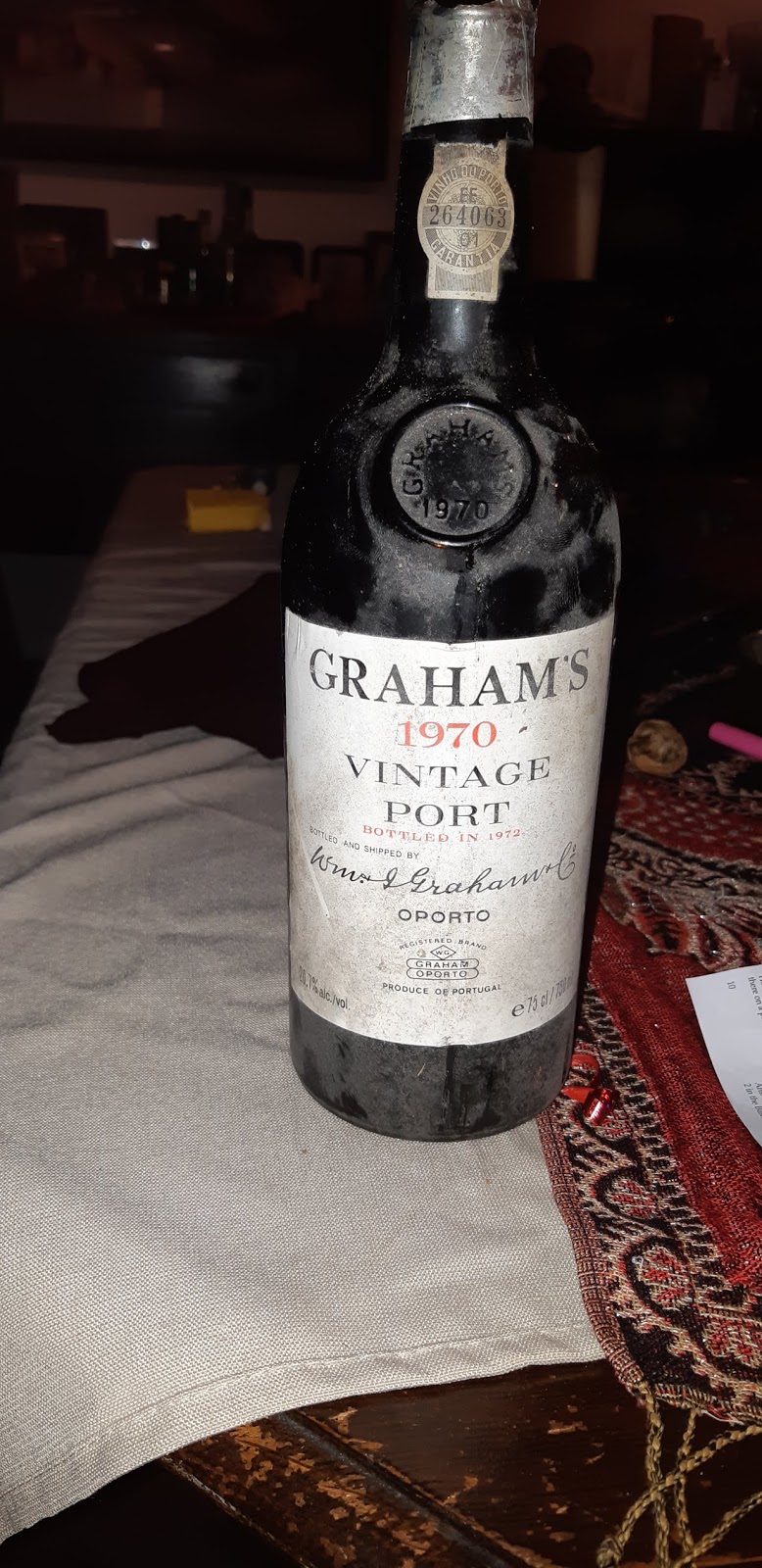
After a very pleasant Christmas and New Year, during which the wine cellar was liquated with enthusiasm, we are getting back to work. But we didn't really stop: December saw a lot of progress.

This is not as disorganized as it looks, although with the hydraulic hoses out, I can tidy up and cable-tie the wire runs better.
The hydraulic setup to the helm, as the surveyor remarked last spring, were requiring more pumps to effectuate rudder action. While the hydraulic fluid was sufficient, there was evidence that the hoses themselves were starting to "sweat" and needed replacement. Job one, then, is to remove them and take them to a truck shop or something not "marine" to have them made up to the same gauge and lengths. The fittings are in good shape and may be reuseable. Here's a lucid link for the perturbed to the wonderful world of hydraulic pumps in general, but a lot of this is marine-orientated.
The back of the first of two Marol HRP-38 helm pumps.
It's a messy, cold job, I won't lie. Out of shot is Mrs. Alchemy, down in the engine bay with a bucket to catch the spills.
As I removed the retaining nuts on the couplers, I swaddled the ends in paper and tape to catch the leaks. Spinning the wheel squirted out a lot more into a handy cup.
Pretty clean back here after 30 years. Good.
The mounting system is four Allen bolts and a nut. Easy and secure.
The rare shot of the skipper at work.

If heavy and awkward (see: 90% of the refit process). These are fishing trawler-grade helms and they are about 15 kilos in weight minimum...and empty.

Perhaps Cabin Boy can polish the entire wheel spoke area now!
The rest of the draining exercise took place on deck. Just visible is the "sailing" helm, as opposed to the "pilothouse" or "downstairs" or "power" helm. A secret of sailorly exclusionary language is that a lot of it is completely made up to be difficult.

Needs a paint job as the outdoor life is a hard one. The insides, however, are in good shape. The brown ring is a fibreglass spacer.
The second helm was easier to remove because a) there's direct access behind a metal plate in the binnacle, and b) its wheel is much smaller and lighter, which is easier to handle with an Allen key in one hand.
Also wanting a paintover, but essentially in good shape.
The helm will have some TLC. The nearly rotten wooden box atop it will go to be replaced by a HDPE caddy for beverages, sunglasses and the like. Wood on a steel boat is fine...inside.
That's leaked hydraulic fluid. I'd swab it out, but it will keep the rust at bay until it's warm enough to paint. Or so I maintain.
And some very nice AWAB T-clamps, for the discerning boater's BWL needs.
I have been able to obtain, at reasonable cost save for the detective work, the seal rebuild kits for both helms and for the Marol MRB-75A rotary actuator controlling the rudder ram. Because it's the hoses that were near end-of-life, and not the seals, I will likely save the seal kits as I am not sure Marol makes this helm pump, beefy and capable as it's seemed to us, any more. I know they make the actuator, however, but I have no evidence yet that it's leaking or needs the service. Might be a "Halifax" job for next winter, then. We'll see. Now the job is to find a truck place to replacate these hoses in a bulletproof fashion. Truly, I'm not sure if "rubber" hydraulic lines are not sufficient, given the comparatively low pressures these helm pumps create. Comments on this are welcome.

Doesn't look like much, but it promises a great deal.
Lastly, I received the Lars Thrane LT-1000 heading sensor I need to orient my radar and to improve my plotter's accuracy. I foofed around on this decision for a long time; originally, I wanted the Comnav Vector 2 GPS Compass, but this item is a third the size, half the price and works with both NMEA 2000 (the plotter/AIS net) and NMEA 0183 (what the Furuno radar likes). Adding it will unlock the radar's full suite of features and will, in effect, make the radar a second plotter capable of showing the AIS target information, SOG, COG and all those other data points of interest. This thing even gives baro and temp. Getting one involved some effort; once again, I find my needs are somewhat rarefied at the pleasure boater level.

More to come soon!

2017-01-22

Wind, light, time and warmth

The view from the side deck, Jan. 22, 2017: This is the opposite of usual and even the waterfowl seem nervous.
I'm not sure I'm the only Great Lakes sailor to be baffled by the absence of ice in a protected basin on January 22nd of any given winter. This is usually thickly iced, often to 30 cm. or greater, if also often cracked from the surge of the lake coming through the gaps in the sea wall into large pans.

Last night I hoisted a pleasant beverage or two with fellow sailor and blogger Brian Jones (Dock Six Chronicles) in the context of his amusing yet helpful Facebook group, The Low-buck Yacht Club. It's a place to exchange tools, tips, techniques and gear choices with other sailors who concur that the second-worst thing after abandoning ship is parting with money. That doesn't imply the neglect of mandatory purchases, or even choosing the cheapest (so rarely the best) option; it does suggest that boat gear and hiring others to install it is expensive, often unreasonably so, and alternatives to just raising the cost of cruising per mile to thin-air levels involves both constant vigilance and crowd-sourced wisdom. Hence, Low-buck YC, your virtual talking shop for smarter-assed cruising.

It did occur to me, however, as I cycled down to the waterfront pub in which Brian had convened about a dozen Toronto International Boat Show attendees, that I was wearing a T-shirt, a pullover and my somewhat venerable boat club fleece jacket. No windbreaker, no toque. My concern while cycling was fog, not cold. This is uncustomary for the third week of January in Toronto.

Typical local winds. Image (c) Meteoblue.
Speaking of odd weather, anyone else notice the excessive number of days with east wind, sometimes strong, over Lake Ontario? The prevailing W to NW wind is there, all right, but I have (without verifying this through research of the historical wind roses, mind) noticed, as one does on a steel deck, a greater incidence of easterly winds year-round than I once noticed. I will research this further and report back, not just in the context of this lake which we will leave behind, but in the context of world oceanic weather, which is recorded in pilot charts going back centuries. They can't predict the weather, of course, but they do given historical probabilities of how much wind from what direction may be expected at any given time of the year. They aid the cruiser in making broad planning and routing decisions, but, being an average of decades and decades of recorded data, if the last 20 years or so were at strong variance with the pilot chart's cumulative data, it would take decades for the numbers to reflect, say, a seasonal wobble in the trade winds, or the failure of monsoon seasons to establish themselves, individual years being such a small part of a pilot chart's assumptions.
A light to guide me.
From pilot charts to pilothouse, the not-wintry, if not exactly shorts-wearing weather did prompt me to spend my Sunday afternoon wisely, i.e. boat jobs. I like to charge the battery bank as often as I can in the winter and I always have something I should be doing; today was no exception. While rooting around in the fall at Genco Marine's bargain shelves on one of my frequent bike trailer expeditions to Mississauga, I found some discounted lighting fixtures, including a warm white LED array on a gooseneck for $10. So, to the sound of classic rock, which I only play while splicing, heat-shrinking or bolting things together, I ran some 12 ga.from a spare circuit breaker up the wire loom that supplies the VHF and, some modding with a Dremel later, I had a not-overbright, amp-sipping helm light bright enough to also illuminate the battery box and the engine bay. If I change my mind about the LEDs, there's an identical 10W halogen-bulbed fixture I got at the same time, although I'm thinking that would suit in the galley.
I'm quite pleased with this, as its appearance in subsequent blog posts suggests. Note the temperature on the baro.
I next mounted the clock I bought last week. It looks very fine to my eye, ticks not loudly but pleasingly and we'll see if I can further zero in the rating as it was running slightly fast in my "home" test. The venerable Speedtech barometer, seen here but long discountinued, has been reliable as hell over the decade-plus I've owned it, and reported 9C/48F in the pilothouse this afternoon; I didn't bother to run heaters for the first time since haulout. Less reliable as previously reported have been the battery clocks this one is replacing. Fingers crossed, we'll have a good time together.

Next up: the boat show. I made quite a dent in the installation list this year, but there's more yet to do before casting off in earnest.
Regularized nicely, too.

UPDATE, 18.02.06: I finally sourced a 24-hour clock! Unlike the one above, it will go next to the SSB radio and will keep GMT/UTC/Zulu!

2016-10-26

The hardest part of fall

One last lazy October sail in the inner harbour for sightseeing and relaxation purposes.
Well, she's out once again, safely even if a review of the video I shot seems, in retrospect, a touch alarming. The run-up to haulout is slightly different when one is refitting a boat: it's less an interruption of the sailing season and more a frantic break in the refit. Frantic, because all the stuff one has secured on deck (anchors, the boom, the tender, etc.) must be stowed below so as not to represent a hazard when club members are beneath the boat as it transits from water to cradle.
No, we weren't going for a particularly high level of trim.

Amid all the prep, we squeezed in a final, "novelty" sail in Toronto's Inner Harbour. We actually rarely take the boat out for no particular reason, and it was a nice change to do so and was made possible by the fact that tools and other vital bits were stowed away and it was easy to work the boat unimpeded.
The stern anchor's "rode bucket" is not only insufficiently secured, but is clearly too small. It's on the list.
I'm thinking of coiling down rode and other long lengths of line with a Ballantine coil...does anyone do this? I "Flemish flake" halyards on deck, but this method was new to me.
Mooring Committee stalwart John King belays the crane boom.

There are many tasks not only on the individual boat level, but around the club that are necessary to complete before winter's advent. Dinghy ramps, modular docks, moorings and, above, the "poop deck" or pumpout dock, need to be hoisted clear of the water or otherwise secured. Above is the tonne and a half pumpout platform leaving the water. The same principles of "control lines" apply as with the boat, as seen below.
The purple tape is a "sling mark" indicating where the slings should go to keep the boat level in the air.
Alchemy does not have permanent sling marks as are often found on production boats, because she has a) a lot of lead ingots forward as "trim ballast" and b) the addition of many batteries and tankage means she's increasingly heavy (although she is still above her lines) and not necessarily in predictable ways. I estimated where she would "hang", therefore, marked those spots and shot video this year to see if I guessed correctly.
Close and incredibly loud: The crane operators are both careful and alarmingly swift.
"Pushers" keep the boat off the wall as the slings are adjusted.
Damn, this was too early for my taste.

Note the "cinch belts/straps". These keep the slings in place lest they creep along the hull and cause the boat to pitch.
Once up, I see the bow is a little down. This, however, is less about weight distribution and more about how the equal-length slings are "longer" because of the cutaway forefoot of the hull. The cinch belts are precautionary, especially as it was blowing a hoolie.
This is about the time people back away.
In the video portion of our blog post, you can hear the wind and see that Alchemy in flight is a bit of a handful. Still, the club members know their business, and all ended well. Now, back to work!

Update, 16.10.25: Head, A/C, sinks and raw water engine circuit are all winterized. Next not-cold day brings a general end-of-season clean-up before I fill the insides with sawdust again.


2015-10-20

Unsticking and other season-ending events

Bye, bye, summer!
Some might see our efforts to put up Alchemy's mast in August only to take it down in mid-October as fruitless or even silly labour. Clearly, we disagree. The exercise was very useful (and was also good exercise) in determining where and how best to run sheets and halyards, to do the small repairs due to the long hibernation of the mast in the club's racks, and, of course, to get the mainsail measured in preparation for a new one with an improved batten car setup.
Blurry, but repaired, jib topsail in full effect.

Next season's head start also included a new and seemingly effective installations of a VHF antenna and a blindingly bright tri-colour/anchor light/strobe, and the afore-mentioned halyard replacements. We also marked on our solar arch the location of the passage of the twin backstays, meaning that particular bit of custom work can be altered to accommodate all four panels as designed.

Once more unsticked.
But the real benefit of getting in a few actual Alchemy sails in was of course to crew morale. A great deal of the last few years has been spent either research in front of a computer screen, designing things in front of the same screen, drilling and bending things in a garage or installing things in an often cold, dark and cramped area of the boat. To actually use the thing was a great joy to myself and Mrs. Alchemy, and provided a real boost to further off-season labour in the cold and dark, which is less dim and miserable a prospect when lit by memories of  late summer's sailing. We learned a lot, and even if the semi-symbolic nature of an August "start" can be justified by the better state of prep next spring, it's been a blast this year to even drive about staring at a mast base.
It needn't be complex. It needs to be on the outside helm binnacle.
The sail control lines are working well, but I do want to install a third pair of winches for speed, and will do so after I install a new traveller this winter. The rehabbed Lewmar 44s I picked up some time ago should do nicely. Once again, it's been a case of me springing on a deal of sorts well before it ends up being installed. Revealed over the last two months were the rather pressing need to install a second throttle/shifter at the outside helm, as my ability to see the dock is assumed rather than actual from the middle of the pilothouse, causing either a sudden backing down or calls to "go around again; you're six feet off". Luckily, the shifter, engine and four-bladed prop are working very well, and I fancy people think I have a bow thruster, given the tight maneuvering we are capable of. So...that's promising, but I need to dock from outside.

Not seen: the 35 knot gust that happened while this massive ramp was briefly 10 feet in the air on a club forklift that impressed me by not falling into the lake. I was handling the tiny yellow rope in the foreground.
Amidst personal boat stuff, there is the club preparation for the months of not-sailing. Above is the dinghy ramp, sturdy enough to have a trailer and not necessarily lightweight boats on it, plus any number of kids learning to sail. It would be damaged were it to stay in all winter, so out it must come. The wind was constantly over 20 knots yesterday, and often crested 30 (I checked with the nearby airport weather info site for pilots) and it was a cheek-reddening sort of day.
It got even wavier (two to three metres) later.
I'm on the Mooring Committee, as I've mentioned before, and we seem to do (without exaggeration, I think) a lot of the tougher jobs, such as keeping the moorings serviced, moving disabled boats, and lifting heavy things up and down. Yesterday we discovered, while looking for a boat reported missing, a second boat which had chewed through one of its two mooring lines.
Speed was in this case of the essence, so we took the water taxi instead of the heavier, more powerful work boat.
It's no joke to re-reeve a mooring line on a boat and a water taxi that are both in motion of differing periods. Pictures don't do justice to just how much of the lake was sloshing over the sea wall, but that spouting wave hitting the end of the airport runway gives an impression.
Thar she blows!
After securing the boat above, we went to the far end of the basin, where an old Shark monohull was chewing its topsides on the eastern seawall. A quick tow to safety and too much time trying to push a line through an abandoned fender later, and the owner should buy us a beer.
 
Two hundred-odd kilos of get you offshore, fit to be tied.
The same mates from the Mooring Committee were kind enough to help when Alchemy's now extracted (at sunset the previous, less windy, day) stick needed to be racked for the winter. Friday and Saturday are "Haulout", a melancholy, if in these parts necessary, duty.
While a more complete paint-job will happen in spring when I can get underneath it, Alchemy's cradle got some Tremclad love today.


2015-07-31

We apologize for this interruption in service....

It's been pointed out to me recently that it's been several weeks since a post has been made. So this brief missive, directed to the two readers I may have left, is proof I haven't been killed in a horrific caliper or crimping accident. There are items to report...but soon, soon...

It's been a busy summer. There have been Solstice dawns to observe; this was shot at a beach party I've attended for over 30 years, because I enjoy it and it's a beautiful way to kick off the season.
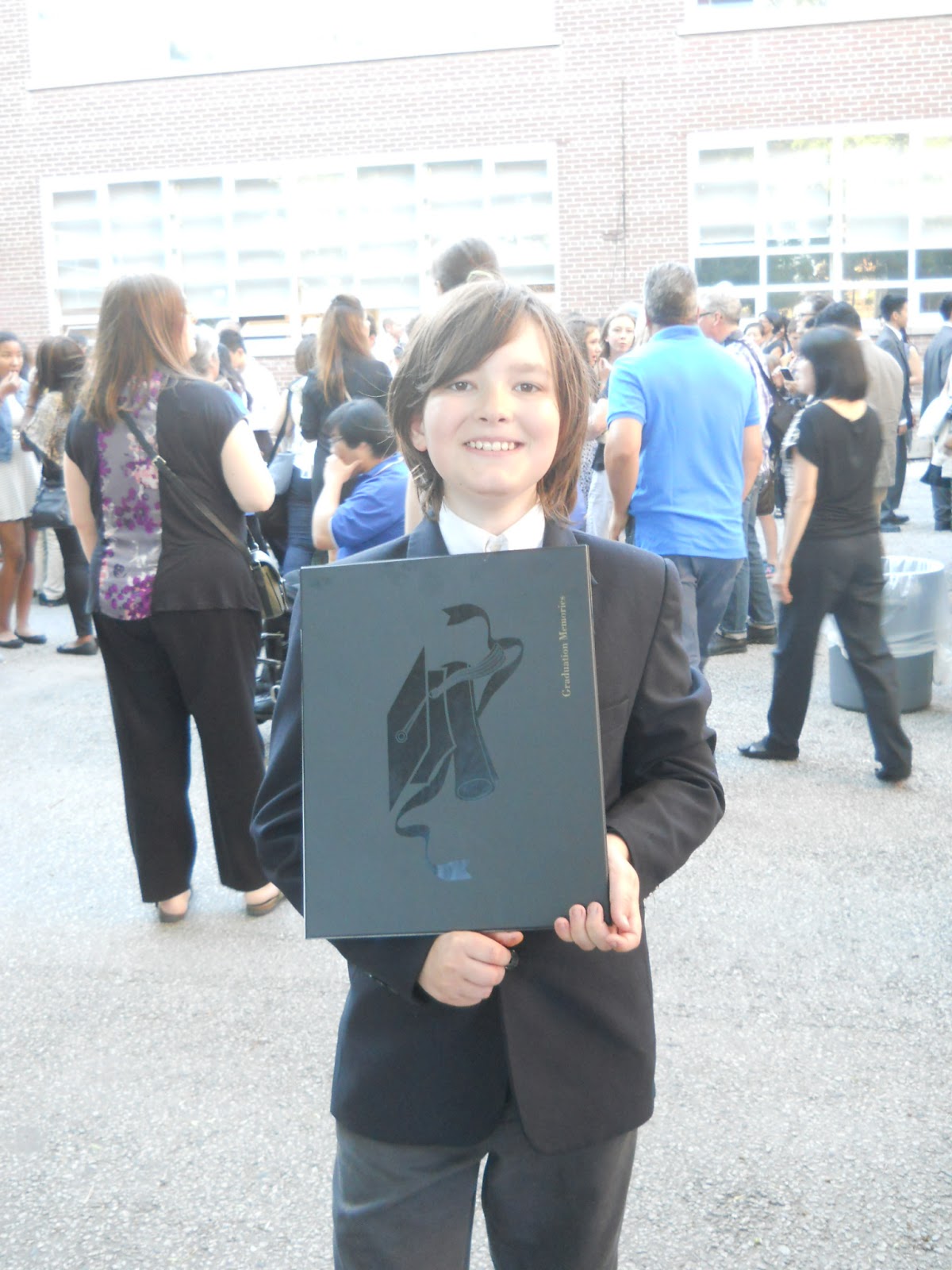
I don't recall a "diploma". His is larger than my wife's university degree.
"Other than boat related" has dominated that summer, alas. There was the pressing matter of seeing Cabin Boy Number One finish elementary school.

Yes, but can you reduce a sight?
And my wife, the wildlife rehabber, brought baby pigeons home...and, because they needed feeding every few hours, BROUGHT THEM ON THE BOAT when we overnighted. There may still be millet in the bilges.
Certain elements of my life are well beyond my control. Sailing with eight pigeon chicks is emblematic of this.
 There were dinghies to assemble and cabin boys to row them:
This 10-foot nesting dinghy, which also has a sailing rig, is going to be our son's primary tender. The more cargo-oriented Portabote will be ours. Unless circumstances dictate differently.

And there was an enormous amount of paying work in June and really, well into July right up to the present. Good for the bottom line, less good for boat-related tasks. However, there has been time for the occasional refreshing dip and boarding ladder testing:
Cabin Boy can swim perfectly well, but he likes to bob and doze off a bit in the water.
There's been a few sailing days...this one saw us overhaul a similarly coloured  Viking 28, the "little sister" to our Viking 33, Valiente.
"Eventide": I don't know where she's berthed, but that's a nice design on the jib. We effortlessly overhauled her.
Fortunately, our fairly paranoid weather sense led to looking aft and we didn't like the look of the sky.  I fancy I can "smell" weather and (broadly) sense barometric changes. It's either something innate or is a skill I've learned and which I am mistaking as innate. Either way, it's kept me safe and dry since I was a kid.
It wasn't like this, I mean.
So we dropped and secured our sails, kicked the fenders over the side and motored back to the marina and tied off with the requisite spring lines. A mere five minutes later, a characteristically brisk squall of short duration passed over. I would say it blew at 35 knots or so.
One of these babies: you are seeing the backside of the squall we ducked. Happens about a dozen times a summer, and you can heave to or run off without much concern, because they are gone in five to 15 minutes.
Unfortunately, a Viking 33 we hadn't noticed during our excellent sail was out in the squall, and evidently was too close to the rocky lee shore of  a local water slide...and she met her end there.
Very sad, although my first rather mercenary thought was "this makes the boat I'm trying to sell a wee bit rarer". Photo (c) Jeff Cooper
According to fellow Viking 33 owner Dan Erlich (Ketchup): "Last Sunday during a line squall the inexperienced young owner was too close to the rocks when the squall hit and his crew went below to be out of the rain.  He had no one on deck with him.  Hull number 24 has the traveler on the coach roof so the helmsman could not dump the main sheet.  That is why I prefer the traveler in front of the companionway on this boat.  The engine on this boat was a 15 Hp outboard not suited to pitching seas or extreme heel angles and no one felt compelled to have the anchor and rode ready to use.  The result was boat was pushed upon the rocks and then holes were eventually punched through the hull in several places."
Ouch. It's never good when a boat dies.

The still-kicking, for sale boat, after the pigeon incursion, needed a good clean, so a good clean was done, partly via the removal of the accumulated crap we've felt necessary to accumulate over our years as cruisers.

The full horror of "colour-blind Scotsman brown plaid" is revealed when you stow the sails properly.
Of course, having done this task of subtraction and the application of elbow grease and teak oil, the boat's rarely looked better, and I want to keep her all over again. But I will entertain thoughtful offers.
I haven't seen the top of this navigation table for three seasons. Usually it's covered in obscure little boat bits, logbooks, and charts.

For simplicity's sake, we dealt with deck and hull cleaning by motoring over on a calm evening to the bigger boat Alchemy, which has a power washers and all sorts of cleaning supplies. The nearby presence of a soot-producing airport was revealed as dirt sluiced off the boat in impressive amounts.

Very possibly the last time my navy will raft up.
 The result was a markedly cleaner and less cluttered vessel, inside and out.

Ooh, shiny.
 But the real work on Alchemy has not been avoided or shirked. Something fuelish this way comes.
I'm actually starting to enjoy wire work and brand-new circuitry leaping to life in a safe and non-flammable fashion.

More to come, sooner, too.