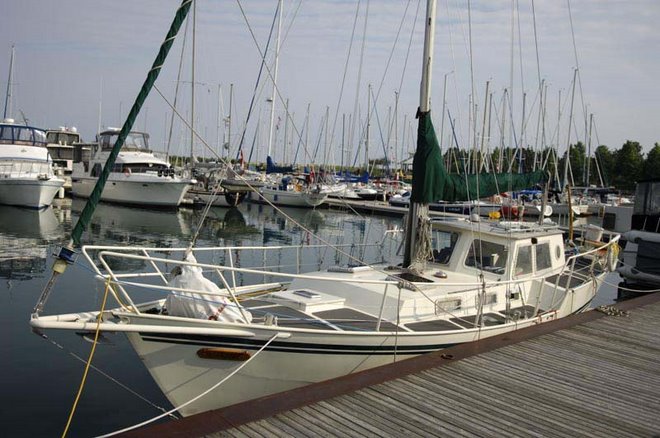
The reason? Canada Post has a...wait for it...pension shortfall. So they are raising prices and cutting service to make sure the already retired and those approaching said state of bliss can get their pensions nicely built up, in case they beat the actuarial death pools and have the temerity to persist. Given my recent and older writings on the topic of "the sailing life versus public finance", I may have to change my name to Captain Cassandra.
To be fair, I understand why paper-style mail is fading: I can't recall the last time I either sent or received an actual letter, although I have stacks of them filed from childhood until about the mid-'90s (I took to e-mail back when it was a UNIX-looking and vaguely woody thing). But, primarily for accounting reasons, I still gather paper bills and receive paper cheques; booting it down to a communal mail hutch blocks away has little appeal beyond the theoretical economies of scale. So sic transit gloria postie, I suspect. Fifty years on, the name Penny Black will cease..if it hasn't already...to be an understandable pun.
So there I was, polishing one of my sextants, when I heard that the BBC is taking a survey on the "usefulness of the Shipping Forecast". Now, aside from the baffling proposal that I have not just one, but multiple sextants requiring a quick rubdown, there are perhaps for some readers some puzzling words in the preceding sentence. The Shipping Forecast is one of the most heeded radio broadcasts in the world, even if it is opaque in its nomenclature and of nearly no use to non-sailors or those not currently standing outside in the rain somewhere in the British Isles (including Ireland).
The Shipping Forecast is a four-times-daily, densely written and comprehensive report of weather and sea conditions surrounding all of the British Isles out to some hundreds of nautical miles. A production of the UK Met Office, who've been issuing it thanks to the initiative of Darwin's skipper Robert FitzRoy via telegraph, shortwave and later, FM radio (Radio 4), it's also now a webpage and presumably also a Twitter feed, a pop-up app and a Facebook page.
Here's the often-heard theme music, which I first heard as a 12-year-old on my first trip to Britain, when, jetlagged and excited to have been anywhere, really, I was allowed to listen to the radio past midnight:
Dulcet tones, indeed: a touch old-fashioned, a little anodyne, perhaps, particularly for a kid who would shortly enjoy punk music, but because the Shipping Forecast was frequently the last thing British people hear before lights out, this short instrumental piece and its lulling tones, along with the near-hypnotic delivery of the Forecast itself, have been strongly associated with Britain and her oft-salty inhabitants for decades. The only piece of music I think is equivalent for Canadians is the "Hockey Night in Canada" theme, and when that fell off the CBC, the pangs were loud indeed. Almost as loud as the ones at our helm when we heard of another marine forecaster hanging up the microphone.
From Jack Tar to ASBO chav in a hundred years.
The British, although their merchant shipping is largely as defunct as their once-unbeatable Navy is now shrunken to near-irrelevance, still think of themselves as a sea people. Like some sort of pasty Phoenicians, they see themselves (against much recent evidence to the contrary) as heirs to a mighty sea-based empire manned by people from a resource-poor, minchingly small land, one surrounded by enemies and with only their wit and their enterprise to guide them to greatness. The Shipping Forecast, despite its ease as a target of satire, is therefore not just a weather forecast, but a reminder of those times and a reinforcement that on the most horrible, gale-blown night, somewhere out on the pitiless sea may be a countryman trying to get home.
Naturally, I am aware that I don't pay for British radio services, and that radio is only one of many ways through which to get information, and I should add that I use such ways and, when in a WiFi-rich urban environment, do not object to them in the slightest. But the beauty of radio is its price, its reach and its simplicity: these are attractive features on a boat, whereas a "narrowcast" dependent on four bars on a satellite phone a thousand NM off soundings is less so. The potential demise of Really Useful, to quote another British institution that may have no place in the future, services like shortwave radio broadcasts and the Shipping Forecast may make passagemaking both quieter and lonelier than has been the case for nearly a century.
Hey, I hear you say, this isn't some stock-picker's ranting blog. What's next, Ayn Rand porn and foaming about fiat money? (Some of you are glad I didn't link up "Ayn Rand porn", aren't you? Me, too.) How does this factor into boating?
Well, boating runs on money, before, during and after any actual sailing. This morning, I received notice that one of our two tenants is moving on, and that, regretfully, my boat-sharing partner of three years (the stalwart Clive) has foreseeable scheduling issues that disincline him from continuing our partnership (which involved a nice offset to my keeping Valiente in the water instead of in a barn or sold off for next-to-nothing) into 2014. Both situations may, in one way or another, cost us. Both are fixable, but not without effort and hard decisions.
So we are thrown inevitably back onto our own resources. What are the habits of saving that are perhaps less obvious to someone trying to get rich enough to leave the middle class for the cruising class? I already buy day-old bread, after all. My wife said we could reduce the cheap red wine budget, but that's just crazy talk for liquids I consider medicinal. Once I encountered a person on an online forum who questioned my (indirect) experience that bad habits could be literally purchased away.
If money were that much of a motivator, nobody would smoke cigarettes anymore either. i'm in the you'd have to pay me more than 20$ club.
I have to disagree. I have evidence to the contrary.
My
father's dead now, but not from lung cancer or heart disease. He smoked
a pack and a half of cigarettes daily from the '40s to the '70s (all the cool kids
were doing it during WWII, when death from torpedo was a more pressing
concern). At some point in the mid-'70s, he got tired of that particular dorsal primate, and quit cold turkey. His
incentivizing tactic was to put away, every day, the money he would have spent
had he continued to smoke. For argument's sake, let's say it was
seven dollars and fifty cents per day (Canadian cigarettes are now and were then irresistible to the tax
men).
Long story short, he did this for about 40 years. When
cigarettes went up in price, he would throw a greater amount of money in a
drawer. He'd bank it every few months in a separate account.
The total saved by the time of his death, and adjusted for inflation, was nearly $110,000. That's a nice cruising kitty by any measure, I think.
With this bundle, he bought three cars...in cash (which
is inspirational to car salespeople, apparently) and paid off a house,
which quadrupled in value while he owned it. He left a nice
mortgage-erasing packet to myself and my sister, although frankly I would have preferred him to have lived longer to be my son's grandfather.
I feel it's important to stress that he
never made more than $35,000/year in his life. Not rich, but then even
bums and the homeless can afford to smoke. This is the societal assumption: Smoking may be nasty, bad or just defiant, but the cost of actually burning the things has rarely been seen as particularly expensive. Even though, like certain industrial and agricultural subsidies, it clearly is.
So even the indigent can usually afford to smoke, not that I imagine that's much of a comfort. While I realize that access to fresh food can be a big obstacle to the poor, I similarly reject
the notion that you can ever be too poor to eat properly, by which I mean nutritiously and without eating a load of over-processed crap. I'm not naive; I realize the entire food industry is offering everyone
they can sucker into taking up the crack pipe of salt, sugar and fat,
but that industry doesn't have to use your bashed-in pancreas or damaged
kidneys inside your lard-encased torso to get through the world.
You, dear reader, do. Eating adequately is probably as much of an educational problem as it is a money problem. And if a money problem involves savings (including savings directed to a boat habit), then maybe take up virtual smoking, so you can quit cold turkey on day one and throw the money (would that be one or two Starbuck's coffees?) into a drawer. Really, the amount isn't so important, and the effort is token. But time, plus token effort, gives one a pile of tokens.
It doesn't have to be virtual smoking: it could be virtual dining out. The restaurants around my house are stuffed with 20-something urban hipsters of the most cliched accessorization drinking $14 cocktails and $5 cups of artisanal coffees. We could live like them, but we couldn't save for a damn thing.
As a sailor, my mustache is non-ironic. It's there to catch the nose-weep from squinting into a nor'easter.
Saving for damn things, like cruising, could mean cutting the cable bill to zero and getting a library card...we get about 2/3rds of our DVDs as library borrowings. It could be switching off the lights or unplugging the phantom-power devices. It could involve keeping shelving in a cool corner to stock up on sale items from the grocery store. If
putting away ten bucks for every day you don't eat McDogfood's or snarf
a sack of chips is the incentive, get on that. The monetary effects,
when factored over time, can be dramatic...like really dramatic.
And, of course, if you aren't a smoking salty sugar gravy gobbler, you'll have that time to pay for more than an XXL coffin.
What the results of smoking salty sugar gravy gobbling...and crack use... may resemble.
It's down to individual choice, something people tend to not want to hear, particularly during credit- and waistline-maxing season. It's become clear to me that the government is going to solve its
underfunding of the old-age pension scam by encouraging people to eat
themselves to death, ensuring that said citizens never claim it.
Cynical, perhaps, but logically, it's the path of least
resistance, if unlikely to ever be stated so explicitly. Also logical is the making for oneself an illusion inspirational enough to encourage reality-based savings. Fair winds to that.
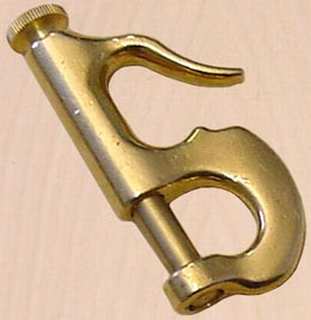
Behold the humble brass sail hank: Is it the nautical equivalent of a buggy whip?
For a guy who knows insufficient knots and ropework, and who is woefully deficient in anchor-themed tattoos, I have a somewhat old-fashioned take on boat gear. Partially, this is based on a reluctance to dispose of that which can be repaired (see "spawn of WWII and Depression-era children" and "part-Scots"); but equally, I respect the utility of older objects, even if they are not as, perhaps, convenient as newer designs. Newer designs can incorporate undesirable (to me) complexity for too little utility: I have an adjustable socket wrench socket that is a little handy, but it feels a little sloppy and...I dunno...isn't as good as the right socket. For me. Today.
The SocketPro: Eh, it's OK.
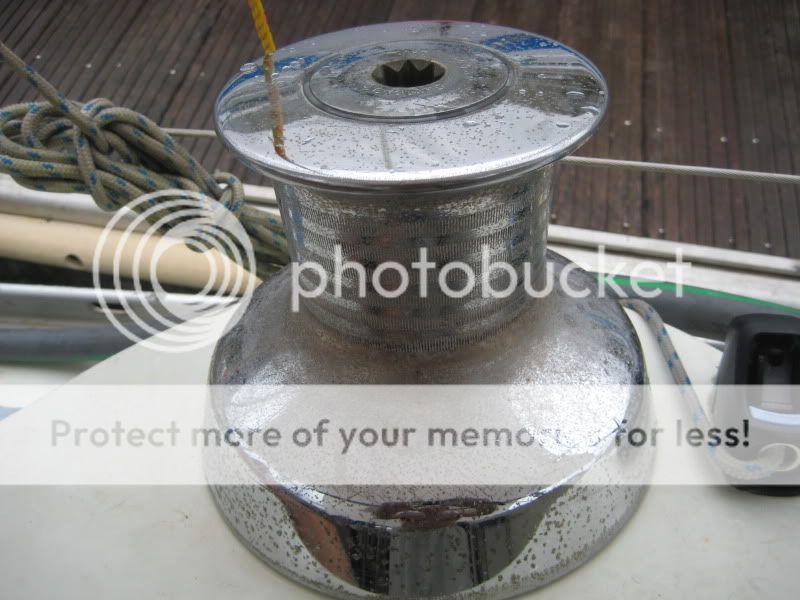
My older boat has non-self-tailing Barlow and even less current, or rather more superannuated, Gibb winches. I sailed for many years with only a manual Whale bilge pump. I have considered sculling oars for the steel boat, for Neptune's sake . To be fair, we don't have a bow thruster nor do we have a desire to weld a pipe for one through our fair bow, so the idea of literally rowing in and out of tight corners...the cheap skipper's Azipod...isn't that crazy.
A Gibb winch. I have these sort on my boom and mast, only in better shape.
Like this, only cleaner.
So it's probably no surprise that I neither have furling on my sloop or on the staysail of my cutter, but that I really don't intend to get it.
To some, this is Luddite and heretical, at least for the cruising crowd. The convenience and perceived safety ... you don't need to go forward onto that nasty, wet and dangerous foredeck... of headsail furling trumps the issue of bad sail shape, furler failure perhaps bringing down the rig and, lest we forget, the greater cost of a sail requiring a complex cut and UV protection and pads, oh my.
Now, I am capable of changing my mind. Bruce and June Clark's Ainia showed me how two things that might have provoked the barest of lip curls...an electric winch and in-mast mainsail furling...could in fact be a safety feature at sea in snotty weather. That's not to say it was a sailing feature...you have to pay a lot for in-mast furling that exhibits a decent shape...but can that trump the safety of keeping one of a two-person crew in the cockpit instead of wrestling a reef in a part-gale? It's hard to argue, even if one hears of the occasional mechanical failure. Likewise, our Yankee jib would be a handful without a ProFurl furler, and I expect we'll keep it. The staysail, however? I can't see a reason to alter the status quo. Of course, there are some who continue, like me to be somewhat iconoclastic on this point, like sailmaker Carol Hasse and voyager Lane Finley.
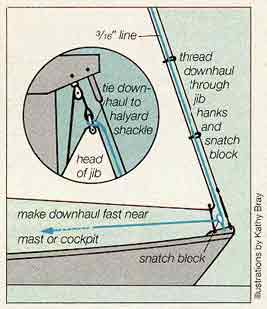
Jib downhaul, diagram courtesy of johnellsworth.com
In discussion of "to furl or not to furl" with a fellow Viking 33 owner (and Viking 33s, being "big gennie, skinny main" IOR-style sloops, have big enough foresails and foredecks to make one envious of furling setups), I concurred with his view that hank-ons continue to have a place in the cruising sail inventory. I commented that "with a vast J-measurement and skinny main typical of the times, bringing down the hanked-on No. 1 can be a chore, so I am pleased you mentioned the downhaul, the installation of which can be done with Spectra line with a double-braid tail spliced (if required), allowing a "deck douse" by steering head-to-wind and dousing from the mast. Easy and you can get your sailorly thrills going forward on hands and knees to bungee the sail flat to the rail or on the deck if conditions aren't great for folding it down. The downhaul line is a simple and yet rarely seen control line I recomnend widely...like I do with the barber-hauler, something else gone the way of the lead line!
"As for our bigger boat, a heavy displacement (16 tonnes) 41-foot steel pilothouse cutter, I feel I have to accept a furler for the Yankee, although I may opt for something other than the current ProFurl, as yours isn't the first alarming story I've heard concerning them, and the idea of a "lockable" furler and a slide-equipped track has great merit in my view.
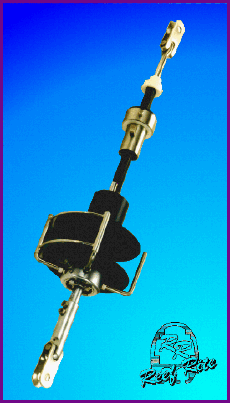
The New Zealand-made "Reef Rite": a happy medium between hank-on and furling?
"Our staysail on the cutter is hank-on and will remain so. It's the size of the No. 2 (a 120% or about 400 sq. ft/37 sq.m)on the 33 footer, so I am going to keep the "light" one and have a similarly sized one made in heavier cloth, but with a set of reef points about one-third of the way up. As I have driven our steel beast at seven knots in 32 knots of wind with the staysail alone, this seems prudent for offshore...that and a trysail track affixed to the Selden mast."
A reefable, hank-on staysail: Nutty or prudent? (c) SVVita.blogspot.com
We'll practice and we'll see. Personally, I have to replace one or two hanks per year at a cost of $20 or so...when I can find hanks. I have started to hoard a half-dozen or so; in the size of foresail I have, big 'uns are getting harder to find. But for sheer simplicity, pointing ability and ease of service, there is still much to recommend the old hank-on way of sticking sail to stay.
In a rare photo that is not of some part of a partially disassembled boat, your correspondent is seen at the helm with fellow Yachtmaster prepper John C. at the companionway, both looking, I think, suitably nautical. Photo (c) Sailing School Brittany.
It may seem facetious to say that the greatest skill a sailor can exhibit is balance. It seems self-evident, as we are enjoined to "stay on the boat", naturally, as the boat, unless in the process of burning or exploding, is inherently safer than off the boat, in the water or (better) in the liftraft or the helicopter harness.
Most sailors try to avoid such situations, and yet, we are seeing on a regular basis of late the consequences of insufficient preparation for a life at sea in a small boat every year. One might say that the balance of having sufficient funds and leisure to go a-sailing is slightly at odds with the time required to develop the necessary skills. Acquiring the boat's a doddle.
Now, the boat we've got (S/V Alchemy) for high-seas mucking about has been both on land or stationary in the water for a number of years. Opportunities for sailing her have been precisely zero, although I did throw her about in big air sufficiently before The Great Refit. I began, thanks to such deliberate thumpings, to feel fairly confident that she's fit for the purposes of wandering the world's oceans in relative safety and even comfort.
Now, while we have available to us the original 33 footer (S/V Valiente), the amount of sailing we've be doing in her has been neither extensive nor particularly challenging. "A nice day out" is the usual fare, with a couple of occasional 30 knot rides with friend Jeff, who, like me, enjoys when the boat moves. But, en famille, this is because "time for sailing" has fallen below the slots of "work to pay for life and boat refitting and fractionally employed wife and child", "parenting" and "boat refitting". I play in a basement band on some Friday evenings, but that's essentially it. I have been aware for some time that my sailing skills, despite some time spent on deliveries and in races, were becoming somewhat eroded, if not actually stale.
Not a model of balance, really.
So I purposed, apparently audibly, to attend a Royal Yachting Association course. I knew I wanted to learn about all things tidal, about calculating for current, about mooring and anchoring under sail, powering off a spring line against wind, and so on. Some of these things I had done in the classroom, and some in one or both of our boats, but the math aspect of calculating current, tide and their effect on course to steer was, shall we say, near-virgin territory. Our original plan was to have a shakedown cruise to Canada's Maritime provinces and to overwinter in Halifax, where myself and my wife would immerse ourselves in the lore necessary to take the Yachtmaster Coastal course, for which we both qualify in terms of offshore miles, and which largely agrees with our watch-keeping and skippering experience, and for which we possess the Canadian versions of radio operator's and marine first-aid certifications.
Funny looking port-side burgee, if you ask me.
I mentioned "audibly". My friend and, as it has turned out, patron John C. likes to take sailing courses once his boat is hauled out and likes company. So when he suggested that he would splurge some of his surplus air miles to get me to an RYA Training Centre to take a week of Yachtmaster prep, it didn't just seem churlish to refuse, it seemed stupid: If one is anticipating going into tidal waters (such as the St. Lawrence and the coasts of New Brunswick and Nova Scotia, parts of which have among the greatest tides on Earth), one should perhaps bone up on the topic.
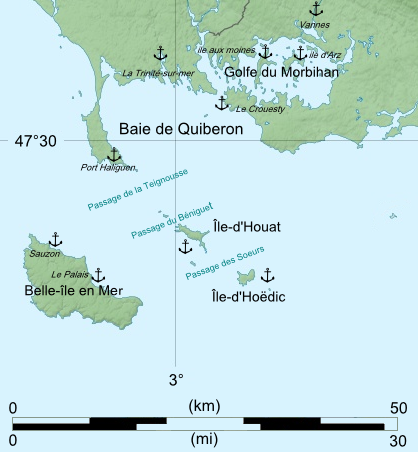
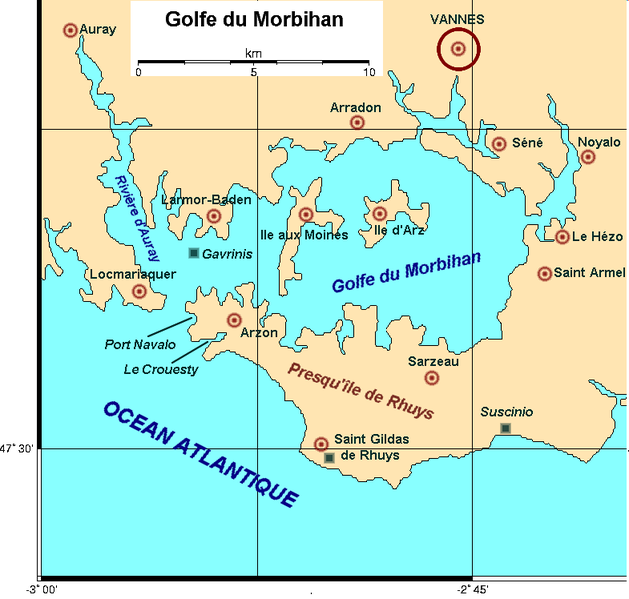
The Bay of Quiberon and the Golfe du Morbihan: Tides, they have 'em.
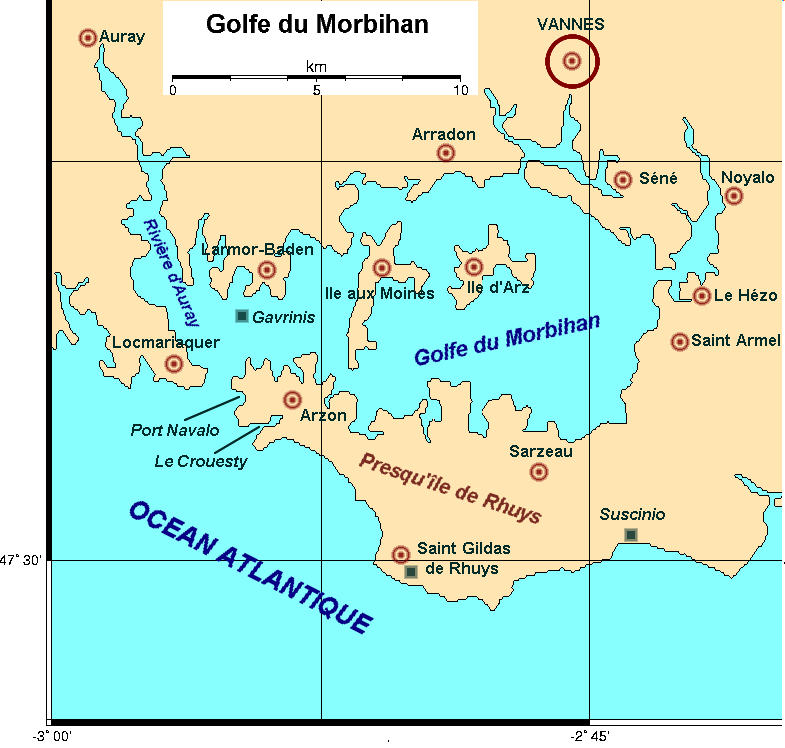
The problem was first "what place", and then "what time". John wanted to go in November after our boats were hauled out, and I knew I had a great deal of client work (which I could ill-afford to decline, particularly if I was going to pop for an RYA course in some distant area) in hand, plus some regular, meaning cyclical, work commitments, plus hauling two boats. Luckily, John has a more open calendar than myself, and a more probing mind when it comes to logistics. Having little response from a number of RYA "shops" here in Canada and in some places either harder to reach (southern Portugal) or less clement (mid-November on the English Channel), we fixed on Sailing School Brittany, run out of Vannes on the south coast into the Golfe du Morbihan and Quiberon Bay.
A fascinating, compact cruising ground and what I would describe as a laboratory for sail training in tidal conditions.
John freely admits his vices mingle with his virtues as expressed by his love of fine food and wine. Add to that his fluency in French, the (relatively and conditionally) benign late-fall weather on the south side of the Brittany peninsula, the tidal and current complexity of said area, and the British-run (and yet equally Francophile) RYA-certified sailing school, and the die was cast for France.
Personally, I was working until about an hour before I hopped into the car for the airport on Nov. 8. I returned on the 17th and have been working pretty solidly since then. The evidence is the silence in this blog: if I'm posting a lot, it's either too hot or too cold to work on the boat, and I haven't got the right amount of freelance gigs. But now we are back to the question of balance: While anticipated as an order of events, this "wedge in a sailing course in the shortest possible window" will re-emerge as Not the Best Plan later in this post.
Once located after a chastening cloudburst, this was Hotel Quite Acceptable.
But I won't foreshadow overmuch. The trip was an ordeal, as I find all air travel to be since You Know When, but it wasn't worse than I had expected and everyone was civil for a change. Upon landing in Paris, we opted to change trains to one for the largish town of Vannes in Brittany arriving three hours earlier, meaning we'd be awake and moving for 25 instead of 28 straight hours. Some hustling and rapid French exchanges later, and we were zooming in uncomfortable seating through the French countryside, which seemed remarkably untouched by fall colours, if garlanded in grey, weeping clouds and stoles of sunlight.
One of the publications I regularly work on has a distressingly similar palette to this French "W.C."
A 45-minute nap, a shower and a brisk, interrogative stroll through the helpful and friendly Vannetais citizenry later, and John and I were plonked in front of a very tasty cafe dinner. And wine. Lots of wine on this trip. A restorative if not entirely sufficient sleep followed. Alison, Missus Sailing School Brittany, picked us up the next morning (a Sunday, and despite what you may have heard, they are still very keen on church bells in France) and drove us toLa Trinité-sur-Mer, a small town at the north end of Quiberon Bay. Regarding the various little, and often riverine, ports we sailed to: it's perhaps a mark of how popular this area is among French sailors that most of the towns seemed vestigial to the vast marinas beside and in some cases around them. Even by eyeball, most of the marinas seemed to sport between 1,500 and 2,000 slips, few of which seemed empty, even if many, many boats had clearly not been visited in some time. If there's a euro crisis in Europe, I would suggest it's skipped this bit.
The IDEC trimaran: Around the world, solo, in 57 days. Yikes. It looks faster than a moving boat tied to a dock.
To be fair, this has got to be the heartland of French sailing, and France is arguably the most sailing-crazy nation on Earth. The English would prefer to think they are the cradle of yachting, and they are no slouches, but they name streets after local guys here, guys like Francis Joyon, Eric Taberly, Olivier de Kersauson and even an old guy named Jacques Cartier...I think the Tragically Hip wrote about him.
One of Taberly's novel...and successful...experiments, Pen Duick V, the first boat with water ballast tanks. We docked across from it. This was at Port-Haliguen, on the "presqu'île de Quiberon".
Anyway, apart from the reasons we were there, I would say "cruiser and racers' paradise" to describe the well-sheltered Bay and the even more protected (if wickedly tidal in spots) Golfe is no exaggeration. It's roughly about a hundred square miles in area, and it would be hard to sail for more than two to three hours before hitting a vast, well-equipped marina with very good food and drink only a steep ramp (tidal, remember?) away.
Oh, there's a nice metal beauty!...across from Pen Duick V.
Hmm. Nothing online about this impressive vessel, even given its unusual name of Catgil.
We were dropped by Alison at La Trinité-sur-Mer to meet her husband Dave, a former businessman turned professional sail instructor. Dave skippers Tamara, a lightly used and exceptionally well-kept Bavaria 36 from the middle of the last decade.
Tamara at Vannes across from le Capitainerie, the rather official clubhouse for the popular Vannes marina
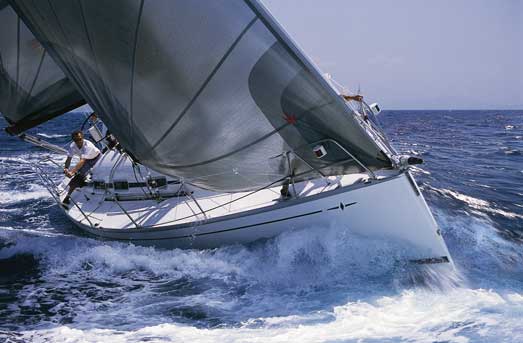
And here's a video of that vintage of Bavaria, as driven by a Dutch fellow in the Channel:
Please note that apart from a brief 30-odd knot squall that kicked up very Lake Ontario-like square chop of about a metre inside the Golfe, we had very little in the way of wave action. Currents, however...
Now, as for the rationale of picking an RYA course, it can be summed up in terms of throughness, a fairly rigorous review of instructor and examiner standards (although John has found this last part a little on the variable side in the past), and the general respect given to RYA certification well beyond Europe.
I won't delve into the debate, perhaps new for some of my American readers, on the merits of yachting education and subsequent certification, except to say that I personally believe that given my informal, scattershot and non-familial (my father was in the British Merchant Navy, but personally never messed around in boats beyond enjoying an occasional row) apprenticeship to the sea, boat handling and navigation skill sets must be objectively measured against some sort of knowledge-based and experentially evaluated standard.
John and I concur that Canada does not have such a standard, save for Canadian Power Squadron course and some auxiliary instruction of what seems to me to be a touch feeble. Enough to keep one off the rocks, but insufficient for ocean-crossing. I'm not alone in this: there are RYA schools in Canada, but they were
neither clement, as well-provised or as logical to attend as was the one
in Brittany.
With the RYA, there are two paths: one leads to better skippering of a private yacht, and the other to more commercial ends, including chartering or smaller commercial vessel operation.
The RYA, by contrast, has graduated courses to take in a fairly linear way from lubber to skipper well-prepared to go pretty much anywhere. Perhaps a touch ironically, the RYA courses were originally devised to keep the government out of boating, and yet have become a de facto regulatory reference in places where no such boating standards exist. It can lessen the cost of one's insurance, as well.
Now, does the average boater need RYA courses? No, not necessarily, but then, who is the average boater? A weekend fair-weather sailor could be hit by a squall stronger than any I've ever experienced (the middle 60s on Lake Ontario, the middle 40s in the Atlantic). As an analogy, automobile commuters don't need winter or defensive driving courses, either, but it's hard to argue that having such training can increase one's odds in challenging conditions.
For North Americans, ASA, CYA and various Power Squadron courses can work as sail training. If you throw in plenty of sailing in all conditions (which many sailors frankly dislike, avoid and feel challenged by, understandably), plus a bit of yacht delivery work, plus some first aid training, you would generally match the lower tiers of RYA certifications. But what would be lacking is that measuring stick whereby one's knowledge (and reaction speed and boat handling choices) are compared to a recognized standard. What would be lacking is balance.
That's what I was looking for, and, Neptune help me, that's what I found.
Still jet-lagged and mentally compressed (well, I was mentally compressed), Dave, John and myself left for five days aboard Tamara. Dave's Bavaria 36, which he bought out of charter, sported three cabins, which I thought was hard to do on a 36 footer, but proved quite serviceable in actual use. The general idea on this sort of course is to sail from port to port in the daytime, and to include some night passages for the purpose of taking bearings, estimating distance off and generally playing "spot the phare" against a sometimes busy background. French buoyage is generally excellent, if often unlit, and Quiberon's suitability as a cruising and as a sailing instruction zone of high relevance is based on the fact that it's full of rocks, ranges, shoals and markers for all the above. The French nautical charts are easily the match of the British ones, and Dave said he went through three sets of the local area per instructional season...even with soft "2B" pencils, the constant erasure and handling wears even the sturdy paper out.
Oh, buoy: Throw in sound and light signals and day shapes RWG light sectors and you've got a brightly coloured stew.
Back to Sunday: After a brief but thorough safety drill from Dave, who as expected, keeps his boat in full compliance, as far as I could see, with all flares, extinguishers, lifejackets (what we call PFDs) and so on, we shoved off into a sunny going cloudy going breezy day, i.e. Brittany sailing weather. We preceded past the unfamilar-to-me IALA-A buoyage (red right leaving on lateral marks!) south into the Bay making for Port-Haliguen, where my failure to recycle my knowledge of the rarely seen (on Lake Ontario) cardinal buoys would first rear its empty head.
This was better than the one I got from the CPS 14 years ago.
See? No grid beyond the rose, nor error offsets, nor handy scale to use with dividers. Oh, yes, there were dividers.
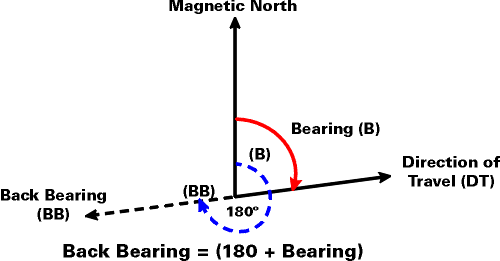
On an RYA course, one uses "traditional" (read: non-GPS-based) coastal navigation, assuming one can see the coast. This can involve working out a three-point fix, and keeping dead reckoning from a last known fix, such as the aforementioned buoys and markers. I won't define these terms except to say it's possible to get a little rusty with concepts like back bearings and actually consulting the boat's deviation chart and calculating the annual compass variation (also called declination) in order to determine a compass course to steer.
If you can't see the lighthouse ten miles ahead of you, try to see the lighthouse ten miles aft.
Now, I know and actually use this stuff in my own chartwork...I don't have a working plotter on Valiente, and that means the GPS is used (when it's used at all) to determine arrival time estimates, distance to the next waypoint, and so on. Most of my nav is still paper-based and my pilotage is done using hand-bearing compasses. In other words, I'm mostly in this headspace already. But it's markedly different in a new environment, with new numbers (the variation in Lake Ontario is considerably larger and, at circa -10 degrees, easier to manipulate without pen and pad), the effect can be a little disorientating. Or so I found.
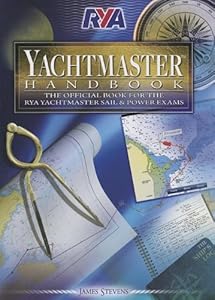
The bible, or near enough, as it was an object of near-religious veneration and scruntiny.
Thrown into that mix is a tidal range of about 4.5-5 metres. "Chart datum" isn't a worry so much on Lake Ontario, the depth of which is for reasons of shipping kept above it. Here the tides are, while not extreme, a big consideration, and considerable research is required. It's picky, if not overly complex, but the upshot of understanding tides is to grasp that the hours around high and low water are (usually) when the current is most slack and the current imposed on the water is at its least. Conversely, the point between the high and low tides can be (usually) the hours during which the waters are moving fastest, which in turn can help or hinder one's progress.
Note the "usually" there: In places with unusual geographical or seafloor features, or which feature some sort of restriction, there can be a predictable delay in the tidal streams, and a corresponding misalignment of the expected currents. So you could have the same tide both "with you" and "against you" in a rather short period of time and stretch of water. Welcome to Brittany!
Monkish postures aside, this was a fairly common scene aboard Tamara. And yes, we all require geezer glasses! (c) photo by J.C.
Luckily, there are crib notes and techniques and almanacs to help turn this sort of voyage planning into a Big Math-light Picture. Briefly, one might determine from an almanac of tidal ranges a particular day's tides from what's called a primary port. The closest one to us was Brest, so we note the tides at Brest (there were two highs and two lows per 24 hour period), correct for local time if necessary (this is why you want a clock reading GMT/Zulu/UT or whatever you're calling it); extrapolate to the closest secondary port (a plus or minus X number of minutes plus a height offset); and then consult the tidal stream information in your (in this case) handy Bloc Marine book for your area and the time of day/tide during which you'll be sailing. It will be quite evident if you'll be helped or hindered by billions of litres of water moving around, or whether the wind will oppose the current, making for a potentially nastier trip. Factor in the current offset into your proposed course to steer (the concept of tidal current set and drift). It may appear when that number is finally determined that one's boat is crabbing at an angle to reach a selected waypoint. That's because it is.
Again, this is stuff I knew. I covered tidal concepts in my first CPS course in 1999. But I hadn't really experienced firsthand; when one leaves "with the tide" you don't really think about it at sea until you again approach the land. I find it fascinating, and doable, but I needed to refamiliarize myself with it, because it came back slower than a man paying to learn would prefer. Apologies if I've made errors in description and logic...I'm typing this out from memory, not from the books...
...I didn't have time to do more than leaf through, glancing at chapter headings.
This is a Breton rock. Most of them seem to be called "the sheep and the lambs" or "two ducks" or "the sick calf" or something equally agricultural and Welsh-sounding. Breton is Welsh with French polish, as far as I can tell.
But it wasn't all math and tables and drawing little arrow markings on tide vectors and talking about how to avoid shooting rescue helicopters with SOLAS-grade flares. Some of it was about seeing very pretty seascapes emerging from various forms of French precipitation.
This is the small island of Houat. It is pronounced "What". Bilingual hilarity ensues.
Some of it was anchoring under motor and under sail. That's an anchoring dayshape, a.k.a. "an anchoring ball". The fishing boats, which are usually in sight, have a full set of shapes they display to indicate what they're up to, and, by inference, what they can be expected to do next. Regarding the anchoring ball, iIn 15 years, I've seen one exactly once on Lake Ontario. There's no cops for this sort of thing to my knowledge (although if you screw up and haven't displayed the right shapes or light, etc., there may be lawyers). It's just a case of learning best practices.
More Houat, during a lunch stop. It kicked up past 20 knots during a delightful repast here, making for a good run.
French weather is pretty English (i.e. charitably described as "changeable" and less so at "barely predictable despite the locals having basically invented meteorology") in its moods and rapid cycling. A bit like the tides, really.
One of these is probably Hoëdic, Breton for "isolated danger mark". Note the untouristy weather.
Nonetheless, despite the educational challenges and a spot of condensation in the V-berth that just wouldn't dry, the sailing continued after an interesting, misty approach to Port du Crouesty (where skipper Dave stretched his legs in search of crusty French bread and we drank at a bar called Cape Horn...arr...), the weather improved.
Note the liferaft: This "RYA Training Centre" is equipped forproper ocean travel, even if the Bay is a rather cozy corner of the Atlantic...it could get nasty quickly.
Quite a bit, really. A very high pressure system (1032-1042 mb) had isobars steep enough to bring the occasional hatful of wind, something fairly unusual in my experience over continental North America, where high pressure usually means "calm to angel-fart zephyrs" and "get out the assymmetrical". Anyway, we always had enough wind, even at night, to move the boat.
Pretty benign for November. Temp: about 10C
After ceaseless MOB drills involved a weighted fender named Bob, we timed the tide to enter the Golfe du Morbihan for more ceaseless MOB drills. Both John and myself eventually improved, even if it was akin to driving nails made of butter to achieve a semi-timely "save". "Man overboard, point, heave to, throw something floaty to poor Bob, start motor..." I have dreamt these lines since my return. Thanks, Dave...sort of...
Weirdly, the Golfe resembles parts of Georgian Bay, perhaps 500 years in the future and littered avec chateaux.
We had some fun in the Golfe. The tidal streams inside it are delayed about two hours from the Bay "outside" and you can have the interesting sensation of seeing four knots from the speedo and 10 knots on the GPS when it's in your favour.
A visual cliche, to be sure, but it was followed by a proper thirty-knot line squall. I like helming in proper line squalls.
We returned by sea and a sort of canal-like approach to the medium-sized town of Vannes, which had an impressive number of decent restaurants and plenty of little French kids rowing down the middle of the channel. My Fox 40, a whistle unfamiliar to skipper Dave, came in handy.
The Bristol Cutter Cariad, the sort of working boat that would guide bigger vessels through appalling weather we didn't really see.
No time to step aboard and explore, alas. Like Carnac, so close and yet...
We covered off various boat-handling techniques, such as the useful "spring off the dock" stern line to midships dock bollard method, and I gained a new respect for the concept of looping docklines around door-handle type cleats, as opposed to tying off, but that's a separate post.
The end of the story is only a little sad. Nick the anecdote-stuffed RYA examiner came aboard and we presented elaborate (to me) passage plans to get us not only into three of the local Bay of Quiberon ports we'd already seen, but to cover a 100 NM passage involving (at a posited five knots of boat speed) various tidal and weather conditions, as of the day of the exam. After submitting these plans and after significant ex tempore talk on safety, weather, what three blinks in the fog might mean, and other nautical minutiae, and after approximately nine hours (I'm not joking) of examination, John achieved his Yachtmaster Coastal certification.
Long story short, I got into skinny water (but didn't touch, at least) on the wrong side of a green buoy the size of a Liberty Village condo and failed the exam. Fatigue and the distinct sense of my serious underpreparedness foiled my concentration, but I don't regret the attempt and feel I got plenty of value and instruction of the experience.
Now I have a better sense not only of what's involved, but where my weak spots are (I HAVE to get out on deck more and let the missus drive...which she has resisted, but should not). I found the quality of Dave the 'prepper' and Nick the examiner to be exemplary, and would encourage anyone wishing to try for this sort of certification to consider choosing Sailing School Brittany for top-flight instruction on a well-found vessel.
While I let myself down a bit (and part of that arose from a very compressed work schedule in the run-up), I cannot in any sense fault either the coursework or the instructors' delivery of it. Well, maybe a bit more weather theory might be an idea, but that's a very small cavil. I've received no price break or footrubs for the above sincere endorsement; I really believe it was full value for the price and a real-world chance to review the holes in my seamanship canvas, so to speak.
That's the new Jeanneau Sun Fast 3600 rafted up to Tamara in Vannes. France showed us an unbelievable volume of boats, several of the "super hot" variety. Also of note are the greater number of fenders called for when tidal current is about and who knows how many boats may raft onto one's boat.
I haven't even discussed the superb boat provisioning/catering, which was by Alison, a former pro in the field, and was superb. So despite "unfavourable conditions and unlooked for outcome", I am likely to return, better prepared, and better studied, and I think I'll nail it next go round.
While this was taken on November 1, a day later than Hallowe'en, it illustrates how even a "moderate" gale of 40 knots or so can create havoc in the channel just outside of my club's basin. Conditions like this are not particularly rare.
Photo copyright Eric Jacob.
What could be more appropriate for an October 31st post than to list the horrors of hauling out? As I write, there's a warning of a 45-knot (gusting 60) gale that's supposed to lash Toronto while I am herding a bunch of Halloweenies on a search for sugar. And I still have a boat in the water.
But first, the equally windy tale of the boat that is not still afloat.
Every baby needs a cradle.
Usually, I am driving a safety boat over the two days of my club's launch and haulout process. This year, some welcome work meant that while I could test a new foul-weather jacket under real-life conditions (it passed with high marks), I would not be able to actually be on station for the Saturday haulout. So my wife and I put the cradle up (above), brought the boat over to the seawall, and I wished her well with a 0700 h call (still mostly dark at 0700) in increasing wind and rain.
Funny, this worked in the spring...
First bit of horror came with the realization that the former sling marks (see red tape on top pipe rail) have altered, no doubt because the new engine and gear aboard has shifted the center of gravity. Mrs. Alchemy was called over to consult.
No one looks happy, a bit of a theme in a cold gale.
Eventually, air got under the boat...
This will change yet again when I shift that load of lead "trim" out of the bow.
Note the "cinch belt" keeping the slings from sliding around and terrifying the villagers.
Once down, it was clear that staying mostly still at a dock does the bottom paint no favours.
Ew.
On the upside, with a number of the larger boats (ours is a large boat, but has never been among the club's larger boats) off to winter digs featuring a TraveLift, there's some welcome space between the boats and I don't have to put the ladder off the stern.
Most of this will in fact dry up and flake off. Or I will fix the power washer which has blown a gasket.
A rare, if semi-obstructed, side view of Alchemy. The paint job's holding up thanks to Mrs. A's summer two-part touch-ups.
What big fenders you've got!
So as the weather got worse...
And out of focus.
...and worse...
Not present...the 20 foot surge over the end of the runway at Future Boat Club Killer Airport.
...the decision to defer the small boat retrieval out of the Western Gap until a calmer Sunday was taken, and a sodden but successful Mrs. Alchemy splashed home before hypothermia took hold.
Whoops. Time for a brushdown.
The boat bottom is surprisingly mucky, as is the prop. I will apply some elbow grease to see if this is, as I suspect, superficial fouling.
Dermabrasion, steel boat style
Meanwhile, the Old Girl is still afloat. I'm scheduled to haul out for Valiente's winter storage at the redoubtable Uli's Pier 35 on Sunday afternoon, but the above-noted gale tonight and tomorrow argued for some seamanlike prudence in the form of lashing and doubled dock lines.
Boom lashed, tiller lashed, bimini lashed and boom pointed at direction of gale.
After a pump-out of the existing rain and some lashing of the bimini frame and tiller, I checked the state of charge of the batteries (100%) if the bilge pump needs to work while the power is down (or the power cord is worked loose). I know from experience that water WILL sluice down the mast, particularly from the expected SW direction of the gusty weather.
Bow lines doubled.
Doubled springs and stern lines and reposition big ol' fenders.
Midship spring and doubled bow lines to port.
We'll see if she's still there on Sunday. I would think so.
So while I didn't have the time for a late-season sail, my boat partner Clive did, and apparently enjoyed himself. I'll keep my fingers crossed that the boat will be undamaged when I return on Sunday and that the Hallowe'en Gale is more treat than trick.
Not seen: the actual sailboat sailing in the south-eastern part of the harbour. Looked nice.
UPDATE: November 3, 2013: Aside from the climatic dice-rolling that saw the overnight temperature in Valiente's cabin dip to 0.2C, the lake did not seize and Sunday was bright and only faintly breezy. A good day to redline the engine (based on some possibly fictional idea of "blowing out the carbon/oiling the rings, etc.) and get to Valiente's winter quarters for the 40th time.
Behold a rare video, taken by boat partner Clive. It is very boring, except for the fact that it demonstrates how slowly one should move when tugging four and half tons of sloop.
Blurry because it was very much dusk at this point. She's pointed more or less into the wind for a change.
After some intense and Clive-aided cradle assembly, Honda genset-running and sling-positioning, and a measure of the usual standing around and waiting in the surprisingly busy confines of Pier 35, the old girl was hauled without incident, rapidly winterized in engine and bilges, and will be visited in a few weeks for further lashing and prep. Despite a degree of under-utilization this season, which was predictable due to various workloads and external events, she had a good summer, and the new standing rigging is keeping the mast up and the sails pulling.
The online log of S/V Alchemy, her restoration, her crew and their voyage
“You never enjoy the world aright till the sea itself floweth in your veins, till you are clothed with the heavens, and crowned with the stars: and perceive yourself to be the sole heir of the whole world.”-Thomas Traherne
"He that has patience may compass anything."-François Rabelais
"The Great Lakes sailor is wild-ocean nurtured; as much of an audacious mariner as any. "-Herman Melville
"[The sea is] neither cruel nor kind ... Any apparent virtues it may have, and all its vices, are seen only in relation to the spirit of man who pits himself, in ships of his own building, against its insensate power." -Denys Rayner
“For those who believe in God, most of the big questions are answered. But for those of us who can't readily accept the God formula, the big answers don't remain stone-written. We adjust to new conditions and discoveries. We are pliable. Love need not be a command nor faith a dictum. I am my own god. We are here to unlearn the teachings of the church, state, and our educational system. We are here to drink beer. We are here to kill war. We are here to laugh at the odds and live our lives so well that Death will tremble to take us.” -Charles Bukowski
"A dream you dream alone is only a dream. A dream you dream together is reality." -Yoko Ono
My wife, my teenaged son and I plan to start voyaging in spring of 2020, plagues notwithstanding, for an estimated five to six years. I hope to move us aboard before that point to work out the kinks of living on a boat.
The careful reader will note the URL of this blog has "alchemy 2009" in it, a reference not only to our boat's name, but also to the original, anticipated departure date.
This is called "tempting the gods of the sea and life in general" and will not be modified. You have to know when to fight, and when to appease. Frankly, it matters that we go, not when we go. This is a good lesson for all aspiring voyagers, I think: the hubris of long-range planning lurks like an evil watermark on every "to-do" list.
Here you will find various notes on our preparations, labours and education as we try to become better sailors in a good old boat. I hope to continue to discuss in this blog the realities of preparing for a marine-focused extended sabbatical, the issues both mundane and philosophical confronting the potential cruiser, and the efforts required by everyone involved to make it happen.
Please note that all text and images on this site are copyrighted and may not be used without permission of their respective authors and creators.
Please note that I have not bothered to resize photos and they may be seen at full size and aspect ratio simply by clicking on them. Some photos formally hosted on third-party servers are not at present appearing; I will locally host these photos as I can afford the time to relink them.
Please also note that anonymous comments are usually spam and will typically be deleted without reading.
Author's text and most images other than product shots specifically created by product manufacturers are copyright 2006-2026 M. Dacey/Dark Star Productions. Photos sources linked from online news and related organizations are copyrighted to their creators.
Middle-aged, bookish Canadian with compact family in process of exploding career and prospects in favour of lengthy, low-rent sabbatical has boat, seeks ocean. Must have non-smoking bilges.
All contents (C) 2007-2021 M. Dacey/Dark Star Productions