My primary clients since the mid-'90s were kind enough to throw me a lunch party. Very generous of them.
A couple of weeks ago, I attended a lunch in my honour, which was a pleasant surprise, as it was thrown for me by my clients for whom I've been a contractor since mid-1996 in the roles of graphic designer/layout guy and, latterly, editor of their many publications. The firm, when I started working for them, was just four people in an attic office; now, it's over 30 analysts and has been acquired by a U.S. firm, which was, a few months back, itself absorbed by an even larger U.S. firm. All through this time, I've beavered away as a freelancer, and the amount of work, while never large, was enough to live on when combined with rental income and the modest earnings of Mrs. Alchemy, who has worked for a wildlife rescue charity for about the same time.
But, as the meme has it, the cake is a lie: I am retiring from this day gig, much as I "retired" from full-time salaried employment in 1999 (and used the "shut up and go away" severance sack o' loot to buy our first sailboat instead of, you know, a minivan or a lump-sum mortgage payment...). But I do not rule out occasional work of a less-time-sensitive nature for this and other firms, as my skill sets are largely portable, save for those relatng to boat maintenance, repair and operation. That's hands-on, baby!
Besides, I have plans to write articles for the few sailing magazines still extant, and to change this blog for a new, "on passage" blog where the emphases will be less on boat repair and maintenance and more on where we go, how we get there, and what we think of the passage-making life. I will also (sorry!) have ads on that new blog and will be supplying content to a You Tube channel as this seems to be pretty common these days....but ours will have fewer bikinis, and you'll thank me for that later.
I have a background in film and television productions and friends who are already doing this sort of "sailing television" quite successfully, and we hope to bring a slightly different angle into play that we hope will be of interest...but more of that after we leave!
In the meantime, work progresses...so many projects...
The rarely seen Admiral in her natural habitat: holding a screwdriver while I tighten a Nylok.
This object is an Ongaro wiper motor. It's positioned to take a short arm and a large wiper blade right in the eyeline of whatever person happens to be at the pilothouse helm seat. I'll hook it up before departure, but I wanted to get the wiring run up to the pilothouse roof in now. That's a skinny mounting block of UHMWPE to spread the load of the motor and all the bolts are sealed with 4200 as well as being quite protected by the pilothouse roof overhang in this location.
The depths I'll go to...
This is the Navico forward-looking sonar transducer fairing. It needed a good demucking, and while I'm unsure whether its functions were affected by the small amount of growth that had accumulated last season, it doesn't hurt to give it a once-over.
Every boat needs a big driver.
This is the screwdriver I dropped over the side when I demasted for the winter last October. I can't recall if it belonged to my late father, or if he had got it from my even later grandfather, but it's easily 50 years old and is of a great length to spin off a big-arsed turnbuckle, which is how it ended up in the drink. When it happened, I was right on the stern of Alchemy, and I noticed the location of the bollard on the sea wall next to us. So, when the water cleared to near-transparent last week on a near-calm air day, I saw the screwdriver on the bottom. I rigged a big magnet on a length of line, extended that line out with a boat hook, and snagged the tool on my first attempt. Some wirebrush work later, it's back aboard and will be getting a light lanyard through that handle soon!
The prop minus the magnesium anode suitable for fresh water. The prop's been cleaned since and the anodes arrive this coming week from Nautilus Propeller.
Between boat stuff, the annual tax-prep collation, and doing some final fixes on the rental-income house in Trenton (which was rented to a nice couple as of April 1!), it's been a very busy time here in Alchemy Land. In fact, until the last weekend in April, we are on land in "winter mode" and are doing the things necessary to enter the boat's natural element of water without bringing too much of it inside, so to speak.
Great for ventilation, less so for buoyancy.
There was a superflous speed wheel mounted in the hull to a long-gone sensor original to the boat on the port side of the engine bay right where I pictured putting a water tank. So I had welder-fabricator extraordinaire Andrew Barlow plate it over...
This involved deployment of the fire blanket. I've been down this sparky road before. Oh, and that gruesome parquet flooring in the pilothouse will be gone in the near future, along with the yard dirt it's collected.
The burning ring of fire.
Andrew put in extra material to ensure not only watertightness, but strength.
I have referred to this book in the past. It's a great compendium for any boat owner, but has particular relevance for the metal boat owner in understanding the role of stray current in the water due to marina wiring, faults in the power setup aboard or other related issues that can eat (in our case) steel.
Yes, that's the aft bilge, or "smugglers' cove". You can see where the bead is running by the cooking off of the plate. And no, I didn't breathe in the smoke, which is toxic.
To this end, I decided that the impending cruise down the St. Lawrence needed a rethink of the somewhat casual approach to anode deployment on Alchemy...casual not because we were ignorant of the issue, but because we had some basic anodic protection in the form of magnesium anodes on the bronze prop hub and on the aluminum rudder and little evidence of damage elsewhere.
But we can't count on being in well-serviced waters once away from home waters. So I decided to acquire anode plates. Big anode plates.
DO NOT PAINT. To do so indicate a misunderstanding of the function!
Aside from "Martyr" being an apt name for a "sacrificial anode", I have come to accept that aluminum anodes of this particular grade are the best choice for our steel boat, and even for our aluminum rudder (of a differing composition/grade of aluminum). After a fair bit of research, I think aluminum anodes are the way to go. Should I change my mind, we can always switch, thanks to the way these are attached to the hull, to zinc anodes, which are also appropriate for salt water...which, after all, we won't be in until we pass Quebec City. Magnesium is right out in salt water, by the way...it apparently fizzes away in a matter of weeks should stray currents be present.
The daily grind of the boat fixer.
There are, typically, two ways to put the anode in contact with the hull material it is supposed to protect. One is by removing all the coatings on the hull to reveal the bare metal, and then directly welding the anode by tabs on its ends to the hull. This is common on commercial ships.
The second method is to make a mounting plate with welded in studs of appropriate length on which the anodes can be bolted. This involves grinding off the coatings to the area of the mounting plate and welding the plate (which is stainless steel plate with 1/2 inch stainless steel studs) directly to the hull. This gives the desired direct connection between anode (alu brick) and cathode (big old steel hull) and should do the trick. Yes, there's a bit of drag created, but not as draggy as a rusted-through hull would occasion. We have aluminum anodes on the rudder now and are just awaiting the arrival of a pair of aluminum prop hub anodes this week, one to install and a spare.
It's odd to hope you never see this deployed in earnest, or in the absence of the main vessel, really.
Having a freer hand with the boat gear purchases made the recently visited Toronto Boat Show reviewed last time a lot more fun than usual. But I've spent a lot of time in research/review mode, as well, trying to make the best choices in gear for our vessel's voyaging. First up of the "big buys", if just about the last to arrive, is the Viking RescYou six-person liferaft. Last to arrive, because the clock starts ticking on the service schedule from when the raft arrives, and we don't need to mount this until after we launch in late April. We also got the rail-mounted cradle and the "hard" container, as this isn't something I want to muscle out the companionway if things go pear-shaped. We already have a ditch bag and are debating its contents, but a handheld watermaker is already in there.
Now, to rig jacklines and bolt padeyes in all the right places.
Continuing on the safety front, we now have a pair of Wichard ProLineR 2m/1m safety tethers. I picked this version for flexibility as I plan on installing Kong Tango carbiners on jackline webbing as needed and snapping onto that. This allows the smaller shackle to be used on "static" clip-ons, such as padeyes on the mast tabernacle or wire. A shout-out to Attainable Adventure Cruising, which has been, as in so many other areas of offshore sailing, a source of great value.
Self-rescue the better way.
Now, tethers keep crew on the boat, when used effectively and without exception. But you'll see the problem inherent in the system: human behaviour, plus simple misfortune of, say, tripping off the boat. There are a number of ways to address this, starting with "always wear your PFB on deck. Always." Now, after that, the options multiply. We've had PLBs (pictured is the successor to ours), and we have liferings and throwing line slings and danbuoys and assorted means to retrieve a COB (crew overboard). But the device pictured above is a step beyond.
Arguably, the most dangerous time for a crew is watchstanding at night; smaller crews, as ours will largely be unless we pick up crew, will have the nightwatch hours split into two or three shifts, at least one of which will have only a single crew, tethered on deck, awake. Should a crew fall off the boat, this AIS MOB1 will not only transmit to the AIS receiver on board, it will also send a DSC alarm to the VHF, which is going to wake up everyone on board. Lastly, it's got a strobe. Save for survival conditions (stay aboard, kids), in which case the crew would almost certainly be awake and tethered and ready for anything, this seems like a game-changer for self-rescue, a topic that has interested me for some time. Fact is, in most cases, save relatively near to shore, the boat from which the crew has unexpectly departed is best placed to get their crew back alive. Search and rescue not only take time, they are generally not available more than a couple of hundred NM offshore. So this is a helpful advance.
Hello, hello? Dinner is ruined!
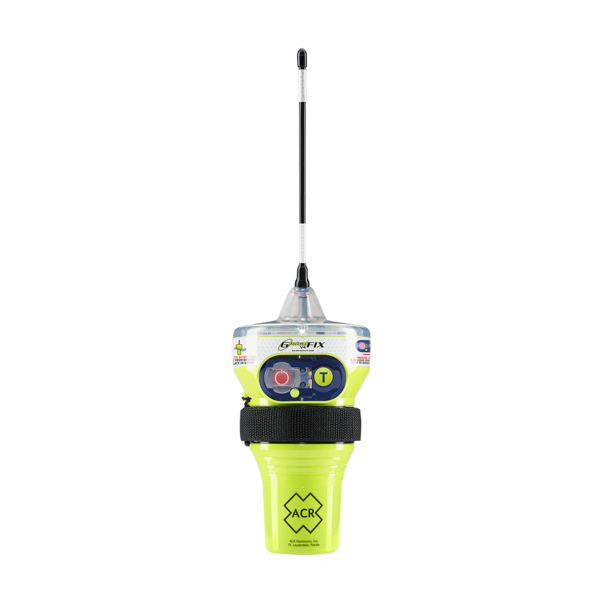
Now, what about the boat? We could have a medical emergency, a dismasting or a small fire that cripples our ability to make passage. We needn't be sinking. We needn't be taking to the liferaft. But we may have to call in outside help. That when you trigger the EPIRB. I selected this model for its balance of features, and because we also have a functioning PLB and will also have a satellite phone and handheld VHFs with GPSes (as does my watch). We are making it hard to get lost, frankly.
Slightly less capacity, greatly less corrosion, much easier to haul to shore.
Speaking, more or less, about cooking up solutions, we have now a fibreglass propane tank to replace the steel one that came with the boat, which is at least 13 years old and probably uncertifiable. This one will be easier to haul ashore empty or filled.
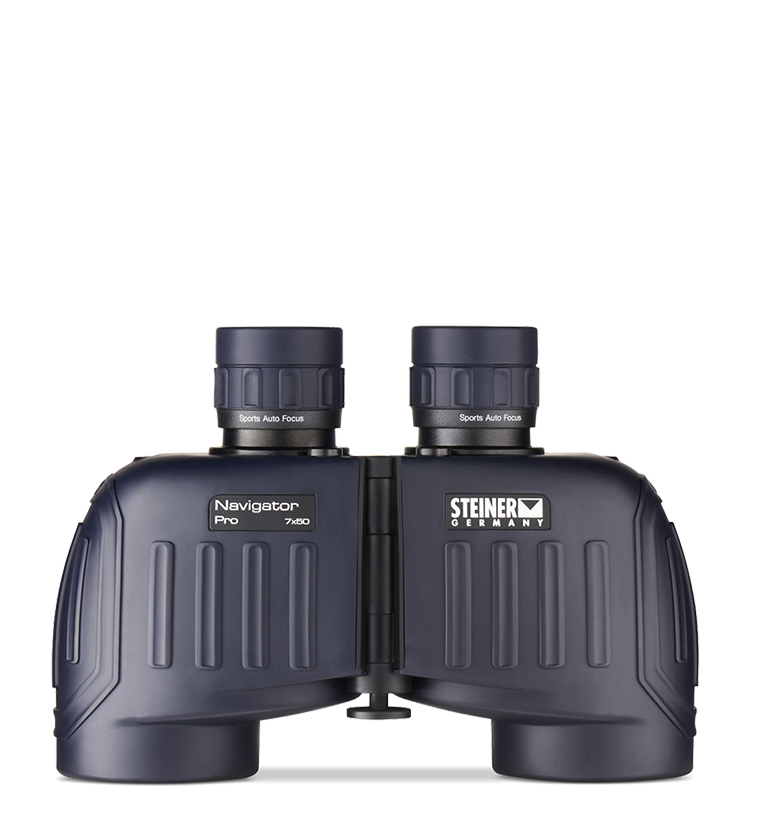
I can see clearer now and can correct for variation.
These were not strictly necessary as I possess fairly good, if vintage, Kurt Muller circa 1940s 7 x 50 binoculars. But these Steiner Navigator ProC binoculars have a built-in compass and very impressive optics, making buoy spotting or bearings to landmarks very simple, once I figure out how the steel deck affects them. Experience suggests "a lot" for my compact wife and "not at all" for my loftier son and myself...the steel seems to bother compasses to about the 165 cm. mark above deck and then hardly at all.
If you're going to pump with enthusiasm, go hydraulic.
I don't favour Gill particularly, but we've ended up with Gill gear because we've had very few issues with it and it's good value for our money, particular if you buy last year's wonderfoulie. But then we have a dry boat.
Small boat or large driver? Hardly matters in a pool.
WARNING: Graphics-heavy supersized post follows! The annual Toronto boat show is an odd event for me. It's been years since I went solely to check out new boats, and the kind I prefer (sailboats) have become increasingly rare over the years as the nature of the boating community has, as we shall shortly learn, shifted away from wind-powered fun to one predicated on fossil fuels.
A HobiePhat? Inflatable, portable pontoon thingie.
But as we own a diesel-driven motorsailer, I risk hypocrisy here, even though we try to motor very selectively and have kept the hours low. But it's a definite trend at the boat show: I have never seen a greater variety of powered fishing boats, runabouts, outboards and cabin cruisers in one place. So...much...chrome...And so much for carbon taxes, eh?
On the other hand, this is the Canadian-approved Honda eu2200i and "companion" pair of gensets, a way to get about 3600 watts of 120 VAC, or 30 amps (continuous) in two approximately 20 kilo "luggables". Now, for us, this is an attractive alternative to having a small diesel genset aboard as it is portable (as either one or both in operation) and needs little gas to run for several hours (which we would carry for the small outboard we're bringing) and allows us to run pretty serious standard power tools without engaging the inverter off the battery bank, which is generally considered "lossy". In addition, a pair of these can themselves charge the house bank or to power the watermaker, should the renewables and the alternator be out of commission. Another option is to bring them ashore if we need to do work (or help locals) on distant beaches. Lastly, they can be fit in existing compartments and lashed in place for safe stowage. I've had the predecessor model, the eu2000i, for some 10 years and the Hondas are reliable and well-built. And yes, I know not to run them at the bow when anchored.
I will point out that the speed limit in Toronto Harbour is six knots.
Overcompensating, Skip?
The Honda 2.3 HP aircooled outboards now out are not to my mind worth the upgrade from my simple, 12 kilo Honda 2, and while propane-powered outboards abound (which I don't entirely understand, given the energy density of propane versus gasoline or diesel, although I'm willing to stand corrected), there is seemingly no other air-cooled outboard option.
Because I would go for a 3 or a 3.5 HP one of those, thanks to the weight savings and mechanical simplicity of an air-cooled four-stroke outboard...and yes, they are noisy little buggers, but you can refill them from a water bottle if you want. Well, a water bottle capable of holding gas safely.
There's a 2.5 HP Yamaha, but it's water-cooled and about four kilos heavier than the one we own.
So...many...fishing boats.
...but enough fish?
Now, powered boats of all kinds have always dominated the Toronto boat show, and given the thousands of small lakes and rivers within 500 km. of here, that's not surprising. But the floor space devoted to sailboats has declined precipitiously in recent years and appeared to be at a new low, to judge by the shoved-off-into-one-corner appearance of the few Hanses, Dufours and Beneteaus present.
So, maybe 10 sailboats?
A new approach to making bow thrusters accessible?
Rectangular portlights...ugh. The grey hull is nice, however.
I usually prefer the Dufours, but they've gotten as "samey-samey" as most other production boats at these price points.
More on Boat Show sailboats (and powerboats) a little later, but the changes at the show arguably reflect more than reinforce changes in the marketplace demographics of boating, its costs and indeed, its likely future form. I had the good opportunity to sit down and talk boats with Wallace and Sharon Gouk, the survey/yacht delivery team responsible for Port Credit Marine Surveys.
Fits the driveway, doesn't need the dock.
Veterans of the local boating scene and long-time liveaboards, neither is short of opinions on the changes in boating in southern Ontario and elsewhere over the years; indeed, Gouk posts on the popular Cruisers' Forum website. I asked him to speak as a surveyor to note some of the major changes he and his wife have seen in recreational boating over the last few decades. Wallace replied that, in terms of the demographics of the sort of boats with which he is involved, mainly "cruiser-type boats, whether power or sail", boating mirrors society. "People are getting older," Gouk says. "The demographics of [boaters] are getting older, too." He adds that "boating is becoming more complex, extremely expensive and it's hard for younger people to get into in until they collect the inheritance from the boomers."
The companionway is a little shallower, meaning there's extra stowage in front of the engine here. Clever? Depends how hot it gets, but that's decent access to critical stuff for a production boat.
But Gouk does not see money as the only obstacle to the continuance of a thriving recreational marine scene. "I don't think the interest is there among the young people" he says. "There's a bit of a different attitude that goes way beyond boating. Kids are coming out of school with [significant] debt. That changes their attitudes about everything. The ones that have an interest are looking at smaller, trailerable boats, or at chartering, but for a young family to lay out $200,000 for a good used cruising boat, that's not going to happen."
One pair of winches on a 41 footer? Huh. I'm going to three this spring.
Gouk sees a decline in sailboats of the cruising type, but also sees a fallback in sales of the larger cabin cruisers and powerboats. "Nobody's doing very well [on new boats]." But the outlook is perhaps even worse for used boats. The surveying couple, who also do the appraisals on seized boats for Port Credit Harbour Marina, part of which is a "graveyard" for abandoned boats, sees more 'classic plastic' as unsellable at any price and destined to be cut up for scrap.
"That particular problem I see as mushrooming over the next five to 10 years," says Gouk. "The shell of the boat, the part that's going to last forever, that's the cheapest part of the boat. It's the systems inside of the boat that are really expensive. People buy a 32-foot sailboat? I can take you to 50 of them right now you can get for $500. People go into this with the dream of 'I can fix that up' ...well, maybe, but it's going to cost you $3,500 per year to store the boat while you're fixing it up."
Hmm. Why boating's in decline is no mystery.
Gouk does not see, in his work as a surveyor, the level of competence he would hope to see in restored boats, noting that "marine electrical work is different from that done on land". Your correspondent can agree with the assertion. Nonetheless, the skilled amateur wanting a cheap boat has not got long to wait. "In the used boat market, the prices are dropping simply because boomers are dying off," says Gouk. "The biggest tip-off is in the demographic make-up of the yacht clubs. The younger kids have an entirely different outlook on life. They're not coming in at the bottom of the market to pick up an old boat."
The man I sold Valiente too is in his (quite fit) 70s...I have to concur.
This realistic assessment may extend to even the more popular brands of "good old boat". Gouk, who has been inside hundreds of them in a near-forensic assessment of their qualities, is emphatic: "There are no 'good old boats'" he says. "You get into those older boats, and there's gate valves, solid-core household-grade AC systems, and sloppy construction techniques. And yet some of them are still very expensive on the used boat market."
Having had a '70s boat, which, besides its fine sailing qualities, was more or less a ready-to-sink firetrap when I bought it, I can only concur. A special thank you to the Gouks for spending time with me and I encourage a visit to their interesting and comprehensive website for some great resources (and some horror stories!) from deep inside the world of boats.
These lads were doing fine work for an underappreciated cause that could render a lot of fishing, save for carp, unlikely.
But back to the show. The numbers support Gouk's assertion of a
shrinking market for boat owners of all types. According to show
management,
"the 2019 Show attendance totalled
73,464, down 5% from 2018, having experienced 8
out of the 10 days with major snowfall, ice and extreme cold across the
province effecting travel for show-goers. The closing weekend had over
1,800 e-tickets unredeemed, likely due to
weather conditions."
Likely, sure, but a lot of clubs in the Toronto area also have empty docks, and as noted, the demographics of people who might enjoy boating of any type are getting longer in the tooth...how are you going to get a 24-year-old into a Shark when Netflix is streaming?
This looked to be popular, but as we sail pantless offshore, it would be rather inappropriate for our lifestyle choices.
That said, sales were apparently reasonable enough to keep vendors happy; Mrs. Alchemy worked a few shifts for Genco Marine, which we have personally enriched this winter with multiple purchases I'll outline in a later blog post. Anyway, my co-skipper reports that sales appeared to be strong this year (the incentivizing discounts no doubt played a role), and other vendors with whom I spoke gave the impression that the trade was "fewer, but better". May this continue. The boat show is a big regional draw, and irrespective of my attendance, or indeed our presence in Canada, a lot of people would still clearly miss it.
More square windows? Have they never heard of the Comet jetliner?
I often go not to see the boats...I mean, we have a boat...but to see the innovation. With a steel pilothouse cutter that will plow more than glide through the waves, "slick" isn't a priority. Advances in control gear, safety gear and the "working the boat" elements are, and I like to quiz various vendors, especially at the less-frequented booths, about lingering, obscure questions I might have. Pro-tip? Go on a Monday or Tuesday of the show, because the mornings are sparsely attended and you'll have the marine industry pro's attention more easily than on a weekend.
This pro must have been on break.
For instance, I had a particular issue in that want to weld on studs for hull anodes this year. Without going into detail at this stage, I have to change over from freshwater-sutiable magnesium anodes to ones capable of providing protection to our steel boat in brackish and salt water, at least until we get our hull recoated. We are going out to the sea via the St. Lawrence this summer, and it had been recommended to me that I switch to aluminum anodes for the hull, rudder (aluminum, too, but of a different grade) and prop. I could source them, but I could only find zinc anodes to fit my DF-107 model VariProp. Well, they exist and I found that out at the show. Fizzing averted.
Found out some details about EPIRB registration here, as well.
Along with the multitude of free and paid educational seminars available (although Paul and Sheryl Shard and Andy Schell and Mia Karlsson were not present this year, both of whom I count as friendly acquaintances and at whom I enjoy throwing impertinent questions, the show remains a great place to pick up knowledge without actually getting wet in the process. I think in the rush to promote big, shiny things, this aspect of the show is somewhat underplayed, but as we are about a thousand miles from the ocean...and it's winter...time spent learning from sailors on break from full-time lives aboard (or people like forecasters or delivery skippers) is of great utility and interest.
This firm makes a Travelift not made by Travelift, which tends to monopolize locally the boat picking-up business.
A couple of last points: The commercial marine business is not well-represented at the boat show, and perhaps it should be. It is very difficult to convince Canadian youth to take trades-type jobs these days, but perhaps if they knew more about them, there'd been some attraction, interest and uptake. This booth, for Georgian College's marine trades courses, saw very little action and was tucked away in a presumably cheaper corner.
Didn't help that I couldn't attract this guy's attention to speak with him, so absorbed was he in his screens.
Perhaps that's the wrong approach for a labour-starved field to take.
I also noticed that some popular booths were not in attendance, particularly Garhauer Marine and Ontario Battery, both of whom from which I've bought significant amounts of gear in the past. I also noticed that Ray of Ray's Marine didn't have his usual double booth, or indeed any booth, another surprise and another vendor I've spent money with. While I can still find multiple outlets for pepperoni, hammocks, miracle waxes and Sperry shoes, it's the more "hardware" places I miss.
Holland Marine Products: I patronize them and will again.
Knowing our plans to depart this summer, I spent more time at the show than I had in years, and appreciated, I think, its rhythms and emphases. It's a circus, sure, and it's not necessarily even a place to score bargains (although I did pretty well in that regard this year, probably because I was keen to "finish" certain necessary areas on the boat). But it remains a great place to window-shop, to pick up well-priced "sundries" (every third person seemed to have a fender, foulie jacket or boat hook to hand) and to think of the warmer months to come.
I am surprised, but perhaps shouldn't be, at how many people I know, or run into, at the boat show.
Got a fresh 2019 almanac and confirmed we can order the charts for our big trek to Nova Scotia at The Nautical Mind.
Finally, like all boat clubs these days, our strong racing and junior sailing programs protect my own National Yacht Club from the march of time and division of attention that so strongly suggests boating 20 years hence will be even more niche an activity than it is now. However, it's not all gloom: the NYC booth attracted a lot of favourable attention, and the cadre of over 30 friendly and informative club members acting as "ambassadors" garnered around 150 serious enquiries from people contemplating a club from which to enjoy life on the water.
Good. I'm rather fond of the place myself.
Sure, the location's great, but the people are pleasant, too.
I'm pretty good with weather, but this cloud waterfall is both baffling and ominous.
Amid the lowering clouds of December I toiled to get the boat further in shape for a late June/early July 2019 departure; hence the title referring to the last winter of refitting, which I realize is probably hubristic. There's a lot left to do, including moving out of an apartment and stowing the contents 160 km. to the east, along with purchases from the upcoming boat show of an EPIRB, a life raft, water tanks, and the finishing of various welding/fabrication jobs.
Ah, speed wheel, you're yesterday's news.
To that end, out came the old speed wheel. This hole will be plated over. Zincs are also to be added. Plus a big change I'll cover off in future weeks. Plus Christmas happened. Goodness, it's a busy time.
Although not without its upsides: Can't take it with me!
After a very pleasant Christmas and New Year, during which the wine cellar was liquated with enthusiasm, we are getting back to work. But we didn't really stop: December saw a lot of progress.
This is not as disorganized as it looks, although with the hydraulic hoses out, I can tidy up and cable-tie the wire runs better.
The hydraulic setup to the helm, as the surveyor remarked last spring, were requiring more pumps to effectuate rudder action. While the hydraulic fluid was sufficient, there was evidence that the hoses themselves were starting to "sweat" and needed replacement. Job one, then, is to remove them and take them to a truck shop or something not "marine" to have them made up to the same gauge and lengths. The fittings are in good shape and may be reuseable. Here's a lucid link for the perturbed to the wonderful world of hydraulic pumps in general, but a lot of this is marine-orientated.
The back of the first of two Marol HRP-38 helm pumps.
It's a messy, cold job, I won't lie. Out of shot is Mrs. Alchemy, down in the engine bay with a bucket to catch the spills.
As I removed the retaining nuts on the couplers, I swaddled the ends in paper and tape to catch the leaks. Spinning the wheel squirted out a lot more into a handy cup.
Pretty clean back here after 30 years. Good.
The mounting system is four Allen bolts and a nut. Easy and secure.
The rare shot of the skipper at work.
If heavy and awkward (see: 90% of the refit process). These are fishing trawler-grade helms and they are about 15 kilos in weight minimum...and empty.
Perhaps Cabin Boy can polish the entire wheel spoke area now!
The rest of the draining exercise took place on deck. Just visible is the "sailing" helm, as opposed to the "pilothouse" or "downstairs" or "power" helm. A secret of sailorly exclusionary language is that a lot of it is completely made up to be difficult.
Needs a paint job as the outdoor life is a hard one. The insides, however, are in good shape. The brown ring is a fibreglass spacer.
The second helm was easier to remove because a) there's direct access behind a metal plate in the binnacle, and b) its wheel is much smaller and lighter, which is easier to handle with an Allen key in one hand.
Also wanting a paintover, but essentially in good shape.
The helm will have some TLC. The nearly rotten wooden box atop it will go to be replaced by a HDPE caddy for beverages, sunglasses and the like. Wood on a steel boat is fine...inside.
That's leaked hydraulic fluid. I'd swab it out, but it will keep the rust at bay until it's warm enough to paint. Or so I maintain.
And some very nice AWAB T-clamps, for the discerning boater's BWL needs.
I have been able to obtain, at reasonable cost save for the detective work, the seal rebuild kits for both helms and for the Marol MRB-75A rotary actuator controlling the rudder ram. Because it's the hoses that were near end-of-life, and not the seals, I will likely save the seal kits as I am not sure Marol makes this helm pump, beefy and capable as it's seemed to us, any more. I know they make the actuator, however, but I have no evidence yet that it's leaking or needs the service. Might be a "Halifax" job for next winter, then. We'll see. Now the job is to find a truck place to replacate these hoses in a bulletproof fashion. Truly, I'm not sure if "rubber" hydraulic lines are not sufficient, given the comparatively low pressures these helm pumps create. Comments on this are welcome.
Doesn't look like much, but it promises a great deal.
Lastly, I received the Lars Thrane LT-1000 heading sensor I need to orient my radar and to improve my plotter's accuracy. I foofed around on this decision for a long time; originally, I wanted the Comnav Vector 2 GPS Compass, but this item is a third the size, half the price and works with both NMEA 2000 (the plotter/AIS net) and NMEA 0183 (what the Furuno radar likes). Adding it will unlock the radar's full suite of features and will, in effect, make the radar a second plotter capable of showing the AIS target information, SOG, COG and all those other data points of interest. This thing even gives baro and temp. Getting one involved some effort; once again, I find my needs are somewhat rarefied at the pleasure boater level.
The online log of S/V Alchemy, her restoration, her crew and their voyage
“You never enjoy the world aright till the sea itself floweth in your veins, till you are clothed with the heavens, and crowned with the stars: and perceive yourself to be the sole heir of the whole world.”-Thomas Traherne
"He that has patience may compass anything."-François Rabelais
"The Great Lakes sailor is wild-ocean nurtured; as much of an audacious mariner as any. "-Herman Melville
"[The sea is] neither cruel nor kind ... Any apparent virtues it may have, and all its vices, are seen only in relation to the spirit of man who pits himself, in ships of his own building, against its insensate power." -Denys Rayner
“For those who believe in God, most of the big questions are answered. But for those of us who can't readily accept the God formula, the big answers don't remain stone-written. We adjust to new conditions and discoveries. We are pliable. Love need not be a command nor faith a dictum. I am my own god. We are here to unlearn the teachings of the church, state, and our educational system. We are here to drink beer. We are here to kill war. We are here to laugh at the odds and live our lives so well that Death will tremble to take us.” -Charles Bukowski
"A dream you dream alone is only a dream. A dream you dream together is reality." -Yoko Ono
My wife, my teenaged son and I plan to start voyaging in spring of 2020, plagues notwithstanding, for an estimated five to six years. I hope to move us aboard before that point to work out the kinks of living on a boat.
The careful reader will note the URL of this blog has "alchemy 2009" in it, a reference not only to our boat's name, but also to the original, anticipated departure date.
This is called "tempting the gods of the sea and life in general" and will not be modified. You have to know when to fight, and when to appease. Frankly, it matters that we go, not when we go. This is a good lesson for all aspiring voyagers, I think: the hubris of long-range planning lurks like an evil watermark on every "to-do" list.
Here you will find various notes on our preparations, labours and education as we try to become better sailors in a good old boat. I hope to continue to discuss in this blog the realities of preparing for a marine-focused extended sabbatical, the issues both mundane and philosophical confronting the potential cruiser, and the efforts required by everyone involved to make it happen.
Please note that all text and images on this site are copyrighted and may not be used without permission of their respective authors and creators.
Please note that I have not bothered to resize photos and they may be seen at full size and aspect ratio simply by clicking on them. Some photos formally hosted on third-party servers are not at present appearing; I will locally host these photos as I can afford the time to relink them.
Please also note that anonymous comments are usually spam and will typically be deleted without reading.
Author's text and most images other than product shots specifically created by product manufacturers are copyright 2006-2026 M. Dacey/Dark Star Productions. Photos sources linked from online news and related organizations are copyrighted to their creators.
Middle-aged, bookish Canadian with compact family in process of exploding career and prospects in favour of lengthy, low-rent sabbatical has boat, seeks ocean. Must have non-smoking bilges.
All contents (C) 2007-2021 M. Dacey/Dark Star Productions