Copyright (c) Marc Dacey/Dark Star Media 2006-2026. Above photo (c) Marc Dacey. Powered by Blogger.
Showing posts with label Autopilot. Show all posts

2020-04-13

An outbreak of boat jobs

Can't. About to move aboard!
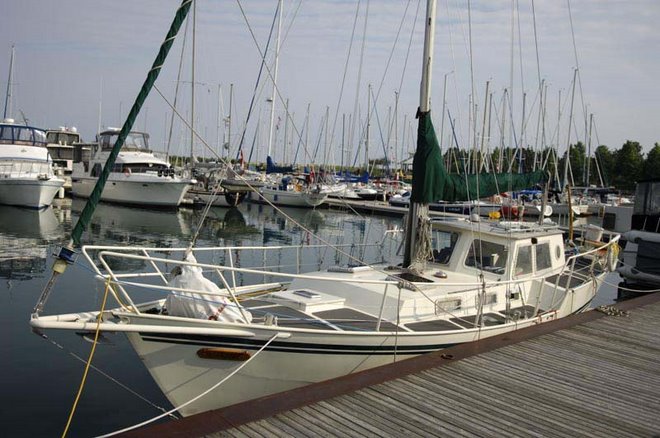
The above request is courtesy of Marina Quay West, which has several dozen liveaboards in residence and where the good ship Alchemy is being readied to being a floating home once again, and, it is most devoted to be wished, a sailing home by April 30th, which is when our apartment lease and our marina dock lease expire.

There have been many, many changes since the last post. A major one was the offer of our boat club, National YC, to offer us a dock (good thing we never "cashed in" that dock right, right?) for the summer, which means going "up" the membership status ladder from "crew" to "senior"...which will cost us money. Given the extremely tentative nature of our plans to leave Lake Ontario this season, even to get just to Nova Scotia and get our hull recoated and our standing rigging redone, leading to the possibility that not only might we cruise in circles this summer, but might also have to haul out (because the antifoul paint will be rather tired at that stage) in Toronto, our plans scuttled for another years, we decided to rejoin the club and get a dock, a course both providential in terms of timing, but a little bitter in terms of dreams deferred.
The underside of the wind generator "body" has a compressing collar and Allen bolts. I believe it is happiest with a 1.875 OD pipe.
Nonetheless, while there remains even a glimmer of hope of leaving on May 8th (the first day of what was the "suspended until further notice"  aspect of locking down the Seaway for boats such as ours), we press on with the refit just because we should. One long-postponed project is the installation of an Air-X wind generator on the stern to supplement the solar panel portion of the shore-independent power regime. This 12 VDC model is not necessarily the best or the quietest, but I traded it for a 24VDC acquired at a yard sale from the people who sold us our solar panels, and it seems reasonably robust, although it needs a paint job. Andrew Barlow, fabricator extraordinaire, is going to make up a pole for it and a footplate on which said pole will be mounted, which in turn will be bolted onto the flange off the stern of Alchemy fit for the purpose. Its role is supplemental to the solar panels, and we'll see if it earns its keep in that regard on, for instance, night passages when we'll presumably want radar and AIS chewing amps on the night watch.
Because it wouldn't be a passagemaker without a load of gear off the arse.
Other improvements include the resurrection of Alchemy's original 20 amp charger, which I found was made not only for Westmarine, but in versions labelled by StatPower and Xantrex (as the Truecharge model). Manuals are available still, and this is a pretty straightforward unit suitable for keeping two Group 27 deep cycle batteries of about 210 Ah capacity and wired in parallel topped up.


Does the job and so did the 5200 in sticking the board to which it's screwed to the collision bulkhead.
The idea here, which I consider not overly crazy, is that if the main house bank fails or otherwise requires service (or simply needs to be moved out of the way for access or repair of the tankage and plumbing beneath it), I can have two Group 27s at the ready to "become the house bank" or the start batteries as needed. After all, the windlass can also be worked manually, if onerously. Belt and suspenders thinking at work!
The energized windlass breaker and solenoid box: This is tidier than it looks.
Part of the prep of moving aboard is sending things into storage. To that end occassioned a socially distanced visit from my nephew Ryan Dacey and his still-under-warranty missus, Alex. The two of them brought some of my late parents' records, old photos and other "treasures from the basement" of their mother, my late sister. Off to Trenton it shall go.
Try not to cough.
Onward to the construction of the bed platform, which, being 90° rotated from the original, needed accessorizing to serve as an athwartship double berth. First up was constructing a crosspiece on which the hinged "bed flap" could land smoothly and capable of supporting the weight of two dozing admirals. This required an aluminum backing plate for the inside of the hanging lockers.

Why, yes, the vacuum cleaner got a workout in this process.
The flap itself is 1/2" marine ply, reinforced by stiffeners underneath and hinged with a stainless steel piano hinge and two SS strap hinges at either end. It will be held just past vertical when not in sleep mode by a peg set into the bookshelf surround, backed up by an eye-and-hook.
The underside is shimmed 1/4" to make the whole thing level. There will be a strip of gasketing material to keep those bolts and screws from chewing at the wood and metal. Stowage is below.
The upper side will have, at first, thick closed-cell foam as a Velcro'd on base, with memory foam as a mattress. We will have to improvise to get the hinge covered for comfort, but expect to get fitted mattresses and a Froli-type substrate sometime down the road. Mrs. Alchemy is already planning out lee cloths.
Prior to strap hinges and, you know, the bedding.
Imagine, if you will, that we are on either starboard or port tack, at night, with Cabin Boy on watch. We can shift our head or feet to either end, and our weight is farther forward than it would have been. A simple movement gets us into the pilothouse (there's a new handrail just out of shot) and there's also new stowage (the rectangle cut out of the former port berth) for light items, such as fenders. We hope it serves us well. 
Moved logbook rack, restored 24-hour ship's clock and freshly repainted port-side helm area suitable for chartwork.
John Cangardel was kind enough to give us some anti-chafe gear that wraps itself around line, such as our "cross-channel" bow spring to the docks opposite. Handy, this.

Yes, our son finally cleaned the deck. Well, somewhat.
Lastly, I spent a couple of hours yesterday tracing some wiring glitches and restored the radar's power circuit and that of the AIS. This involves taking down the pilothouse wire loom secured on the forward part of the pilothouse just below its roof and getting busy with the heat shrink. When I deselect the B&G plotter's internal GPS for that of the Vesper XB-8000 AIS unit, which has its own GPS receiver above the radome some seven metres up the mast, the positional accuracy was improved...the big scribble in the second slip was "before" and the boat running its forward-looking sonar was "after": we are in fact in the first slip of this pier.
But not travelling at 0.1 knots.
A few fuses blown last year (perhaps during the October "thrashings" we administered while racking up sailing hours) were replaced; some legacy circuits at 2 amps or under have glass inline fuses, which is a better solution in some ways for small draws than endless five amp circuit breakers. So back on came the helm reading lamp.
Maybe too many pens, pencils and loose cable ties? Can confirm.
Mrs. Alchemy is prepping the saloon floor with a vigorous belt sanding so that our freshly purposed roll of Lonseal Marine teak and holly flooring can spruce the joint up a bit. It had better: it was impressively expensive, even for something with the word "marine" in it.
Wiring to be confined better before we actually leave, which could be in either May or 2021...sigh. The boxes are full of watermaker parts.
More to do, of course, but we are clipping along nicely, despite the dour circumstances. More to come soon as the seacocks are opened for business...after it snows this week.
That Chelsea clock is keeping near-perfect time now, thanks to Mr. Del Rosario's ministrations.

2020-01-14

Aft to the future

The slight bit of corrosion on that frame will be converted chemically and recoated with two-part top paint.
Behold the underside of the bed platform we've removed in the aft cabin. The black hoses are excess hydraulic feeds for the autopilot and hydraulic actuator that steers Alchemy. The bed platform, more or less two pieces of surfaced marine plywood cut to fit the the hull shape, was on the port side (looking forward). We typically slept (at dock or underway) with our heads at the forward end.

Anyone who has been to sea in proper sea states can figure out the problems with a fore-and-aft berth that lacks a) lee cloths; and b) sleeps two. The function of a lee cloth is to keep the sleeping sailor in the berth; a boat on any kind of a heel is likely to throw or roll said snoozing crew out of the bunk and onto the sole, a situation unconducive to rest. The old-school sea berth therefore featured a wooden half-wall of sorts, but this, which functional on larger sailing vessels, did not easily allow said berth to be used as a settee when it wasn't a bed. Fore-and-aft double berths, meanwhile, required a bunk board (see photo), plus a lee cloth, so that two people could be kept still, or at least, could roll only so far, and remain safely asleep.
Bunk board and lee cloth to make a safe "double" while underway. Photo (c) Practical Sailor

The pipe berth can be wood or metal-framed. Photo (c) Sailing Anarchy
The fuss and yogic exertions to leave that hull-side berth in a lively seaway aren't worth picturing. Similarly, the 19th century solution of a well-secured hammock takes up a lot of room and can be problematic on a small yacht in terms of rapid swinging.

Pipe berths have some advantages in that they can fold or roll up in the day watch and can either be locked into a safe angle of heel or, via rope tackles, can be secured at any angle. And this might be a future project for the saloon, although we already have proper sea berths above the settee seating only requiring lee cloths to be made up to be fully usable in a seaway. Lee cloths, by the way, are commonly bolted to the berth platform and folded away when not in use. We also have two pilot berths in the pilothouse itself, but these are being used for gear and tools at present.

We've decided to move our sleeping platform across, or, in nautical terms, athwart the forward part of our aft cabin. This will accomplish several objectives, including a) gaining us about 15-20 cms. of bed platform width; b) moving our body weight forward, which is desirable for trim and comfort purposes; c) freeing up a fairly impressive amount of otherwise "dead" space opposite the hydraulic ram suitable for large, if light, stowage, such as fenders, while at sea; and d) meaning we can sleep "head on the high side" irrespective of whatever side the boat is heeling. Lee cloths would still be needed for the aft side of the newly angled double berth, however, in case the boat was to pitch uncomfortably in the off-watch.

Lastly, it puts the sleeping crew mostly out of the way of the footwell on the aft deck, which is about one centimetre lower than my crooked knee, as I found out this summer while living aboard.


Quick 'n' dirty hack just to give the general idea. The bunk, of course, will run straight to the curved portside hull.
In the above crappy, rushed diagram hacked from my "electrical layout" schematic, note that the bed extends right across the hull from the port side to the hanging lockers on the starboard. The depth of the lockers here plus the narrowing of the hull aft of the pilothouse means all that width aft of the cabin's built-in bookshelf (and future SSB installation) is needed for adequate sleeping length. However, this means using up all the floor space in the aft cabin, which, when it is deployed, will be under the bed's "flap". Stowed when not in use, the flap will be on a sturdy hinge and will be supported by cross-braces and beams through-bolted to the existing lockers and cabin furniture.

The present clothing shelving for socks, underwear and T-shirts will be shifting to fore-and-aft stowage in heavy-duty plastic drawers on a platform under the flap. Further stowage space will be "liberated" under the platform and some wiring will be more easily routed under here.

Those wooden "floors" are actually two triagular access ports to the aftmost bilge through which the prop shaft runs.
I'll post up further discussion as this project, which I hope to finish before the end of March and our move back aboard.

2019-08-31

A slight change of plans...

Apparently it's a popular place these days.
This is Halifax. At this point, the last day of August, we had expected to be near or nearish to it and booking interesting activities like apartments and hull treatments. But we've had a very busy last six weeks or so, and while frustrating and sweary in parts, it's also been productive. Two weeks ago, circa August 15th, we decided to overwinter here in Toronto, leave the boat in "layup afloat" (mast in, at a slip, covered over with a frame and plastic and with agitators breaking up the ice) so we can go down the St. Lawrence in spring 2020 without rushing and having honed some rather rusty sailing skills.

Also, there was this factor:

We didn't want to rush to the Maritimes chased by fall gales and not lingering in nice places because we were racing bad weather.

Nonetheless, we've now sailed some and repaired or installed a great deal more. The boat's in good, serviceable shape and we have a good game plan for doing here in Toronto what we would have done in Halifax in less familiar surroundings. We've even got a land-based apartment as I do not propose to sleep aboard the "job site".

Some refitting highlights follow. Amazing what living aboard does for one's productivity!

 It's been a hot summer and we tend to skip lunch. Dinner, however, makes up for it. My belt's needed five new holes since May. Hmm.
So many parameters!
 After a rather steep learning curve with the hydraulic steering, we got the autopilot sorted and properly installed. And attractively mounted, if you ignore the previous generation of gear's mounting and conduit holes.
The rudder feedback sensor took a day to mount correctly.
We are at the point now where the AP steers better than we can, so we let it. Basically, we input a true compass heading and correct to conditions. We derive that bearing by putting a cursor with generous offing near our desired destination and just keeping a watch on events. It's clear that a lot of local sailors are going to some waypoint very close to, say, a buoy or other nav aid. That's not so prudent when two or three of 'em do it at once, we feel.
Lazyjacks took effort: the irony did not escape me.
 Lazyjacks and two separate Dyneema-core reefing lines are now on the main. That's a safety improvement, as are the preventers we can now rig for downwind sailing in blows.
 Fact is, prior to actually leaving, we haven't needed reefing lines. Alchemy can carry a full main well past 20 knots apparent wind, and if we encounter more, we've just gone to the staysail. But all is different now.
The secondary fuel filter: Not, evidently, guilty.
 We had a big delay around August 1, when, while on a test sail in light air, our engine basically sputtered and died and only started again reluctantly and at very low RPMs. We made it back to our dock with difficulty and an odyssey of troubleshooting commenced.
And goat sacrifice to the Dark Diesel Lords.
 Basically, we were:
  • 1) starved of fuel, and
  • 2) the fuel was old and grotty, and
  • 3) we needed to change it all, which involved moving all the batteries to access the tank tops to vacuum out crud, and
  • 4) we changed all the supply side fuel lines in case of said crud, and
  • 5) we installed an inline fuel pump (a Walbro FRA-1, for the intrigued), and
  • 6) we changed out all the filter elements, primary and secondary.

And don't forget the goat.
 Very long, laborious story short, the problems seem solved. We've done about 50 hours of rocky and calm motoring without issue, but it took a very long process and a lot of questions strewn about to the helpful people at the club (and elsewhere, thank you!) to solve Why Won't Beta Purr? I feel we were fortunate not to bugger the injectors and we will be cycling thrugh the fuel...and the biocide for the fuel...moe quickly in the future.
Ahctual crap sailing!
 Meanwhile, there's life aboard. Frankly, it's pretty nice.
My sleep schedule's changed.
 There's a lot of sky watching...
Nothing's ripped!
 ...and practising sailing in various modes...
Scored an end dock. Sweet.
 ...and travel to exotic places. OK, this is Trenton, jewel of the Bay of Quinte and where we keep stuff.
An actual exotic beverage, this was. The brewery was micro, indeed.
 We plan to sail as deep into the fall as weather and insurance allow, to see what breaks or falls off. Best to know here than 1000 NM eastbound, I think.
Cobourg, a harbinger of Trenton.
 A happy side effect of deferring our departure is that we get to attend my nephew Ryan's wedding. That required some collective sprucing up ashore and the acquisition of more formal duds.
Cabin Boy, soon to be Cabin Man.
 Lastly, I put the AP controller on a "helm extender", because just having the thing sticking out of a hole on a NMEA 2000 cable wasn't a long-term game plan. It looks about as nice as I can do with a piece of scrap teak.
The answer was "more helm".
More to come and sooner next time!

2019-05-13

Getting properly hosed

Helm's deep: Mind the hobbits.
I alluded to the rehab of the hydraulic hose setup in a previous post. This was accomplished by biking a fairly ambitious distance from downtown Toronto to the north of the suburb of Brampton, home of Green Line Hose and Fittings, a well-regarded hydraulic specialist. Because I was not entirely sure if my fittings were metric or Imperial, I removed all the old, starting to weep hoses and handed them over the counter, saying to the compentent fellow there "please replicate these". And they did.

While I have two seal kits for the two helm pumps, they looked in pretty good condition, and so become spares for the future. While onerous to replace and reroute these hoses, it was a good learning experience. We have the autopilot pump in hand, but ran out of time to fabricate and weld in a stainless steel mounting plate for it, which I hope will be done this week, after which I can piece together the new and wonderful autopilot. However, we were able to launch with restored steering that is properly pressurized and is clearly needed fewer helm wheel turns to go chock to chock, so to speak. In fact, I may have to take a more subtle approach as it's that much more responsive.
Shiny is good.
Restoring the hydraulic oil was interesting. Firstly, my hose runs are long: nearly 25 feet each from the pilothouse aft to the rotary actuator pump in the stern, plus a pair of 15 footers from the aft helm on the "sailing deck". Even with the tiny cross-sections of the hydraulic hoses, that took about three litres of oil, all of which had to be bled to purge the air (using cryptic translations from the Japanese I would have run through a native speaker's brain before printing, personally). Still, can't argue with success.
Dryfitting prior to bottom painting.
The aluminum anodes are on, all 16-odd kilos of them. I had a bit of trouble with Nautilus Propeller's fulfillment from the VariProp factory in Germany; having been promised the aluminum prop hub anode I ordered at the boat show months back, they sent zinc instead. No good to me at their price, as I could get zinc at a fraction of that from the U.S.-based Boat Zincs. com. So I have a zinc prop anode on the prop and aluminum plates on the hull and fingers crossed, this will suffice (the two metals are cathodically close) for the trip down the river until haulout in October in Nova Scotia. Had I left the magnesium anode on the prop, it would've potentially bubbled and fizzed after Quebec City and the introduction of salt water...not a good look!
Better than nothing!
We switched to Pettit Horizons bottom paint, which went on thicker and more expensively. Looks good, however, and, as in the past, we changed the colour so that paint failures will reveal the previous iteration, should that be a data point worthy of note
Ready, aye, ready.
Anode what you did last winter.
The next step was launching for 2019 into an already swollen lake.

2019-02-03

Going somewhere?

It's odd to hope you never see this deployed in earnest, or in the absence of the main vessel, really.
Having a freer hand with the boat gear purchases made the recently visited Toronto Boat Show reviewed last time a lot more fun than usual. But I've spent a lot of time in research/review mode, as well, trying to make the best choices in gear for our vessel's voyaging. First up of the "big buys", if just about the last to arrive, is the Viking RescYou six-person liferaft. Last to arrive, because the clock starts ticking on the service schedule from when the raft arrives, and we don't need to mount this until after we launch in late April. We also got the rail-mounted cradle and the "hard" container, as this isn't something I want to muscle out the companionway if things go pear-shaped. We already have a ditch bag and are debating its contents, but a handheld watermaker is already in there.
Now, to rig jacklines and bolt padeyes in all the right places.

Continuing on the safety front, we now have a pair of Wichard ProLineR 2m/1m safety tethers. I picked this version for flexibility as I plan on installing Kong Tango carbiners on jackline webbing as needed and snapping onto that. This allows the smaller shackle to be used on "static" clip-ons, such as padeyes on the mast tabernacle or wire. A shout-out to Attainable Adventure Cruising, which has been, as in so many other areas of offshore sailing, a source of great value.
Self-rescue the better way.
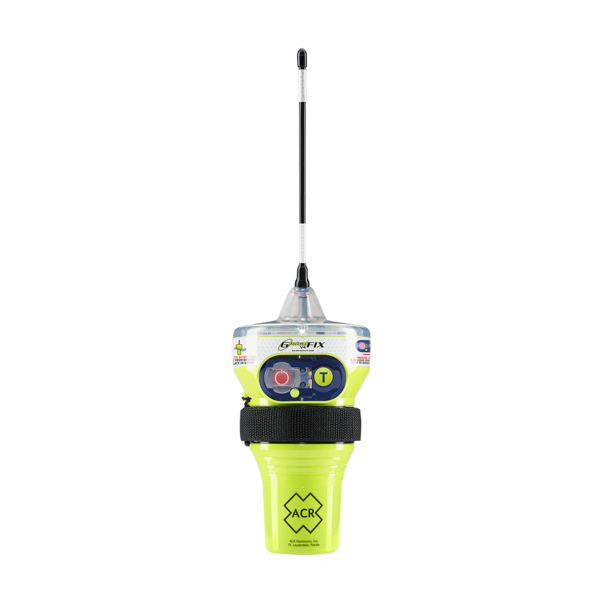
Now, tethers keep crew on the boat, when used effectively and without exception. But you'll see the problem inherent in the system: human behaviour, plus simple misfortune of, say, tripping off the boat. There are a number of ways to address this, starting with "always wear your PFB on deck. Always." Now, after that, the options multiply. We've had PLBs (pictured is the successor to ours), and we have liferings and throwing line slings and danbuoys and assorted means to retrieve a COB (crew overboard). But the device pictured above is a step beyond.

Arguably, the most dangerous time for a crew is watchstanding at night; smaller crews, as ours will largely be unless we pick up crew, will have the nightwatch hours split into two or three shifts, at least one of which will have only a single crew, tethered on deck, awake. Should a crew fall off the boat, this AIS MOB1 will not only transmit to the AIS receiver on board, it will also send a DSC alarm to the VHF, which is going to wake up everyone on board. Lastly, it's got a strobe. Save for survival conditions (stay aboard, kids), in which case the crew would almost certainly be awake and tethered and ready for anything, this seems like a game-changer for self-rescue, a topic that has interested me for some time. Fact is, in most cases, save relatively near to shore, the boat from which the crew has unexpectly departed is best placed to get their crew back alive. Search and rescue not only take time, they are generally not available more than a couple of hundred NM offshore. So this is a helpful advance.
Hello, hello? Dinner is ruined!


Now, what about the boat? We could have a medical emergency, a dismasting or a small fire that cripples our ability to make passage. We needn't be sinking. We needn't be taking to the liferaft. But we may have to call in outside help. That when you trigger the EPIRB. I selected this model for its balance of features, and because we also have a functioning PLB and will also have a satellite phone and handheld VHFs with GPSes (as does my watch). We are making it hard to get lost, frankly.

Slightly less capacity, greatly less corrosion, much easier to haul to shore.
Speaking, more or less, about cooking up solutions, we have now a fibreglass propane tank to replace the steel one that came with the boat, which is at least 13 years old and probably uncertifiable. This one will be easier to haul ashore empty or filled.
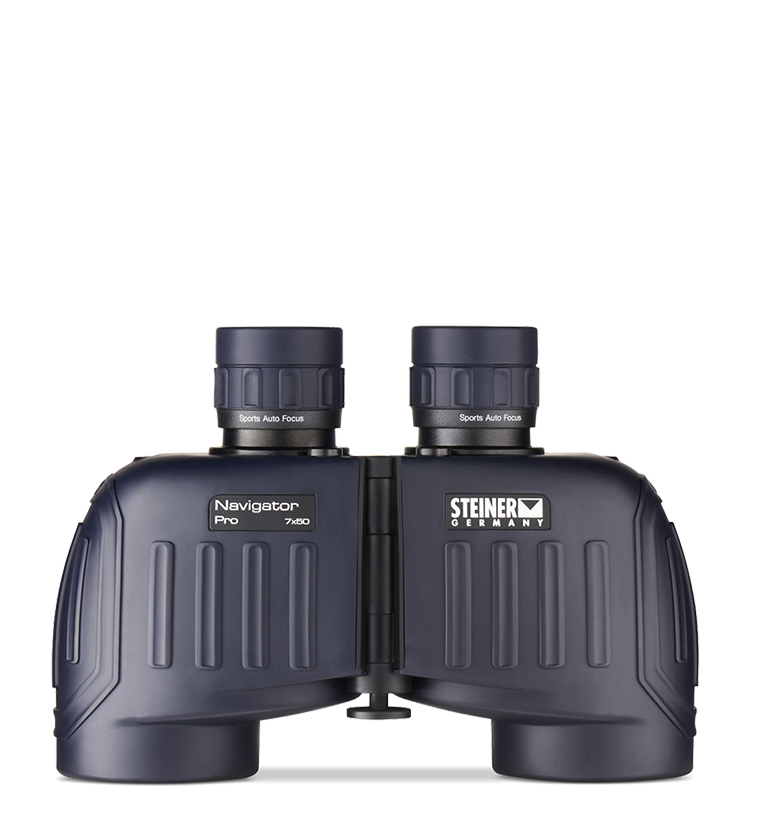
I can see clearer now and can correct for variation.
These were not strictly necessary as I possess fairly good, if vintage, Kurt Muller circa 1940s 7 x 50 binoculars. But these Steiner Navigator ProC binoculars have a built-in compass and very impressive optics, making buoy spotting or bearings to landmarks very simple, once I figure out how the steel deck affects them. Experience suggests "a lot" for my compact wife and "not at all" for my loftier son and myself...the steel seems to bother compasses to about the 165 cm. mark above deck and then hardly at all.

If you're going to pump with enthusiasm, go hydraulic.

The quest to install the autopilot has taken a great leap with the ordering of an Octopus reversing piston hydraulic pump and a Navico NAC-3 "core pack" and some associated gear that will make helming, we hope, a doddle. More on this as the pieces arrive.
I don't favour Gill particularly, but we've ended up with Gill gear because we've had very few issues with it and it's good value for our money, particular if you buy last year's wonderfoulie. But then we have a dry boat.

Lastly, Mrs. Alchemy is off to Brittany this week to take an RYA course in (very) tidal waters. So in our traditional mode of seeking bargains in discounted foulie gear, she picked up a rather nice set of Gill OS23 jacket and offshore pants at a good price. I didn't make a sound when she got some long-sought-after duBarry sea boots (not pictured as they were closeouts). I remain stuck with Canadian Tire wellies, as nothing else fits me.

And that's enough for now about how we spent our Christmas money!