Copyright (c) Marc Dacey/Dark Star Media 2006-2026. Above photo (c) Marc Dacey. Powered by Blogger.
Showing posts with label Tenders and outboards. Show all posts

2015-07-31

We apologize for this interruption in service....

It's been pointed out to me recently that it's been several weeks since a post has been made. So this brief missive, directed to the two readers I may have left, is proof I haven't been killed in a horrific caliper or crimping accident. There are items to report...but soon, soon...

It's been a busy summer. There have been Solstice dawns to observe; this was shot at a beach party I've attended for over 30 years, because I enjoy it and it's a beautiful way to kick off the season.
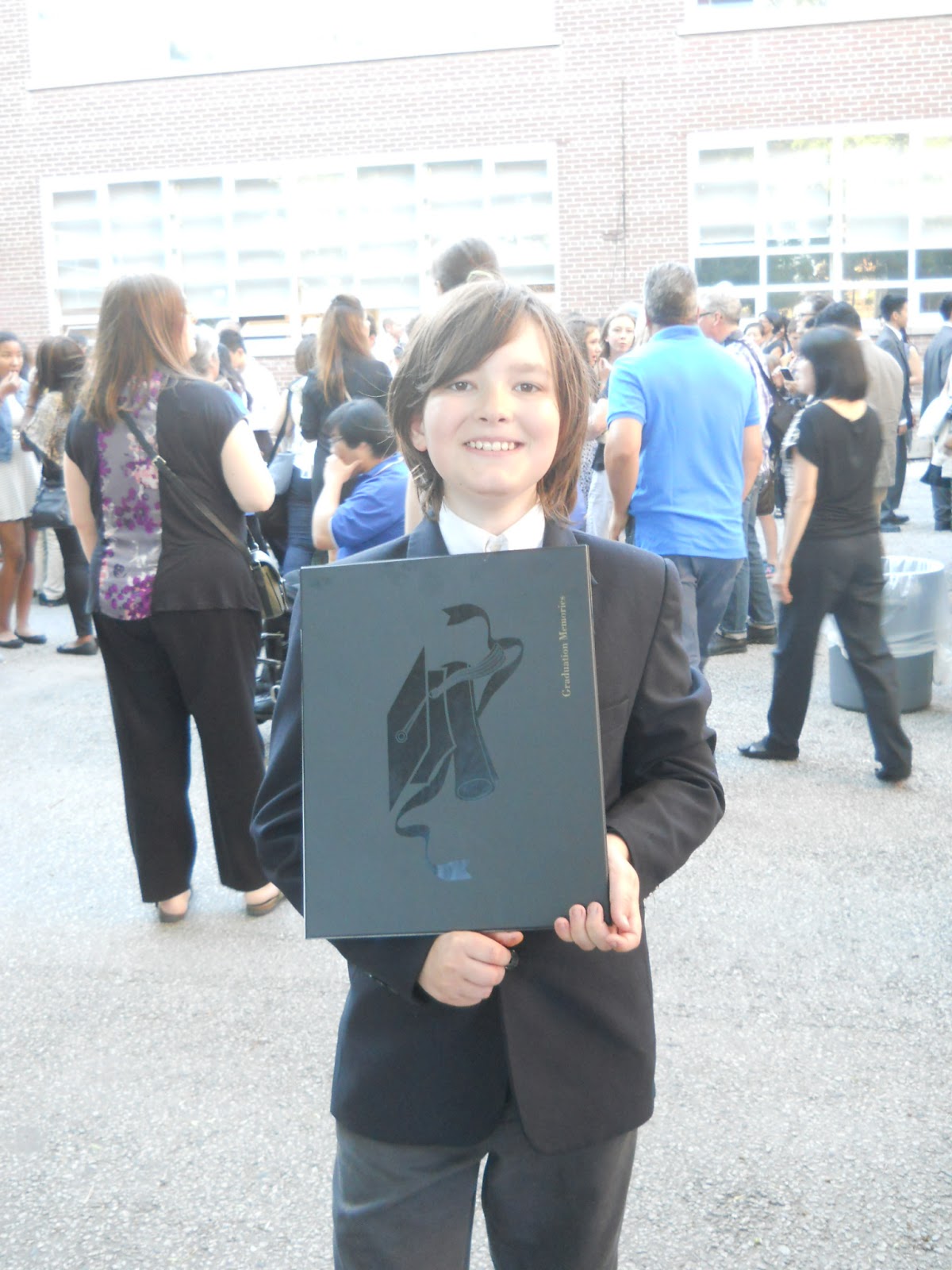
I don't recall a "diploma". His is larger than my wife's university degree.
"Other than boat related" has dominated that summer, alas. There was the pressing matter of seeing Cabin Boy Number One finish elementary school.

Yes, but can you reduce a sight?
And my wife, the wildlife rehabber, brought baby pigeons home...and, because they needed feeding every few hours, BROUGHT THEM ON THE BOAT when we overnighted. There may still be millet in the bilges.
Certain elements of my life are well beyond my control. Sailing with eight pigeon chicks is emblematic of this.
 There were dinghies to assemble and cabin boys to row them:
This 10-foot nesting dinghy, which also has a sailing rig, is going to be our son's primary tender. The more cargo-oriented Portabote will be ours. Unless circumstances dictate differently.

And there was an enormous amount of paying work in June and really, well into July right up to the present. Good for the bottom line, less good for boat-related tasks. However, there has been time for the occasional refreshing dip and boarding ladder testing:
Cabin Boy can swim perfectly well, but he likes to bob and doze off a bit in the water.
There's been a few sailing days...this one saw us overhaul a similarly coloured  Viking 28, the "little sister" to our Viking 33, Valiente.
"Eventide": I don't know where she's berthed, but that's a nice design on the jib. We effortlessly overhauled her.
Fortunately, our fairly paranoid weather sense led to looking aft and we didn't like the look of the sky.  I fancy I can "smell" weather and (broadly) sense barometric changes. It's either something innate or is a skill I've learned and which I am mistaking as innate. Either way, it's kept me safe and dry since I was a kid.
It wasn't like this, I mean.
So we dropped and secured our sails, kicked the fenders over the side and motored back to the marina and tied off with the requisite spring lines. A mere five minutes later, a characteristically brisk squall of short duration passed over. I would say it blew at 35 knots or so.
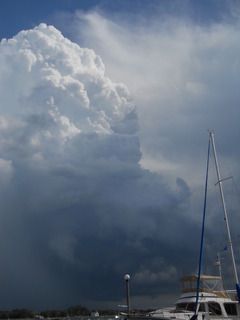
One of these babies: you are seeing the backside of the squall we ducked. Happens about a dozen times a summer, and you can heave to or run off without much concern, because they are gone in five to 15 minutes.
Unfortunately, a Viking 33 we hadn't noticed during our excellent sail was out in the squall, and evidently was too close to the rocky lee shore of  a local water slide...and she met her end there.
Very sad, although my first rather mercenary thought was "this makes the boat I'm trying to sell a wee bit rarer". Photo (c) Jeff Cooper
According to fellow Viking 33 owner Dan Erlich (Ketchup): "Last Sunday during a line squall the inexperienced young owner was too close to the rocks when the squall hit and his crew went below to be out of the rain.  He had no one on deck with him.  Hull number 24 has the traveler on the coach roof so the helmsman could not dump the main sheet.  That is why I prefer the traveler in front of the companionway on this boat.  The engine on this boat was a 15 Hp outboard not suited to pitching seas or extreme heel angles and no one felt compelled to have the anchor and rode ready to use.  The result was boat was pushed upon the rocks and then holes were eventually punched through the hull in several places."
Ouch. It's never good when a boat dies.

The still-kicking, for sale boat, after the pigeon incursion, needed a good clean, so a good clean was done, partly via the removal of the accumulated crap we've felt necessary to accumulate over our years as cruisers.

The full horror of "colour-blind Scotsman brown plaid" is revealed when you stow the sails properly.
Of course, having done this task of subtraction and the application of elbow grease and teak oil, the boat's rarely looked better, and I want to keep her all over again. But I will entertain thoughtful offers.
I haven't seen the top of this navigation table for three seasons. Usually it's covered in obscure little boat bits, logbooks, and charts.

For simplicity's sake, we dealt with deck and hull cleaning by motoring over on a calm evening to the bigger boat Alchemy, which has a power washers and all sorts of cleaning supplies. The nearby presence of a soot-producing airport was revealed as dirt sluiced off the boat in impressive amounts.

Very possibly the last time my navy will raft up.
 The result was a markedly cleaner and less cluttered vessel, inside and out.

Ooh, shiny.
 But the real work on Alchemy has not been avoided or shirked. Something fuelish this way comes.
I'm actually starting to enjoy wire work and brand-new circuitry leaping to life in a safe and non-flammable fashion.

More to come, sooner, too.

2015-05-03

The russet-bottomed Land Rover takes flight

One of the three or four R-class boats clustered at our club. It's like going into a parking lot filled with Toyotas and Nissans and finding a cluster of immaculate Duesenbergs.
Launch day is invariably nerve-wracking for both the things that may happen as for the thing that do. Despite the overall level of confidence I have gradually gained in my own competence and ability to prepare well enough to dodge disaster, every year there are veteran sailors to whom bad things happen. I've had a "waterline view" of some of them as I tend to be crewing on one of the safety boats in the Western Gap, the presence of which is to be the first response to one of the shoreside crew or "slingers" falling into the exceeding cold (2-4 degrees C as of today) water. It's one of the few "all hands on deck" (or, in this case, gravel) events that sees a mass turnout of volunteers, some of whose jobs require a great deal of planning and precision to ensure that closely packed, multi-tonne vessels gingerly take flight and hence to the lake without drama or incident.
This is Fire Escape, a Regal 4260 powerboat belonging to a fireman (clever, no?) and which is, at 10,000 kilos (22,000 pounds) in the same weight class as the 15,000 kilo Alchemy in terms of manhandling.
I was quite busy on the water, which made the surrounding air chilly enough to demand four layers under my foulie jacket despite very benign and sunny conditions, and didn't take many pictures. About 20% of the launched boats seem to have engine or steering trouble daunting enough to keep our club's workboat, Storm King, busy with tows, although I'm not sure why this is, as it's not onerous to do an engine start on land with a couple of pails of water, along with other recommissioning tasks.
Eh, they went with sticky letters instead of my suggestion...

I know that many of our membership are getting up in years (or have died and the boat goes to surviving kin), and that delegating these tasks to less-experienced friends or relatives rarely is as comprehensive a process as the boat's owner customarily performs. One of the courtesies the safety boats perform is to confirm that a freshly started boat motor is exhibiting "throughput" of the necessary cooling water along with the exhaust gases. In my safety boat, we noticed an old C&C which wasn't gushing at all. The single helmsman (not the owner), who we assumed was doing a favour, went below to check the seacock, and emerged, rather quickly for his own years, to announce that the boat was taking on water! A call for a tow was made. As it turned out, and as some of you will have guessed, the seawater intake had not been closed and had not been clamped back on to the motor, and the man tasked with taking the boat from launch to dock didn't know (or couldn't reach) the seacock to either fix it or just to stop the sinking. All was rapidly fixed, but it argues that if you can't, for whatever reason, recommission your boat, you'd best make a meticulous list of "must-dos" for the well-intentioned to do it for you.

Storm King tows the big "Blue Barge" used for lifting mooring anchors off the bottom and other beefy tasks to its tie-off spot. The Blue Barge, while very useful, is an absolute pig to steer and keep on station and has a history of pitchpoling should one's geometry and physics be not up to snuff.

After all the boats (almost three-fifths) had been launched into the Western Gap, the action shifted with the cranes to our basin, where safety boats are not used as there are ladders and far shorter distances at hand.
Alchemy has no waxed gelcoat to preserve, and so no clever gelcoat nappies are used as is the case on Fire Escape.
The cranes used for launching the club boats, which vary in mass from one to approaching 20 tonnes (and no, we aren't the heaviest boat, but we are likely in the top 10) are, I believe, capable of lifting 40 or 50 tonnes...but that's at a near-vertical angle. The cranes operate in circular sweeps: the farther away the boat is from the massive crane truck, the lighter it must be in order to lift without tipping. This means "crane moves" and about 15-20 minutes of prep as stabilizing legs are put down and various bits of gear, such as the "spreader frame" seen below", are moved. It's pretty interesting to see, if at times a touch alarming because the price of getting it wrong is easy to imagine.
Those cables are bigger than they seem because that boom is so long the whole thing is far away, Dougal.
The crane operators are exacting, however, and are able to cherry-pick boats from tight quarters in a fashion that would be called "nimble" save that nimble's a pretty dainty word for hauling big boats around.
At the extreme right can be seen a "pusher stick", meant to keep the boat being launched off the seawall if it is swaying. Little wind yesterday meant that wasn't a big deal.
Alchemy came right after Fire Escape. Because of her full keel, and because she sits fore and aft in her cradle in somewhat different spots year to year, "cinch belts" are usually called for. These keep the slings from moving, particularly when one is on a sloped section of the hull as is the case with the forward sling below.
There are also "sling marks" on the top rail, but they are usually only proximate, as Alchemy's full keel means she doesn't have to land on the same spot in order to be safely upright.
So there's a bit of fiddling and many muddy if purposeful boots on deck. It's why I defer the hull wash until after launch, really.
The lines leading from the fairleads are called "control lines" and are used to "steer" the boat once aloft.
More fiddling and discussion and reminding from the owner of the necessity of cinch belts as will be apparent in a few photos.
Ideally, the aft sling should be forward of this point (especially given the couple of hundred pounds of line and anchors I stowed in the forepeak this spring), but you can only do so much.
 When all is judged ready, the sling handlers step to the next deck due.
Alchemy's mass and general bulk and metal tend to lead to more urgent shouts of "everyone stand back!" It's prejudice, I tell you!
That forward sling would be happier about 30 cm. aft, but you can't have it all. Where would you put it?

I'm not sure why the bottom paint looks a touch patchier this year. It's not like we stinted on it. Perhaps the chilliness of the application opportunities? We'll see if the growth is an issue in the fall.
And perhaps we will decrud or replace those nasty fenders which customarily lurk on the outboard side of the docked vessel.
The myriad things that needed stowing, or at least stowed lower in the boat, did not, despite the bow-down aspect of the boat in slings, did not plummet or lurch, as far as we could tell, during the airborne portion of the program. Despite our relative confidence in getting these parts right, however, I doubt I will ever feel entirely happy seeing our boat fly.
Love is a many-splendoured sling.
But despite the mutterings of "Jesus Christ, would you look at the size of that thing!" and strategic repositioning (which wouldn't help if the cables broke, really), down she came, safe as houses.
I for one enjoy owning a boat that inspires others to invoke their gods.
Nearly there...they call it "splashing", but it's more gentle if done right.

The engine started instantly, the prop turned eagerly and the shifter shifted when pulled and pushed. I think I heard about a quarter-second of squeal from the shaft, but all seems otherwise to spec. You make your own luck through work, it's said, and I believe it these days.
The rarely seen Mrs. Alchemy, who doesn't care for being photographed yanking on a spring line. Or photographed, period, really.

Back at dock, there were still a number of jobs: fetching the nesting dinghy, loading my bike trailer with cradle pads and ladder (yes, it's a feat of strength), and arranging the lines to accommodate our new slip neighbours, a young couple named Doug and Nicole who have just bought an imposing Mainship 390, a trawler big enough to be a northerly windbreak for us and for which we'll have to rig springs to keep our bowsprit out of their swim platform. Valiente launches next week, with I hope will be as little drama as Launch 2015.


2015-01-29

Transports of de light

I'm looking rough at the periphery these days, but at least I've still got nice legs.

I have made somewhat of a point, perhaps at times a point both prideful and smug, of mentioning that we aren't rich, that we do not own a car and that this Not Ownership has played a favourable role in being able to afford the protracted and expensive process of refitting a boat for world travel.

If I haven't, let me know and I'll scribble some hot air.
These have diesels in them slightly less powerful than my Atomic 4 direct-drive. They must burn two cups a week.

The fact is, of course, is that having a car, or rather, some sort of utility van of the Ford Transit or any number of unimported Japanese diesel van models (or even the very modest and unavailable in Canada Piaggio "Ape" above), well, it would be handy. My recent trip to Whitby to see the man who might blast my bottom (why does everything in sailing sound sexual?) was at the favour of the kind Captain Matt, and he's not the only fellow sailor who is generous when my cargo needs exceed that of my many bike trailers.
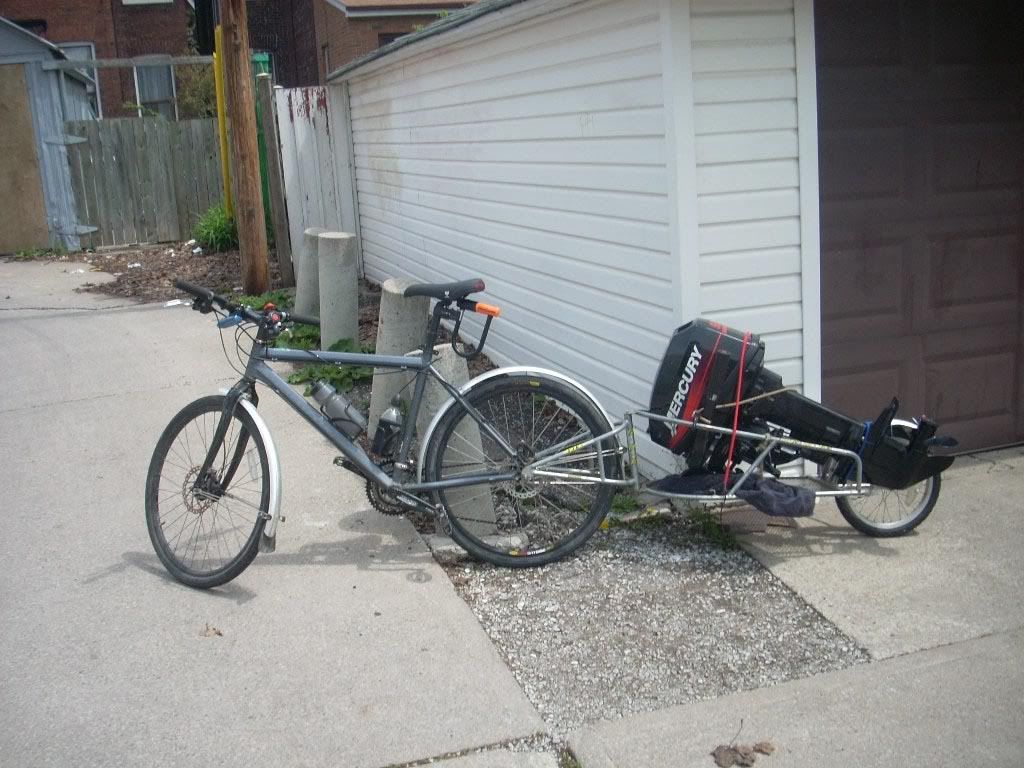
The new ride: a Brodie Argus with a cut-down Chariot, now more cargo, less child.
Speaking of which, much like a car owner, I have to occasionally buy a new bike, usually when the cost and incidence of repairs exceeds the remaining value of the bike. Such was the case recently, and I bought the above model, my first "road bike" in a long time, at a decent January discount. Unsolicited pro-tip: If you buy the previous year's model from a bike shop in January or February, it's possible to save hundreds of bucks as the stores must make room for the inevitable newer and shinier mount.. Pushing through the tumbleweeds at the bike shop was worth it and I received a lot of good advice from cyclists more up-to-date on makes and gear than myself.

The bike plus cart combo is similar to a tender to a boat as it's a means to transport more provisions at one go than would a simple backpack or shoulder bag.
So the land-dinghy involved some fabric amputation, the removal of the kid seats, the replacement of the near-done tires and tubes, some lubrication and a quick torquing of bolts. As can be seen, the old standard 26-inch wheel size of mountain bikes and the even older 27-inch class of older road bikes has been superseded in many cases by 700c wheels (definitions and debates of merits found here), which are big enough to have given me a turn when I first threw my relatively stumpy leg over what seemed to be a very large bicycle. But it isn't, and while a 57-cm frame is as big as I would like, I ended up raising the post a bit for a more effective stroke. Above, it can be seen that the trailer just misses the fender...I don't have to kludge together an extender.
It's crowded back here.
On the other hand, I must use up every millimeter on the chainstay to get this to work, and that fabric "safety strap" is too short to reach. So I may take a spare clevis pin from my sail repair box and pin that latch shut. With the mechanical disc brakes and spokes so close, it would be like ninjas with Cuisinarts if anything came apart.
If you see me (and with the flags and lights I carry, you bloody well should!), please don't honk. I might honk back.
The cart adds both rolling resistance and windage (although less that when this was a child-sheltering wedge shape) when compared with the one-wheel, low cart I usually use. But besides been old and unable to be retrofitted to the new, slightly larger bike, my one-wheel cart is corroded after nearly 20 years of service 12 months of the year (it's the grocery getter), and it carries a recommended 70 pounds, although I have had heavier loads that made it emit alarming complaints. The two-wheeled cart, by contrast, can carry at least 100 pounds, meaning (and here's where boat stuff comes in for those readers who have yet to enter the coma state), I can bring batteries, pails of paint, engine parts, small tankage like the water heater and yes, sail bags to and from the home base to the boat(s). With a web of shock cords, I can haul voluminous if relatively light loads without resorting to taxis or accommodating, if pitying, friends.
The white bin under the blue was seven bucks. I'm going to see if the UV or the friction kills it in months; if not, I can fit several of them on Alchemy.
The bike-orientated plans play further into the world of boats as our ideas evolve around how to get around the various countries to which we hope to sail. The current consensus is that bikes can be found nearly everywhere; that most (but not all) of them rust to bits on deck, and that folding bikes, while compact enough to seal in a bag, are expensive if at all good and are just not great for distances or much in the way of cargo. So the idea was, and remains, that we would bring the cargo "system" of a bike rack or two, and a couple of panniers both sufficient enough in capacity to transport laundry or provisions (assuming we didn't need to actually dock and shop for several months) by hand or bike and waterproof enough to stand drizzly trips in a tender between boat and shore.
Thanks to kitty, more money's in the kitty. Photo copyright © 2006-2015 byBrian Huntley
Now, while there are perfectly economical, not to mention easily built, ways to carry stuff on bikes, the customary method is to use panniers, which range from more or less soft cloth bags to hard plastic shells similar to those found over the back wheels of motorcycles.
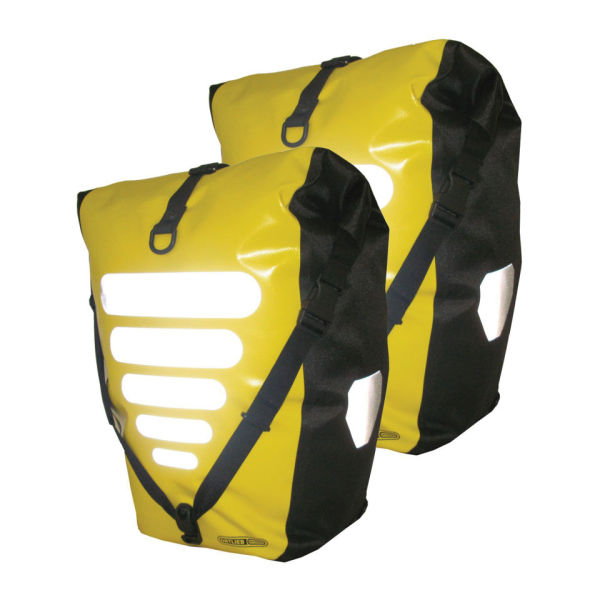
Ortliebs: pricy but cyclists seem to love them with Apple-like devotion.
So far, I am looking at Ortliebs, which have very few critics among cyclists, who like to argue about gear almost as much as the posters at Sailing Anarchy like to mock production boats and yacht clubs they don't like. Also under consideration are updated versions of Seattle Sport Company's "Fast Packs", allegedly fine in a monsoon, and the somewhat similar XLC Globetrotter bags, which seem obscure but the right sort for us, in that they are more or less duffle bags with straps and handles that can mount quickly on a bike and take a bit of sloshing.

These would be easy to stash when not in use.
I may be swayed a bit by the International Orange Colour of Nautical Safety.
So we'll see what the future holds for the role of bikes plus cargo plus boat. Sailing is evidently not just your old man's ditty bag anymore. Although I will have a number of those, as well...they stuff into corners nicely.
If you have two of these, they're called ditto bags.


2011-07-28

Look out, Portabote


I recently helped a friend sell a PVC Zodiac inflatable and a 15 HP Mercury outboard. Not much remarkable about that, but upon inflation and inspection, the Zodiac proved to have a rotten (as in "transect with poking finger") transom and more than one hole in its various parts.

The buyer, another, unrelated friend, was quite understanding and is endeavouring to salvage the Zodiac, while was just about worthless at time of sale. The engine worked fine, thank goodness.

My friend the seller had never used the thing, but it made me think of the damage, largely invisible in this case, that was done merely in storing a significant piece of boat gear between uses. As one does. Apparently, moisture was also stored with the rolled up Zodiac, and rot was the result.

Extrapolate this to the concept of a life raft case mounted on deck in all conditions, and the concept of "what happens at sea to gear we want very much the one time we really want it". Stuff like "emergency tiller/tiller head", "parachute flares" and "hand-powered watermaker" come to mind, also.

Our choice of nesting dinghy and folding Portabote was in part influenced by such considerations. One can be fixed via familiar epoxy repair and the other with glue and plastic, but both are fundamentally stronger than an inflatable (unless they come in Kevlar, I suppose). The point here, however, is that they are going to be used regularly; problems will hopefully manifest in a small way subject to easy remediation rather than in the "wasn't that supposed to inflate?" way that may be the last words uttered at sea for some unfortunates.

Well, although it's more toy than watercraft, some clever buggers have made an origami plastic rowboat.


Made from a single sheet of plastic (excepting the oars, I gather), the boat was designed in a paper-folding workshop that focused on generating 3D forms out of 2D drawings.
I would suggest they succeeded, although how stable the thing is remains to be seen. What it does demonstrate is that even the very clever and increasingly popular Portabote folder might be yet improved, lightened or made dimensionally more compact, which I would image those who see some compromises with inflatable may judge as a Good Thing.


Of course, there are other ideas on how to get to shore without getting one's feet wet (or semi-wet). I don't see these as practical for any place beyond a mill pond, but they do show innovation and that all the good ideas haven't been thought of just yet.

Consider the Shuttle Bike. It's a way to convert the average mountain bike into a water taxi. As someone likely to bring bikes along when cruising, this holds some appeal.


Or how about an Amphibious Bike? (Shh, it's only a model...)


Or if you can't ride, make like Jogging Jesus and stride across the wavelets.


How many of these concepts are applicable to the cruiser? Maybe none. Maybe I'll follow the herd (and not the Pardeys) and opt for a "soft" over a "hard" tender. (Note to foreign readers: "Hard tender" is one of those nonsensical phrases, like "jumbo shrimp", that litter English. Nautical English is particularly confusing.)

But we shall see, and in seeing, shall learn.