Copyright (c) Marc Dacey/Dark Star Media 2006-2020. Above photo (c) Marc Dacey. Powered by Blogger.
Showing posts with label Costs and cruising. Show all posts

2020-01-28

Last of the Toronto Boat Shows? We certainly hope so!


Well, I might as well wipe my feet on something nautical.
I've spent the last two weekends (and Mrs. Alchemy eight of the last 10 days) working at the Toronto International Boat Show at the Genco Marine booth. The missus worked there when they had a harbourside store for a few years when our son was but a nipper instead of the hairy young man he is today, and she has come back to help (wo)man the till for the January event.

This year, I was asked to work weekends as a human filter for Mitch Kitz, who has an encyclopaedic knowledge of marine electronics and can be considered the Ken Jennings of Salty Jeopardy. Which doesn't exist, but if it did, rum would be involved.

I've been attending this boat show since 2000, right after we bought our first boat Valiente on August 31, 1999. Due to the possible fudging of press credentials, volunteer work at my boat club's booth, and now getting in as an "employee" of the most transitory type, I count with pride the fact that I have never paid to shop at the boat show.
All that pink fluid is plumber's antifreeze for the winterization of various water feeds. The strut is being removed and replaced with stronger models for that "ssssh" effect I enjoy.

I have, however, shopped. Search this blog for "boat show" and examples abound of engine and prop purchases, lights and tank bargains, and the inevitable "consumables" of boat hooks and fenders, of which the missus says we have too many and too much. And plenty of sarcasm about dodgy sailboat designs...I didn't even bother with the few examples of dock jewellery present this year. I did get a nice LED 10 watt-equivalent light, however, which is one of two now brightening the engine bay at a "cost" of just 0.0833 amps, times two.
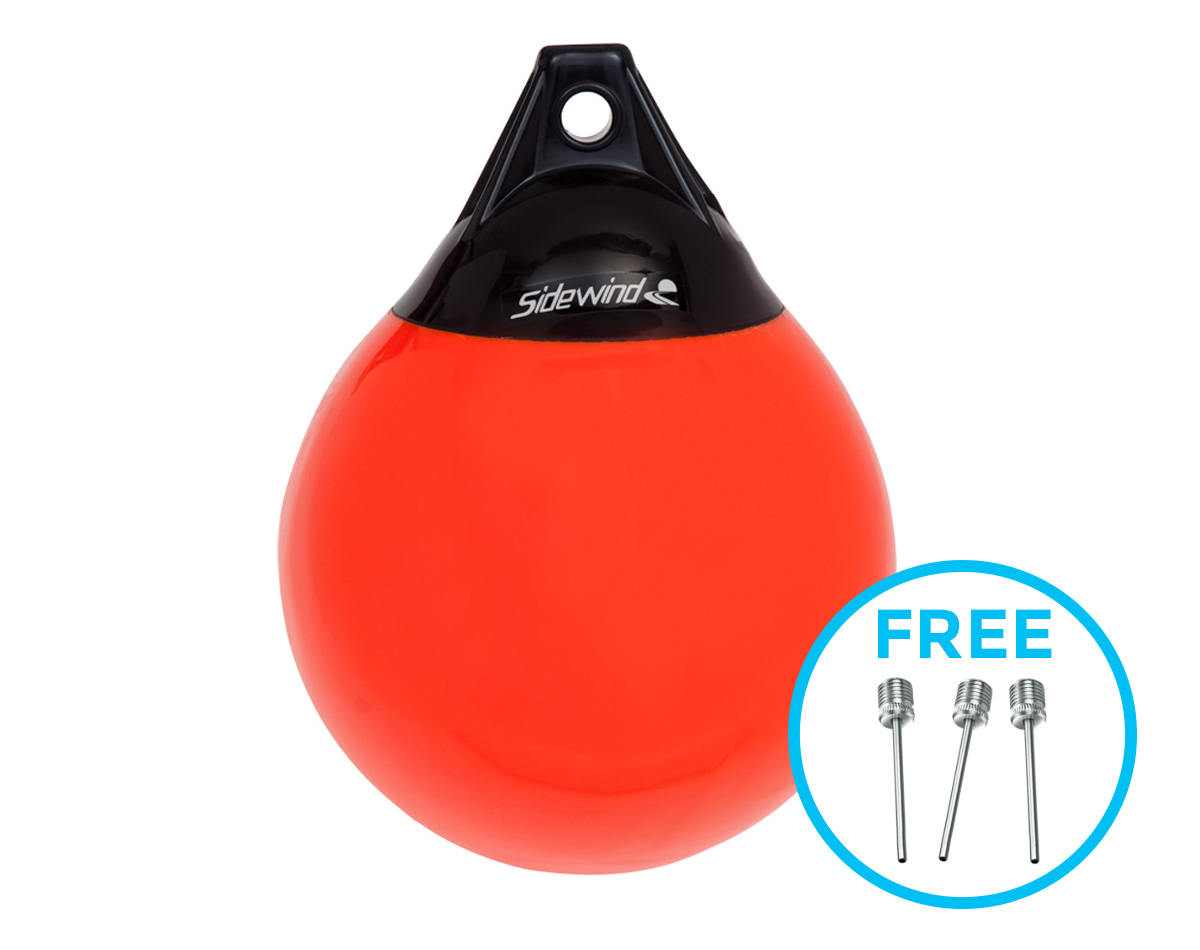
Not the best, no, but I consider them sacrificial in the locks we will soon transit.

The boat show, alas, is not what it used to be, not that it ever was this far from the ocean. Most of the boats and most of the visitors, of whom I spoke with dozens and dozens in my "may I help you" role, are orientated toward power boats of various kinds and it was nice, if fleetingly so, to chat about sailboats. None of the sailboaters appeared to be below 50, a grim little factoid about the demographics of those who prefer wind to fuel.

There were several of these and they proved popular. Apparently, the PR disaster has passed.
But any boat requires an anchor, and so I was deemed "the anchor guy", despite a relative paucity of, you know, anchoring much yet on Alchemy, though we did drop the hook a fair bit on the previous boat. I was a little disturbed at the general poverty of knowledge of ground tackle and how to use it, but this is partially due to nearly half of the visitors to Genco's anchor corner stating "I just bought the boat and it's got a rusty Danforth and no windlass...let's talk." The generational transition proceeds apace and new people are learning that boats remain cheap: it's the fitting out with better gear that costs money.
Man, people love grilling on boats.

A lot of barbeques were sold, and I did get a little cross-eyed relating in excruciating detail the attributes of what is essentially a propane mantle in a steel box. But the focus around here is on the beer, the cottage and combining the two with meat on or beside a lake. The ocean is far away and probably cold.
Last seen in the "salmon mousse" scene.

Which is why I bought this otherwise impractical item. It's a Gul neoprene zip-up 'rigging jacket', thick and a little heavy, like a bondage blazer. It looks like I would have heat stroke in it in any other place than where we are going, which is the North Atlantic via the St. Lawrence in 10 or so weeks. Ice, snow, sleet and wind may be factors, and this I deem the watchstanding jacket to do it in. Besides, it's discontinued and was very cheap.

The biggest purchase was that of two Honda eu2200i portable gensets, which can be linked together to produce 4000-odd watts, or 30 amps, which is suitable for light welding or running our whole boat in most situations. Our existing 12-year-old Honda 2000, the predecessor model, will be pickled and stored in Trenton as it is not done yet by a long shot, but it can't be hooked together with a "companion" model like the newer, somewhat more powerful models as they weren't CSA-approved when I first bought it. The  new ones are. I saved about $300 and the sales guy will deliver them to Alchemy.
Bonus use: as bicycle helmets for retrieving supplies in port. We are bringing at least one bike to Halifax.

Lastly, in terms of notable purchases (aside from upping our total of Spinlock Deckvests to four) were the trio of Gul helmets suitable for sailing, kayaking, getting a glancing blow from a boom, surviving a short fall down the mast, or smacking a hard part of the boat falling over. They were also a good price, about half that of MEC, and I remain persuaded that a helmet in a good blow is a good idea.

The boat show, however, is but a shadow of its former self and I am having trouble reconciling words like "Australia is on fire" and "carbon tax" and "impeding doom" with the massive powercruisers, wave riders and pontoon boats with giant outboards I saw casting wicked spells on middle-aged men and bored-looking spouses. Nonetheless, working on the retail side was interesting and I have yet to manifest the 'flu. And Ben Gartside, the man from B.C.who sells me my Beta Marine spares, gave me that rather fetching door (deck?) mat at the top of the page. I will both treasure it and wear it out.




2019-08-31

A slight change of plans...

Apparently it's a popular place these days.
This is Halifax. At this point, the last day of August, we had expected to be near or nearish to it and booking interesting activities like apartments and hull treatments. But we've had a very busy last six weeks or so, and while frustrating and sweary in parts, it's also been productive. Two weeks ago, circa August 15th, we decided to overwinter here in Toronto, leave the boat in "layup afloat" (mast in, at a slip, covered over with a frame and plastic and with agitators breaking up the ice) so we can go down the St. Lawrence in spring 2020 without rushing and having honed some rather rusty sailing skills.

Also, there was this factor:

We didn't want to rush to the Maritimes chased by fall gales and not lingering in nice places because we were racing bad weather.

Nonetheless, we've now sailed some and repaired or installed a great deal more. The boat's in good, serviceable shape and we have a good game plan for doing here in Toronto what we would have done in Halifax in less familiar surroundings. We've even got a land-based apartment as I do not propose to sleep aboard the "job site".

Some refitting highlights follow. Amazing what living aboard does for one's productivity!

 It's been a hot summer and we tend to skip lunch. Dinner, however, makes up for it. My belt's needed five new holes since May. Hmm.
So many parameters!
 After a rather steep learning curve with the hydraulic steering, we got the autopilot sorted and properly installed. And attractively mounted, if you ignore the previous generation of gear's mounting and conduit holes.
The rudder feedback sensor took a day to mount correctly.
We are at the point now where the AP steers better than we can, so we let it. Basically, we input a true compass heading and correct to conditions. We derive that bearing by putting a cursor with generous offing near our desired destination and just keeping a watch on events. It's clear that a lot of local sailors are going to some waypoint very close to, say, a buoy or other nav aid. That's not so prudent when two or three of 'em do it at once, we feel.
Lazyjacks took effort: the irony did not escape me.
 Lazyjacks and two separate Dyneema-core reefing lines are now on the main. That's a safety improvement, as are the preventers we can now rig for downwind sailing in blows.
 Fact is, prior to actually leaving, we haven't needed reefing lines. Alchemy can carry a full main well past 20 knots apparent wind, and if we encounter more, we've just gone to the staysail. But all is different now.
The secondary fuel filter: Not, evidently, guilty.
 We had a big delay around August 1, when, while on a test sail in light air, our engine basically sputtered and died and only started again reluctantly and at very low RPMs. We made it back to our dock with difficulty and an odyssey of troubleshooting commenced.
And goat sacrifice to the Dark Diesel Lords.
 Basically, we were:
  • 1) starved of fuel, and
  • 2) the fuel was old and grotty, and
  • 3) we needed to change it all, which involved moving all the batteries to access the tank tops to vacuum out crud, and
  • 4) we changed all the supply side fuel lines in case of said crud, and
  • 5) we installed an inline fuel pump (a Walbro FRA-1, for the intrigued), and
  • 6) we changed out all the filter elements, primary and secondary.

And don't forget the goat.
 Very long, laborious story short, the problems seem solved. We've done about 50 hours of rocky and calm motoring without issue, but it took a very long process and a lot of questions strewn about to the helpful people at the club (and elsewhere, thank you!) to solve Why Won't Beta Purr? I feel we were fortunate not to bugger the injectors and we will be cycling thrugh the fuel...and the biocide for the fuel...moe quickly in the future.
Ahctual crap sailing!
 Meanwhile, there's life aboard. Frankly, it's pretty nice.
My sleep schedule's changed.
 There's a lot of sky watching...
Nothing's ripped!
 ...and practising sailing in various modes...
Scored an end dock. Sweet.
 ...and travel to exotic places. OK, this is Trenton, jewel of the Bay of Quinte and where we keep stuff.
An actual exotic beverage, this was. The brewery was micro, indeed.
 We plan to sail as deep into the fall as weather and insurance allow, to see what breaks or falls off. Best to know here than 1000 NM eastbound, I think.
Cobourg, a harbinger of Trenton.
 A happy side effect of deferring our departure is that we get to attend my nephew Ryan's wedding. That required some collective sprucing up ashore and the acquisition of more formal duds.
Cabin Boy, soon to be Cabin Man.
 Lastly, I put the AP controller on a "helm extender", because just having the thing sticking out of a hole on a NMEA 2000 cable wasn't a long-term game plan. It looks about as nice as I can do with a piece of scrap teak.
The answer was "more helm".
More to come and sooner next time!

2019-05-13

Getting properly hosed

Helm's deep: Mind the hobbits.
I alluded to the rehab of the hydraulic hose setup in a previous post. This was accomplished by biking a fairly ambitious distance from downtown Toronto to the north of the suburb of Brampton, home of Green Line Hose and Fittings, a well-regarded hydraulic specialist. Because I was not entirely sure if my fittings were metric or Imperial, I removed all the old, starting to weep hoses and handed them over the counter, saying to the compentent fellow there "please replicate these". And they did.

While I have two seal kits for the two helm pumps, they looked in pretty good condition, and so become spares for the future. While onerous to replace and reroute these hoses, it was a good learning experience. We have the autopilot pump in hand, but ran out of time to fabricate and weld in a stainless steel mounting plate for it, which I hope will be done this week, after which I can piece together the new and wonderful autopilot. However, we were able to launch with restored steering that is properly pressurized and is clearly needed fewer helm wheel turns to go chock to chock, so to speak. In fact, I may have to take a more subtle approach as it's that much more responsive.
Shiny is good.
Restoring the hydraulic oil was interesting. Firstly, my hose runs are long: nearly 25 feet each from the pilothouse aft to the rotary actuator pump in the stern, plus a pair of 15 footers from the aft helm on the "sailing deck". Even with the tiny cross-sections of the hydraulic hoses, that took about three litres of oil, all of which had to be bled to purge the air (using cryptic translations from the Japanese I would have run through a native speaker's brain before printing, personally). Still, can't argue with success.
Dryfitting prior to bottom painting.
The aluminum anodes are on, all 16-odd kilos of them. I had a bit of trouble with Nautilus Propeller's fulfillment from the VariProp factory in Germany; having been promised the aluminum prop hub anode I ordered at the boat show months back, they sent zinc instead. No good to me at their price, as I could get zinc at a fraction of that from the U.S.-based Boat Zincs. com. So I have a zinc prop anode on the prop and aluminum plates on the hull and fingers crossed, this will suffice (the two metals are cathodically close) for the trip down the river until haulout in October in Nova Scotia. Had I left the magnesium anode on the prop, it would've potentially bubbled and fizzed after Quebec City and the introduction of salt water...not a good look!
Better than nothing!
We switched to Pettit Horizons bottom paint, which went on thicker and more expensively. Looks good, however, and, as in the past, we changed the colour so that paint failures will reveal the previous iteration, should that be a data point worthy of note
Ready, aye, ready.
Anode what you did last winter.
The next step was launching for 2019 into an already swollen lake.

2018-04-07

Surveying the risks


"Non-compliant": yes, we know. We haven't used it since shortly after getting the boat. Probably is empty. Photo (c) Peter McGuire, Fastnet Yacht Surveys.

Had a survey for insurance purposes last Sunday, something our insurers haven't asked us to obtain  A couple of things we knew (Mrs. Alchemy was present as a learning opportunity), such as the superannuated propane tank and the propane hose that needs replacement after 10 years, and that the inline filter for the air condition seawater circuit was not ABYC-approved. Both are easily fixed, and the last one can find a use for a salvaged little Perko-type strainer I already have stowed.

It's an Octopus, but not the breaded kind.

We also know we need an isolation transformer. It's on the list. What I didn't know or noticed was that the hydraulic hose going to the pilothouse helm pump is starting to "sweat", meaning Its Time Has Come. As I am planning on installing a hydraulic autopilot this summer, I think I'll buy the replacement and the "new" hose and fittings at the same time. Still unsure of which autopilot brain box I'll install, but I'm leaning toward this. And this display. While we intend as a matter of course (nav pun) to steer to a heading, rather than to a waypoint, so as to reveal set, drift and leeway, etc., we are going to preserve the option of interfacing with the existing plotter. But mainly, it's about robustness.

So is risk assessment. A lot of decisions on the boat are driven less by what we think we can "get away with" and more by "if we do these things and follow these practices, we will lower our chances of catastrophe". That's more than wishful or magical thinking, it's prudent seamanship, which is something even a land lubber can practise. We try to follow the precepts of "renovate, repair, and, if possible, improve". It's why the failed Schedule 40 galvanized steel pipe nipples topped with bronze ball valves have been replaced with Schedule 80 (beefier) stainless steel pipe nipples with Marelon ball valves.
Before...
And after...still to do, the reconnection to the respective drains.
Was I always this cautious? No, but near-sinkings and hanging from tethers over a wild sea will sharpen one's sense of the transitory nature of life and boats, and suddenly backflow preventers and gas sniffers seem like sound investments. This was brought home to me, again, just 12 hours ago.
You'd be melancholy, too.

This fine old fellow is "Doba". How he ended up on our ratty couch at 0300h is a cautionary tale. Doba is an elderly Dogo Argentino, a large breed of hunting dog, allegedly, but he is possibly the mildest-mannered beast I've ever encountered..."big suck" only approaches his degree of stolid amiability. Last night, circa 2 AM, I was fighting with a reinstallation of Google Earth when I heard barking and shouting from the street. Now, as we live way downtown; sonic shenanigans of this sort are not unusual of a Friday evening. I would have ignored it and turned in had I not heard the loud arrival of a police car, followed by that of the first of many fire engines.

One of the rowhouses across the street was on fire. Which one was not immediately clear, but I could see loads of smoke from my second-floor window and, briefly, flames curling up above the roofline. I woke the missus and went outside. Sure enough, Doba's owner, Paul, one of the two tenants in the building, and Franco, the building's owner, were on the street, with Franco clearly in shock. The speed with which the place had burnt was alarming: the second, top floor was effectively burnt out, but the four fire trucks on scene had knocked it down rapidly.

Turns out Franco on the top floor had left a cigarette burning on an ashtray that may or may not have been on the bed while he went to the bathroom. The bed caught fire and then the room caught fire. Everyone got out, save one of two cats (we've just learned that Cat Two was found) but I suspect the building is effectively condemned. Or so it looks.

We learned from Paul that Franco has had a loose relationship with risk management: while he owned the property outright, he carried no home insurance (unmortgaged houses are not, in fact, obliged to do this, which was news to me...and to our real-estate agent). He also had, as is required by law in our province and presumably in others, no smoke/fire detectors on each floor. Whether this would have helped is unclear, but it might have been possible to put out a smouldering bedding fire before it really took off had an alarm sounded. The house was from 1890 and that dry hemlock wrapped in horsehair was like an oil-lamp wick, unfortunately.

We loaned Paul and the basement tenant a couple of coats and had them in for tea and brandy. When the "warming bus" arrived, we offered to take Doba overnight. He did whine a bit, understandably, but he settled on the couch to sleep and was otherwise the perfect guest. Around 10:30 AM this morning, Paul came by to pick him up to shed elsewhere. I wish them good luck. They'll need it.


I relate this tale not to point blame at Franco or at any home or boat owner with a non-rigorous approach, but to illustrate that three people now homeless (plus three pets, including the vast Doba) and, probably, with a few hundred items destroyed or damaged possessions, might have avoided this outcome with some pretty basic forethought. What the surveyor pointed out by way of needing attention needs attention (although my insurance company took this year's cheque without complaint), but a shortage of alarms and extinguishers aboard weren't among the remedial aspects covered. Same with the house: we had tenants for years and there's smoke detectors on every floor with a CO detector next to the furnace, plus more fire extinguishers than are required in various potential problem spots. We have full house insurance, including coverage should I be unable to work from home, as it's my usual spot. These things are stated not to seem smug, but to indicate habits of mind. I have commented in the past (and recent events in the sailing world have kept it top-of-mind) how viewing the universe as more or less indifferent to one's well-being seems realistic, as do clear-eyed assessments of risk in one's environment, particularly that of the sea on small boats. There are parallels to small houses on land. You may think because you've never screwed up, you are an expert at something. This may be the wrong approach.

Prudence only looks like paranoia to the unprepared.

2018-03-24

Regrets and boat sales

One way to get it done. Photo (c) Yachtworld

"That's simply ridiculous when man with minimum education tells me that he's market expert (for example). Rip-off expert - I would believe so."
The above quote is from a recent Cruiser's Forum post in which an individual objected to being "pestered" by a broker with high-ball offers he judged, possessing the infinite wisdom of these sort of internet forum participants, unrealistic. There is a case to be made that apple polishing exists at the offshore end of the boat-selling spectrum, the potential passagemaking boat buyer needs to exercise some common sense about how worn boats at sea for years obviously can get.

You'd have to have been confined to a brig or live under a bridge not to realize how collapsed the market is for used boats, save at the nosebleed altitude of mega-yachts, and even those aren't commanding "oligarch" prices these days. Why would they? They are too numerous and it's cheaper to impress the people you want to have sex with on land.

I did find the obtuseness of the poster, however, interesting. He was simultaneously complaining that a broker he had approached for advice was pitching him boats, because he knew the prices were too high and resented the pitches. His contempt for the brokerage trade was not confined.

Brokers have a legitimate job in the ecosystem of the acquisition of boats, and, like used car sales folk, they are widely despised for it. But I'm not sure why the hate exists. The onus is on the buyer to ask for recent surveys, or, if the money involved or the lack of expertise on the buyer's side suggest it, to hire a purchase survey. The opportunities for getting ripped off are limited when reasonable boats in reasonable condition outnumber potential buyers. The broker, however, can be a useful filter in this process, but, in the era of Craigslist, Kijiji and other DIY operations, not a necessary one. But that is not their fault nor their concern.

The potential buyer can be correct about not needing a broker but can also be indifferent to their existence. And there is more than one way to sell or buy a boat, with variable levels of formality and agency. As an example, we just sold our house. I worked in concert with the realtor to show the place to ONLY developers, renovators, investment property buyers, and people who already owned houses in the area: in other words, to people who saw the place in context, didn't care that the paint was old and the floors needed sanding and that some of the improvements were visible through holes cut in the ceiling. That doesn't matter when you already know you are going to gut the place. It would be like putting on full makeup prior to having plastic surgery. So we didn't. I kept my old boat clean and gave it a cursory topsides buff, but I didn't, by a similar logic, pretend it wasn't 43 years old.

We avoided a general listing with the house. We showed it about a dozen times over five months. No "fluffing", no $25K "staging" or "white boxing": just a sign out front with the "Exclusive" label on it.

We named a fair price. We got that fair price. We paid a fraction of the usual commission. The tactic and the price was based on my extensive research of the 20 nearby houses that had changed hands in the last 36 months.

I mention these aspects because houses and boats sell according to similar agent/broker models, but those models are variable...if you, the buyer or seller, so request. If you don't like the game, change the rules. If you don't like the game with changed rules, don't play the game. I see non-garbage boats on Kijiji I would jump on, if I didn't already have a boat and if I knew anyone who wanted a boat...but, of course, I don't. If you're not paying a broker's cut because you resent broker's cuts, you can keep a surveyor on speed dial. Apart from the price used boats command, selling and buying one outside of the former paradigm is, like so many other fiscal activities in our brave new world, largely frictionless. That said, I can't blame a hungry and probably depressed broker for trolling any name they have. Neither should any buyer or potential buyer. After all, you may want to sell your boat someday, and, unlike an algorithm, a broker may not be interested in your custom at any price.

I had my first boat with a broker for 18 months. We showed it about 25 times. Not a single offer. A guy in my club offered me half of what I'd listed it for, no survey, all cash. I see my good old boat sailing off the mooring regularly. I have no regrets, save I'll never get those 25 showings' worth of time back. And that includes the hard and generally (in my experience) honest work brokers supply.

2018-03-15

Through hull and back

The foil was there to act as a shield for grinding and welding hot bits flying into a mysterious part of the boat I call "the smuggling locker".
Behold the starboard exhaust pipe nipple. It's more or less right at the unloaded waterline of Alchemy and is the passage for the combined diesel exhaust and cooling water. As the attentive may recall, I had a flooding episode last August when the threads on the port 29-year-old Schedule 40 galvanized steel pipe nipple that drained the galley sink failed and water came in. Unfortunately, because I'd spilled some transmission fluid while doing an oil change in the bilges, I had left the bilge pump off. Won't make that mistake again.

When taking off the starboard side ball valve, the starboard side pipe nipple (the drain for the head sink), crumbled. This occasioned a rapid revision of the winter to-do list. New, non-metallic ball valves were ordered, and welder-fabricator extraordinare Andrew Barlow was located and offered boat bucks to replicate the four engine-bay pipe nipples, two which were the problematic below the waterline drains and one of which was the starboard side, waterline-depth exhaust and the second of which was the port side bilge pump exit.
The pipe nipples were all 1 1/2" outside diameter and were upsized with these rough fittings to take 2-inch I.D. exhaust hose.
The waterline pipe nipples, perhaps because they've spent less time submerged, were in markedly better condition than the "drain" nipples which were always submerged in water. I can't draw any conclusions about this in terms of any galvanic/electrolytic component to the failure of one and the clearly imminent failure of the other, save to note all these nipples presumably date to the boat's construction in 1988 and maybe 30 years is all you get. Maybe 20 is a better plan. Less nerve-wracking, certainly.
Mrs. Alchemy, who fits this space better than I, put up some tinfoil to keep grinder sparks from flying into the aft cabin and other places I did not care to have ablaze while I was doing hot yoga below decks.
I do know that, as with every "reset" on this boat, I have an opportunity to change the old ways for the new. Schedule 40 galvanized steel pipe was replaced with Schedule 80 316 grade stainless steel  pipe, welded in three passes with stainless steel stick welding to the hull. As can be seen from the linked chart, Schedule 80 pipe is over a quarter greater in wall thickness than Schedule 40. I'm going to paint these inside and out with two-part epoxy, as well, for insurance against corrosion.
Wanted on the voyage: the drain nipples, left, with NPS threads, and the exhaust nipples, right, which are grooved to take hose clamped exhaust hose directly.

A fly in the proverbial ointment in the fabrication of these pipe nipples was the typical NPS "straight pipe thread" customary in the marine industry. Most home plumbing fittings have NPT threads cut on them, the "self-sealing" type that does not require pipe dope. NPS require pipe dope, or the pressurized water external to the boat will creep up the threads...not good. For the puzzled, Rod Collins explains why this is important here. Note I do not have the load-spreading flanges seacocks on fibreglass and wooden boat require as a steel hull plate is essentially its own flange. But I still needed NPS threads: the Forespar 93 Marelon ball valves and they are quite clear on why NPT won't work.
The outside of the exhaust pipe nipple, minus the nipple. Further grinding down to "flush" followed.
Andrew, who has a machine shop where he works, expressed frustration that not only could he not locate makers of the very typical pipe nipple sizes I needed with NPS threads, he could not even locate an NPS die I could purchase so that a lathe operator could cut these threads. Trusting in my own powers of Google-fu, and already knowing that a fair bit of plumbing uses these threadforms, I tried my hand at sourcing the needful.

No...luck. I found places in the States that had what I needed, but not locally. Every gruff-voiced plumbing supply guy knew exactly what I was talking about, but couldn't help me. Luckily, Andrew found a fellow who had the right dies and could do the work quickly. And cheaply. Huzzah.

Lights, action, camera. Good thing I haven't put in the water tanks yet.
Having removed the existing nipples (grunt work a specialty), Andrew moved in to prep the area to be welded (a few passes with a sanding disk of ferocious efficiency on a DeWalt angle grinder of surpassing sincerity). His Miller welding unit is beautiful, compact and can work on 120 or 240 VAC, but to get the right penetration, 240 VAC is better. Andrew therefore brought some 10 ga. lead and a willingness to get into the yard's power stand to good effect.
I was prepared to sacrifice a 30 amp shore power cable. I didn't have to.

I'm just glad we seemed to be the only boat plugged in.
Zap factor enhanced, the prep proceeded. Bare metal (which I will paint over in a day or two when it warms up a bit) was revealed where once were nipples. Sailing is dirty fun, isn't it?
Well, at least I can gauge the thickness of the paint lay-up.
Andrew had me holding the pipe nipples on the inside while he did a couple of tack welds on the outside. It looked thusly from his viewpoint:
This job on a non-steel boat would have been half as loud and twice as long. I know because I've done it.
And like this from mine:
Before...

...during...
...and after.
Once the external tack welds were done, Andrew proceeded to make several passes of the SS stick both externally and on the engine bay interior. We agreed that doublers were unnecessary, such was the strength of the welding in making the pipe and the plate as one.

The whole bay needs a clean-out now and the engine a wash, but nothing caught fire.

Brought to you by Hydraulic Hatch, improving your blog since 2017.
The work was completed in three and a half hours and I am well-pleased. I have an insurance survey happening on March 30 and it will be nice, if not essential, that I get the boat back to "able to float securely" condition for that date with the new ball valves in place.
No nipples like new nipples.

Oh, and while I alluded to this earlier, I did not quite explain why the redo of the both the port and starboard waterline pipe nipples was necessary. It's because I'm finally going for "transverse exhaust" idea I mentioned four seasons ago. I have all the parts aboard I need, save for a couple of reducer barbs, and it's pretty straightforward to do.

The "skin fitting" with appropriate flap for the bilge pump exit.

As for the bilge pump (which will remain forever on "auto" going forward, naturally), its new exit will be near the exhaust, but not so near as to ever get warm. I can fit that myself.