Copyright (c) Marc Dacey/Dark Star Media 2006-2026. Above photo (c) Marc Dacey. Powered by Blogger.
Showing posts with label Nautical terms. Show all posts

2017-01-20

Time for some changes

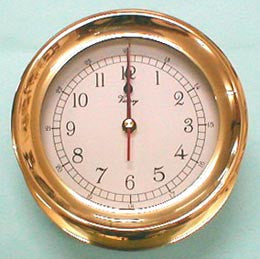
Because it was time for a change, this is my treat to myself for having sold the old sailboat. It's from around 1978 to judge by the serial number, and it's the first thing I've ever purchased on eBay. I'm rating it now prior to putting it in the pilothouse. It's in pretty impressive condition to judge by the outside appearance.
Eight-day windup. I don't expect it to be exact, but I have little faith in the reliability of cheap battery clocks.
The case for a "ship's clock" wound with a key is, in some senses, not a strong one, save for the observation that I've had rather poor experience with the modern replica types which run off an AA- or C-size battery.
Yeah, this is garbage. Sorry, "giftware".
The problem is the cheap, generic, plasticky and inevitably Asian clockwork, which fails to keep time, and fails variably depending on the season. Nnot to mention the pot-metal contacts that corrode even in the air above a freshwater lake. The fact that these are sold with the other anchor-themed tat that fails under "nautical giftware" is really no excuse as even the cheapest models go for well over $100 and the battery operated versions from the higher-end firms, such as Weems and Plath and Chelsea, can go for multiples of that. I don't buy a clock for the boat because brass is shiny.
The keener-eyed will note that apart from the greater number of numerals, this is the same model as I've just bought.
Now, the one above was the sort I really wanted, and was in the even more desirable version of a smallish 24-hour ship's clock that rang the bell, but the seller could not guarantee that it worked, as he had no key for it. Such timepieces are called, variably, a 24 hour clock, a deck clock or 'Zulu' clock, the Zulu having nothing to do with Michael Caine films from the '60s and everything to do with the "Z" in a phonetic alphabet that is shorthand for Greenwich Mean Time or GMT or also UTC. When it comes to time, it's a funny old world, innit?
 
Unfortunately, the 24-hour one on the right took a short tumble and died. Another battery-driven casualty of life aboard.

Why did I want such a near-antique as a mechanical, hard-to-read wall (or bulkhead) clock? Well, one of the upcoming boat projects will be the installation of our ICOM M-802 SSB transceiver and its associated bits. I noticed way back on my Atlantic delivery in 2009 that skipper Bruce Clark kept a nice small mechanical 24-hour clock screwed above his nav table from which he would conduct his comms, download GRIB weather files and have his daily exchange with the alas-retired weather routing expert Herb Hilgenberg
Herb was routing us through this: the remnants of Hurricane Ida. Was a bit bouncy.

There's two concepts at work on a ship (and of which I have written before): local or ship's time, and the time back in Greenwich. Ship's time is useful for planning lunch, but the time in Greenwich, thanks to centuries of maritime convention, is essential to working out one's position at sea with a sextant. Which I own and know how to use and which doesn't require electricity or a network of satellites. Handy, that, particularly as we live in what are arguably interesting times. Seamanlike prudence starts with a Plan B, and besides, for logical reasons, most radio communications are scheduled in Zulu time and so are many official logbook entries. Keeping one clock aboard coordinated with an arbitrary point on the planet is therefore neither pedantic nor unhinged. And the skipper likes 'em.And has an excellent wrist chronometer as backup.


2015-05-20

In praise of older hydrography

Somehow you'd think the scale would be better.

Thank the Canadian Economic Action Plan, I suppose, for the low-res graphic above. For those sailors and casual readers who may wonder if they need to up their kale intake, it's the cover of the latest "Chart 1", the Canadian Hydrographic Service's glossary of terms and graphics that is the key to understanding and decoding (at least until it become second nature to do so) the paper charts mariners, including recreational sailors, are legally required to carry aboard under the Carriage of Charts provisions of the Canada Shipping Act, and which are available at the better sort of nautically minded shop. In some cases (but not all), electronic representations of these charts will suffice, but you need to have Chart 1 at hand as a navigational Rosetta Stone to read the hieroglyphs chart makers customarily use. Contrary to popular belief, the closer one sails to shore, the more crowded the water gets from the view of the nav table (another rapidly outmoding term) or the helm plotter.
The U.S. cover is also a litttle hard to read, almost as if it's trickling down.
Of the several countries' waters in which I've sailed (Canada, the U.S., Antigua, the USVIs, the U.K., France and Portugal), most seem to follow similar conventions regarding their nautical charts, and, as world shipping grew, this was reinforced in the last century by adherence to the standards of the International Maritime Organization (IMO). Looking back, the science of hydrography as a practice evolved in Europe during the Age of Exploration, although the Arabs and Chinese certainly made excellent maps and navigational tools. While the actual charts of coasts and little sugar-producing islands were guarded with the same strategically prompted ferocity as are nuclear missile blueprints are today, the conventions of hydrographical measurement tended to standardize on the British, and, to a lesser extent, the French, model. This was particularly true after the fixing of longitude became accurate and mechanically aided, and with the introduction of superior cartographic techniques. Yes, the books linked are strongly recommended for those sailors capable of prising themselves away from the latest romantic peregrinations of The Bachelorette.

The result is that, with any relatively modern country's equivalent of Chart 1, the sailor can use their local hydrographic services and charts. Bias does play a role here, however, as a few countries have charted most of the world for their own national reasons: the U.K.'s Admiralty charts are generally considered the most thorough, whereas the U.S. NOAA charts are both free in electronic form and are in easy-to-download formats amenable to printing. My own choice would be dependent on destination (former British possessions tend to be better charted by the British) and (this is critical) the last update of the chart in question. If the surveyor was Captain Cook, admirable, innovative and careful as that particular hydrographer/explorer was, take the observation as, at best, provisional, and charts based on inaccurate information, irrespective of the media of paper or pixels, is why you keep a watch. Even the chart printed yesterday unrolled aboard still whiffing of ink (or the plastic and brass of an SD card) is only a snapshot in time of what is really in front of one's bow.
One of these things is not like the other.
As such, the debate between which is better, paper or pixels, is, I find, rather sterile. As this brief but excellent paper examines, it is the evolving human tendency to "trust" machines that is causing to fall into abeyance the simple acts of direct observation that would keep electronically navigated vessels safer by simply looking out and around in order to provide a real-world context for what the Playstation Plotter is insisting is real. Any trip to a restaurant in the last five to 10 year will reveal several beautiful couples facing each other with their eyes locked on their smartphones, which, contrary to the name, do not make you smart. And yet I am far from a Luddite; along with Ben Ellison of Panbo.com, I believe the fault is not in our plotters, but in ourselves.
Get the picture, sailor?

This longing for mitigated and interpolated reality is curious to me in the same manner as gazing at a hammer before pounding a nail is. On the other hand, I started sailing in 1999, and, perhaps more importantly, started navigating in 1999 via formal instruction...and I have yet to stop. While plotters existed in somewhat more basic forms in 1999 and were even acknowledged as the coming thing, I was trained to use paper charts in order to grasp the essentials of navigation, such as taking bearings off land marks, the difference between magnetic and true compass readings, and using every bit of information available to me, such as "running the depth contour" to give me a greater confidence that me and my boat were where we should be...or to suggest and confirm that we were not, a situation that can evidently affect even the most well-equipped vessels. Plotters are great and are inarguably convenient, naturally, but I am starting to conclude that they only make you a better navigator if you were a pretty good navigator to begin with. If you are not, on what basis are you going to find errors that could kill you? Faith-based navigation works about as well as anything else faith-based: while there are aphoristically no atheists in foxholes, there are no fundamentalists wielding dividers.

The British example of eyestrain.
For those who suspect that their plotters, if not actively leading them astray, are not teaching them the situational awareness critical to safe and thorough navigation, there's hope in the form of formal instruction, or even in the purchase of dead-simple flash cards and books with which the sensible sailor can grasp the related fields of chart mastery, buoyage, pilotage and who exactly gives way to whom in a crowded (or not) seaway.
Don't leave dock without them.
While British (and while you have to grasp the IALA buoyage system differences), these are of enormous help in relating what the charts says to what you are rapidly approaching and what that might mean to earning a sundowner.


Particularly helpful, and thanks to John C. for the review.


Clearly, if one wishes to spend enough money, there are electronic plotter setups,  particularly the newer (and priced accordingly) ones that provide a 3D view, that can allow easy navigation, especially at night or in fog when, short of creeping right up to a numbered buoy (which I have done more than once) to confirm one's location, you have little other options short of stopping, heaving to, or anchoring, if possible.
Bay Lake, as Canadian as "Avenue Road".

A compromise, rather than the multiplicity of proprietary formats of the various plotter manufacturers is to use a means to rendr paper charts in electronic form, as is the case with the free OpenCPN and other raster-based displays. For some, the familiarity of the paper chart (which have the advantage of the standardized symbols as well as the typically faster updating of a national hydrographical authority) makes the use of raster or vector (know the difference!) charts in electronic form easy, and in some cases, intuitive.


Warning: May not be intuitive.

So if you have paper charts, as is still required, you might as well use them, or at least be able to read them. Gleaning through your local charts with the relevant pages of Chart 1, perhaps with a suitable beverage, is still a good place to start. I daresay that you'll get more out of the fleeting squiggles on your nav app-equipped iPad if you choose to use one. I opt for a mix because sailing for me is more engaging when I have puzzles of trim, helm and, yes, navigation to solve. I have a GPS, several in fact, but I like to take bearings and make little cocked hats and whip out the sextant and even to swing the lead to determine that it's right. It nearly always is, of course. It's the electronic chart that may be wrong: Paper charts, too, can be, or at least you can be the first poor bugger to confirm that by means other than mere charts.

2014-04-21

When is a skipper a captain?

"Arr, matey, I be parallel parking this scurvy scow!"
Clearly, despite the eclipsing in most senses of the Age of Sail, the allure of the rank of Captain remains culturally intact, if at times nautically dubious. Now, as a title, it's never gone out of style as a military rank in various armed forces, nor is the usage of Captain a thing of the past for the commander of commercial, merchant vessels. But those uses are essentially professional in nature.

Slicker, peaked cap, spoked wheel and manly facial hair: Most male cruising sailors are using "old salt" as a style guide.
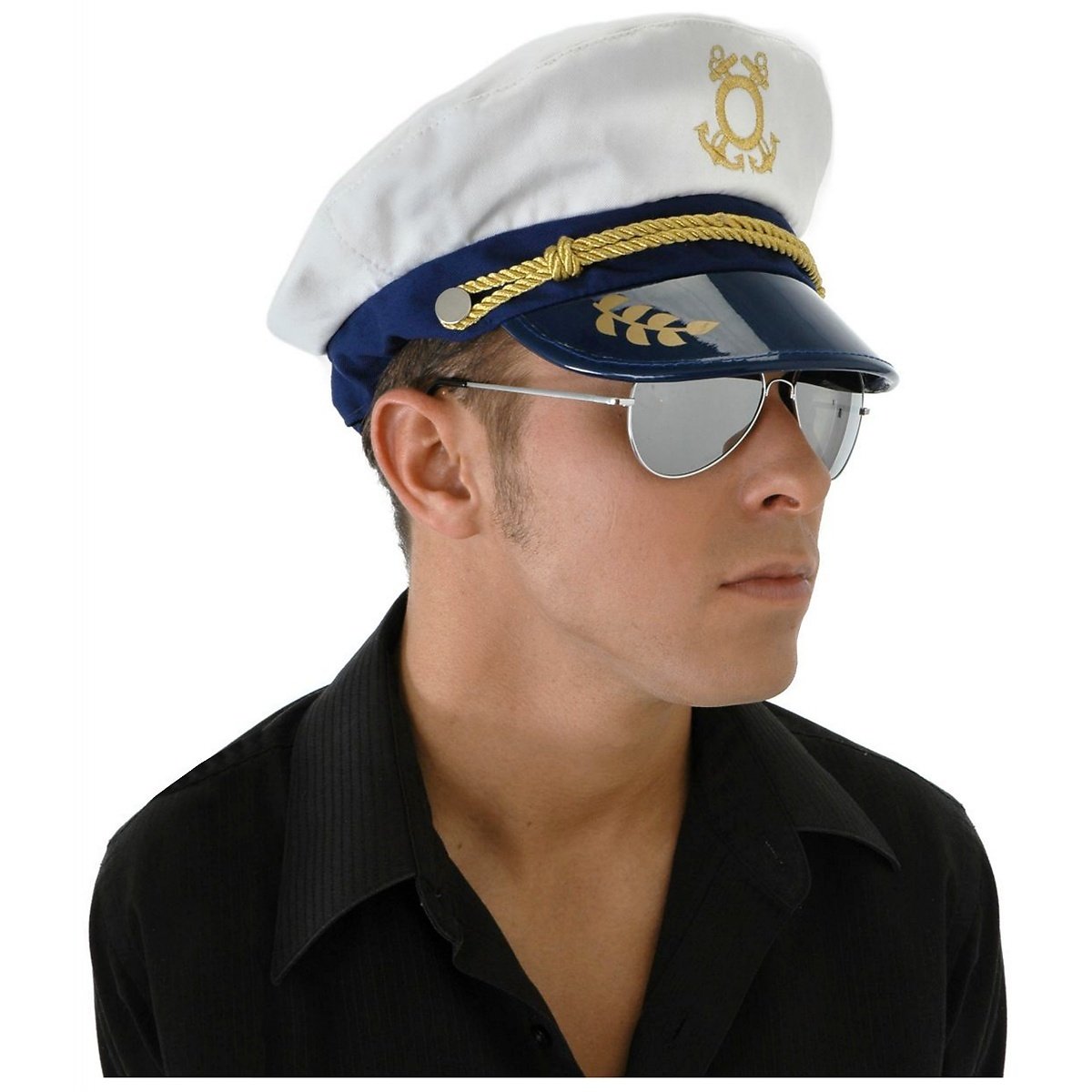
Is the skipper of a private yacht in any sense a captain? I've been called that, usually by someone trying to sell me something boat-related, but also occasionally by marine police or Coast Guard officials by way of inquiry. But despite a plethora of nautically themed headgear that imply a sort of braid-accessorized naval authority, I am unsure whether anyone in a sailboat (or powerboat, for that matter) is, unless such an individual is an actual current or former professional mariner or ex-Navy member, a "captain".

So, Captain Douchebagge, we meet again.
Certainly, as has been seen with the sad and disappointing cases of the captain of the cruise ship Costa Concordia and the recent sinking of the South Korean ferry, expectations are quite high and seem to include that "the captain stays with the ship" ...or at least isn't on the first boat off. Whether they are legally obliged to linger until they themselves are in danger of drowning is another question. Being captain is a job, not a holy office, despite what centuries of naval literature have suggested. Nonetheless, it's a rare job that has some real power when actually at sea. Not to mention a nice hat.

So the bumboat boys know who to pester
I've encountered holders of Royal Yachting Association (RYA) Yachtmaster qualifications who don't object if you call them "Captain"...but that's not quite the case, is it? "Yachtmaster" sounds a bit kinky when shouted across the deck, and yet that's most accurate. Harder to fit on a hat, though.

I see the YM course as a qualification, but not as a licence like a "ticket" from a marine school or institute. Some sailors obtain either through youthful employment or via military service or working on tall ships or coastal boats, certifications like a "60-tonne Master Limited". But generally, this pro or semi-pro level of mariner education is not pursued by those who wish to just sail their own boats, or, at best, run a rather limited sort of charter operation, 

But the lure of the title remains: The "ticket", leading to the stepwise attainment of the rank of Captain, is a sort of guild distinction. In the British Merchant Navy it's like being in a trade (see http://en.wikipedia.org/wiki/Merchant_Navy_%28United_Kingdom%29); you have to take both shoreside courses and "work study" aboard vessels if you want to get to second mate.
A Captain able to find rum before it's gone and all the occult treasure and seamonster one could wish. Docking, not so much.
Similarly, I don't think the licences the MCA issues are equivalant to RYA certifications in the sense that the person successfully completing the course is a licensed mariner. None of my research on RYA courses, despite a lot of informational crossover, lead me to consider them STCW qualifications.

I think the equivalency might be "private Cessna jockey" versus "commercial airline pilot", or private car driver versus the tractor-trailer driver of road freight. If I fly a Cessna for fun, it doesn't qualify me to fly a DC-3 for money, although if the DC-3 pilot has a heart attack, the Cessna pilot is probably the best option for experiencing a flame-deficient landing. The YM Offshore, which a good sailing friend of mine has recently achieved and is happily using on his sailing adventures, isn't a commercial or a professional certification, whereas a Captain is a sort of trade description, as well as a title or rank. Interestingly, until the mid-18th century, a naval Captain could be any titled lubber, Court hanger-on or Army guy, and was the person who made "naval" decisions based on the advice of the ship's master, the non-dilettante career sailor actually responsible for the sailing-not-sinking part. It took a series of reforms to professionalize the Royal Navy and to get the "place-men" reduced, although advancement still favoured the well-connected and the aristocratic.


If this is your charter captain, switch to a walking tour.
Anyway, while it's harmless to call yourself "Captain", I find it imprecise and allusive to professional attainments in an area other than pleasure craft operation. I would allow that the owner and skipper of any given vessel is its Master, but one doesn't need the RYA or the CPS to tell one that. Any warm body with a PCOC is an "operator" in front of the water cops, and a "master" in Admiralty law. I can claim salvage as a master of a sailing vessel, should I wander across something not under command or 'clearly adrift', although this is a very nuanced topic in law, and there are many who would suggest that the line between righteous salvage and vile theft is permeable. Skippers or captain, beware.

I have seen a document
on official RYA stationary in which the "am I now a Captain" question was answered with "we take no stance" is an attempt to say "call yourself Captain, because it doesn't matter".  If people think they are captains, or even armchair admirals, it's going to have some sort of persuasive effect on RYA course-taking, even though that is *never stated* in the literature; it's sold as "the opportunity to improve one's seamanship skills" (which it is, of course), or the opportunity to evaluate one's existing skills (which it also is, as in the case of professional mariners who can "challenge" the higher YM exams and basically get passed into them for the purposes of post-career mucking about in boats.  

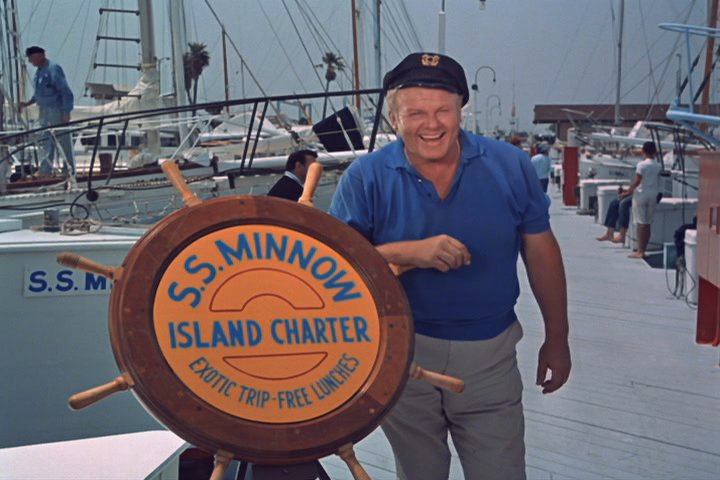
Another fictional old salt, only this one is just "Skipper". Note the cardboard signage on "S.S Minnow". Good grief.


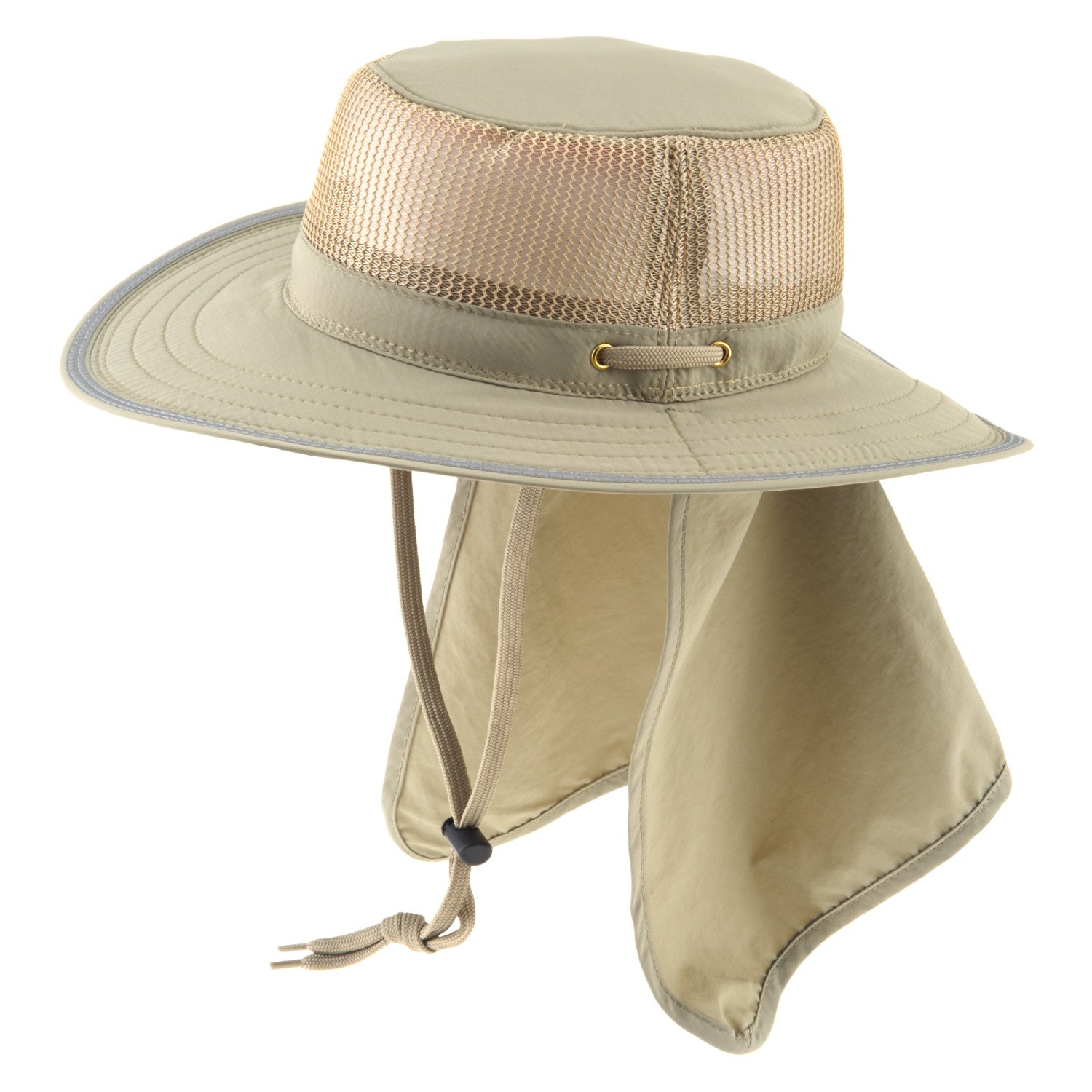
So while I'm happy with "Skipper", I'll leave "Captain" to the pros. The simple fact is that there are different expectations that are bundled up with "Captain", and if you screw up, as one does, it seems worse surrounded by braid than when one is just "Skipper". And as for the hat, I'll bow to my pasty Celtic ancestry and just go with something that keeps the melanoma at bay.
Also good for garden work, I would imagine. Gold braid and anchor badge optional.